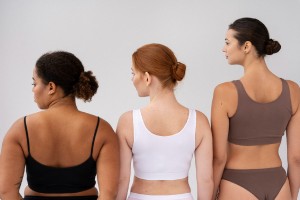
Weight is not the only indicator of physical fitness. Two people of the same weight can have completely different body compositions based on their fat-to-muscle ratio. Therefore, people who dream of achieving an athletic, toned physique need to know their body fat percentage. By calculating and tracking this metric, you can better understand what’s happening to your body as a result of your workouts.
What Is Body Fat Percentage?

To a certain extent, fat is necessary for our body to protect internal organs, serve as a reserve energy source, and perform a number of other important functions. However, for good health and excellent physical fitness, fat stores must be kept within certain limits.
Body fat percentage or body fat index (IMG) is the ratio of fat mass to total body weight. To calculate it, divide the fat mass by the total weight and multiply by 100%. For example, if body fat weighs 10 kg and total body weight is 80 kg, the body fat percentage is 10/80 = 12.5%. The main purpose of this formula is to determine the mass of body fat.
Why is it important to know your body fat percentage:
- When you’re trying to gain weight, you want to be sure you’re gaining muscle, not fat, as your weight increases. This gives you a better picture than just a number on the scale.
- If you’re trying to lose weight, it’s a good idea to track your body fat percentage to make sure you’re losing fat mass, not muscle mass.
- Subcutaneous fat is a good indicator of health, as higher levels of it in the body are often associated with obesity, diabetes, cardiovascular disease, and other health conditions.
What is a normal body fat percentage?
Recommendations regarding body fat depend on various factors, primarily age and gender. Women’s bodies naturally contain a higher percentage of body fat. In addition, fat and muscle mass change with age.
For men
|
Percentage of body fat in men |
Characteristics |
|
from 3% to 6% |
Minimum fat content. |
|
From 7% to 12% |
Low body fat percentage. An athlete with a toned, athletic physique and defined abs. |
|
13% to 15% |
Low body fat percentage. An athlete who is in good physical shape with a small amount of body fat. |
|
16% to 19% |
Average body fat. Normal build, moderate physical activity. |
|
19% to 25% |
Acceptable body fat level. Not in great physical shape, with fat in problem areas. |
|
25 to 40% |
Excess weight. Poor physical condition. |
|
Starting at 40% |
Excess body fat. Lack of athletic build; obesity is possible. |
For women
The percentage of subcutaneous fat in women is always higher due to differences such as hormones, breasts, and reproductive organs. Additionally, women need a higher percentage of fat for ovulation.
|
Percentage of body fat in women |
Characteristics |
|
Below 10% |
Exhaustion. This is dangerous for a woman’s body and can lead to the cessation of the menstrual cycle. |
|
From 11% to 14% |
The minimum percentage required for the body to function properly. |
|
From 15% to 16% |
Low body fat percentage. A female athlete with an athletic build. |
|
17% to 20% |
Low body fat percentage. A sports enthusiast in good physical shape with a small amount of body fat. |
|
From 21% to 24% |
Acceptable body fat percentage. Normal build, moderate level of physical activity. |
|
25 to 30% |
Average body fat. Average build, low level of physical activity. |
|
31 to 45% |
Overweight. Not in athletic shape. |
|
Over 45% |
Excess fat. There is a risk of obesity. |
How does body composition differ from BMI?
Until recently, a common method used to assess a person’s health was the body mass index (BMI), which is calculated using the formula BMI = Body weight (kg)/Height (m) 2. However, today it is considered outdated because it only provides a rough estimate of your body’s condition.
Weight can indicate accumulated fat as well as increased muscle mass or fluid retention in the body. For example, a person with an athletic build and low body fat may well be classified as obese when calculating their BMI.
The most advanced method for assessing physical condition in sports, clinical, and wellness medicine is body composition analysis—a method for describing what the body is made of: fat, bone, minerals, protein, and water.
Body composition and height are key components in the overall assessment of a person’s health. Two people of the same sex, age, and weight may feel differently and look completely different because they have different body compositions.
The right balance between fat and muscle is vital for a person’s health and well-being throughout their entire life. It has been established that a balanced body composition has a positive effect on life expectancy by reducing the risk of cardiovascular disease, cancer, diabetes, and insulin resistance.
Determining body composition is important for athletes because it shows the ratio of fat to muscle mass in the body, thereby allowing them to assess the effectiveness of their efforts to achieve good physical fitness and an athletic physique.
How can you determine your body fat percentage?
There are several methods for estimating the percentage of subcutaneous fat in the body. They vary in terms of accuracy and accessibility.
Visual Method
There are many photos online that you can use to compare your body to the one in the image and roughly determine your body fat percentage. This method isn’t perfect because it only provides a rough estimate: not everyone is able to accurately assess their own body. The advantages of the visual method include simplicity, speed, and clarity.
Body Fat Percentage in Women

Body Fat Percentage in Men

Using formulas
Body Mass Index (BMI)
One of the most common methods based on height, weight, and age. A simple formula is used: BMI = weight (kilograms) / height (meters) 2. The formula applies equally to men and women and does not vary based on age or body type, so it lacks precision. It is not used for professional athletes, pregnant women, children, or the elderly. After the age of 30, this formula should not be used, as it yields higher readings than actual values.
YMCA
This method was developed by the YMCA (Young Men’s Christian Association), a youth volunteer organization with branches in 130 countries worldwide. Only weight and waist circumference are used for the calculation. Measurements are taken in inches.
- For men, % = ((-98.42 + 4.15 * waist circumference - 0.082 * weight in pounds) / weight in pounds) * 100%
- For women, % = ((-76.76 + 4.15 * waist circumference - 0.082 * weight in pounds) / weight in pounds) * 100%
US Navy Formula (US Navy Method)
For these calculations, height, neck circumference, waist circumference, and hip circumference are measured. The waist is measured at its narrowest point, while the neck and hips are measured at their widest points.
- For men, % = 495/(1.0324 - 0.19077(LOG(waist - neck)) + 0.15456(LOG(height in feet)))-450
- For women, % = 495/(1.29579 - 0.35004(LOG(waist + hip - neck)) + 0.22100(LOG(height in feet)))-450
Another well-known method for determining body fat index is the formula developed by the popular sports physician Covert Bailey. It involves measuring the hips, calves, and wrists, as well as taking the person’s age into account. In addition, you can use online calculators that do all the calculations themselves based on the necessary parameters.
Calipers

The so-called “pinch test” is one of the most accessible and quickest ways to assess body fat by measuring the thickness of a skinfold: the more fat there is, the thicker the skinfold. As the name suggests, this method involves pinching subcutaneous fat between the fingers and measuring it using a vernier caliper or a special device—a caliper.
There are several formulas for calculating body fat percentage using a vernier caliper. The measurement sites differ between men and women. The simplest method involves pinching the fat at the triceps, biceps, shoulder blades, and waist. Each measurement is taken twice to obtain an average value. The advantages of this method include ease of use and the low cost of the equipment.
Unfortunately, this method is not suitable for people with visceral obesity, and it is also difficult to perform if the thickness of the subcutaneous fat layer exceeds 5 cm. Additionally, the accuracy of the result depends on the skill of the person taking the measurement.
Bioelectrical Impedance
Bioelectrical Impedance Analysis (BIA) has been one of the leading technologies for thirty years. This method utilizes the active and reactive resistance of a biological object in the path of the measurement current. There are several models of devices for performing bioimpedance analysis. Stationary devices, which are used in clinics, are considered more accurate.
It has been established that current passes more quickly through muscles, which retain more water. Conversely, fat, which retains less water, slows down the current. Active resistance consists of the electrical resistances of all fluids in the body region between the right palm and the right foot, while reactive resistance is the total capacitive resistance of all cell membranes.
The bioimpedance analysis method for body composition allows you to assess your metabolic rate, overall health, skeletal muscle mass, fitness level, endurance, and biological age.
You can calculate your body fat index at home using a scale with bioelectrical impedance functionality. BIA scales measure body fat and can be even easier to use than skinfold calipers. They send a weak electrical current (which is completely imperceptible) through the body and use its speed to determine the percentage of body fat relative to lean body mass. However, for the most accurate results, it is recommended that you avoid eating or drinking beforehand, refrain from exercising for 12 hours, and avoid alcohol or caffeine for the previous 48 hours. Additionally, these scales have a margin of error.
Hydrostatic Weighing
In professional sports, body fat percentage is determined using more accurate methods—the Bod Pot system, DEXA scanning, or water displacement (hydrostatic weighing).
Hydrostatic weighing is used to determine the proportion of fat and lean body mass in the body. This method is based on Archimedes’ principle and calculates the results based on the volume of water displaced by the body during immersion. It is known that the density of fat (0.9 g/cm³) is lower than that of lean body mass (1.1 g/cm³). Thus, fat will float, while lean body mass will sink; that is, a person with less lean body mass and more fat mass will float more easily. The measurements obtained are plugged into an equation to determine the percentage of body fat.
Although this is the gold standard, its practical implementation is quite complex: the examiner must be equipped with specialized measuring equipment, and the measurements are conducted in a laboratory, which is quite complicated and requires special training and preparation.
Factors to Consider in Calculations
When determining body fat percentage, it is necessary to consider the individual’s age, genetics, natural body type, and the presence of specific health conditions. Even experienced bodybuilders advise listening to your body and maintaining a fat level that is comfortable for you.The volume of adipose tissue increases with age, as it depends on natural physiological processes occurring in the body under specific living conditions. Older people have a lower body density when measured by skinfold thickness.
Factors influencing the increase in adipose tissue with age:
- decreased physical activity
- loss of the ability to move quickly
- a sedentary lifestyle
- decreased activity level
- the presence of age-related diseases.
Top Tips to Help Reduce Body Fat Percentage

A proper diet, a healthy lifestyle, physical activity, and effective stress management will help reduce body fat.
Here are a few specific tips:
- Create a calorie deficit. However, keep in mind that without strength training, you risk losing not only fat but also muscle mass.
- Incorporate high-intensity weight training (including bodyweight exercises). This will help you preserve muscle mass and boost your metabolism so that you continue to burn calories even after your workout is over.
- Perform exercises while standing. This burns 30% more calories.
- Run short distances. It has been established that running short distances triggers an “afterburn” effect.
- Reduce your carbohydrate intake. This forces your body to seek energy from other sources, namely fat.
- Eat smaller portions. Simply put, you need to eat less; save large portions for after strength training.
- Eat more slowly. This way, you’ll eat less, since the signal of fullness reaches our brain about 12 minutes after we finish eating.
- Keep an eye on your mood. Try not to become emotionally dependent on food; don’t use food to cope with stress.
- Drink water. Water prevents constipation, improves digestion, and, when drunk before a meal, reduces your appetite.
- Be more active. Exercise, go for walks, or do some physical chores around the house.
- Stick to a sleep schedule. It has been found that while we sleep, we not only rest but also lose weight.
To get in shape, there’s no need to torture yourself with starvation or give up your usual comforts. You can change yourself gradually, step by step, moving from a higher “body fat category” to a lower one.
Frequently Asked Questions About Body Fat Percentage
What are the consequences of a critically low body fat percentage in women?
A drop in body fat below 10–13% can cause hormonal imbalances and reproductive system problems.
At what body fat percentage can men see their abs?
Well-defined abs usually become visible when body fat drops below 10–12%.
How can you determine your body fat percentage at home without any equipment?
The easiest way is to use a measuring tape to take your measurements and enter the data into a special online calculator.