What does body type mean?
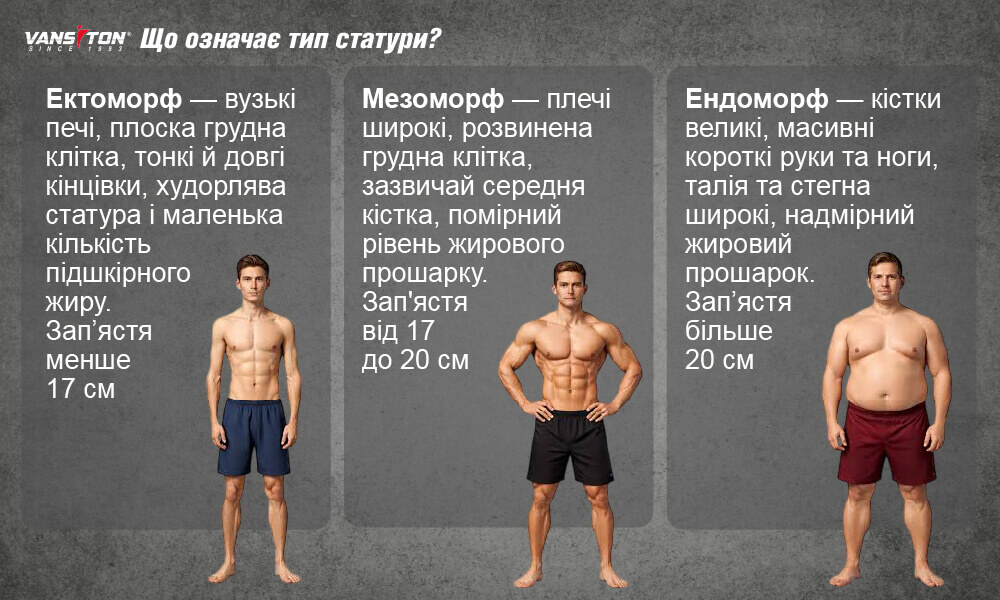
Every person’s body size and shape are genetically determined. Body type refers to the proportions and characteristics of body parts and the development of bone, fat, and muscle tissue. Body type is one of the main characteristics of a person’s constitution, proportions, and body shape. This characteristic is taken into account when analyzing a person’s physical condition.
Somatotype — somatic structure; however, it is not merely a body type but also a blueprint for future physical development. Somatotype (body type) is determined based on anthropometric measurements, a genotypically determined constitutional type characterized by the level and nature of metabolism (predominant development of muscle, fat, or bone tissue), susceptibility to certain diseases, as well as psychophysiological differences.
A person’s physique can change over the course of a lifetime, but a somatotype cannot; it is genetically determined and is a permanent characteristic. Age-related changes, certain diseases, and physical activity alter dimensions and contours, but not the somatotype. There are three somatotypes: ectomorph, mesomorph, and endomorph.
Body type — ectomorph
Ectomorphs are typically tall, though there are also thin women of short stature; an elongated face with a high forehead; a narrow, flat chest; long, slender legs and arms; underdeveloped muscles or long, sinewy muscles; and a very thin layer of subcutaneous fat.
A fast metabolism makes it difficult to gain either excess weight or muscle mass quickly. Most often, an ectomorph’s weight is normal or even below normal.
Pros and cons of this body type
Advantages:
- the ability to endure long-term, moderate-intensity exercise (running, cycling, swimming);
- the ability to maintain a lean and defined physique;
- a high metabolism that prevents excess weight gain;
- gain in lean muscle mass with low body fat ;
- rapid improvement in strength;
- the only body type prone to muscle fiber growth (without the use of hormones or AAS);
- fast recovery.
Disadvantages:
- a fast metabolism is also a drawback. To gain mass, you need to increase food intake, which can sometimes put a strain on the digestive system;
- the need to consume sports nutrition (weight gainers, protein shakes);
- the predominance of white “endurance” fibers slows down progress. Ectomorphs find it difficult to reach their first milestones because hyperplasia hasn’t started yet, and hypertrophy isn’t capable of providing sufficient leverage;
- training injuries—white fibers are activated when lifting heavy weights, but they do so gradually. As a result, a person with a predominance of red muscle fibers can easily lift their maximum weight, but if that weight is increased by even 5%, it becomes impossible to lift. Ectomorphs, who have a predominance of white muscle fibers, do not feel the difference between 95% of their maximum and 120% of their maximum. Since they don’t feel this difference, they are more likely to overload the bar beyond their limit, which leads to ligament injuries and muscle tears;
- When it comes to managing workout duration, ectomorphs are advised to focus on three basic exercises.

Nutrition and Training for Ectomorphs
Ectomorph Training
Optimal training volume is necessary for muscle growth, as is adequate recovery time; therefore, 3 workouts per week are recommended. Each workout should target the major muscle groups. Heavy-weight exercises should be moderate but performed at a high frequency.
Most of the time should be devoted to squats, pull-ups, deadlifts, bench presses, as well as exercises that simultaneously target muscle groups in different parts of the body.
Limit cardio to a maximum of 10–20 minutes, but after strength training, you’ll need fairly intense or heavy cardio sessions.
This routine provides sufficient aerobic and anaerobic training while allowing for an optimal amount of recovery time, which will help you gain muscle mass and achieve your desired muscle definition.
Nutrition for Ectomorphs
Most ectomorphs find it difficult to gain weight and muscle mass. Ectomorphs don’t need a lot of food to provide their bodies with the necessary energy, or they are born with a metabolism that is too fast. The following recommendations can help:
- Instead of three meals a day, switch to eating 5–7 times a day;
- Be sure to include sports nutrition in your diet—protein shakes and weight gainers—even on non-workout days;
- Have a snack before bed.
Ectomorphs should monitor their daily caloric intake, ensuring it doesn’t fall too low, and enrich their diet with fatty meats, dairy products with a higher fat content, peanut butter, nuts, and avocados.
Body type — mesomorph
Mesomorphs have a sturdy build and well-defined muscle definition. They have a rectangular body shape and are quite athletic; they build muscle mass quickly, but they also gain weight faster than ectomorphs.
This is the ideal body type for bodybuilding and most other sports; people of this type gain weight easily and lose it just as easily.
Most often, mesomorphs have a normal BMI, and only a few of them are overweight.
Mesomorphs’ muscles respond best to strength training, which is why muscle mass increases quite rapidly, especially in beginners. However, fat mass accumulates at the same rate as muscle mass.
Pros and Cons of the Somatic Type
Advantages:
- has good proportions;
- metabolic rate, glucose, and cholesterol are within normal ranges;
- muscle mass predominates in the body;
- handles both aerobic and anaerobic exercise well;
- normal body fat levels, easily loses excess fat.
Disadvantages:
- prone to weight gain with poor diet or stress;
- under certain conditions, there is a risk of elevated blood pressure and blood sugar.

Nutrition and Training for Mesomorphs
Training for Mesomorphs
A combination of strength training and cardio exercises aimed at improving muscle tone will help develop proper body proportions. These workouts should be done 4–5 times a week, as results depend on the quality and frequency of training.
Mesomorphs can easily gain muscle mass, and the results will be more clearly visible thanks to an optimal amount of body fat. Athletic types with a normal metabolism should remember that overtraining is not beneficial for their appearance. Therefore, you must keep track of your calorie intake and the amounts of fat and carbohydrates. You should constantly monitor your appetite and never skip workouts. Recovery plays an equally important role; do not rely solely on your muscles’ ability to grow and neglect rest—it is important to get at least 7 hours of sleep per day.
Nutrition for Mesomorphs
To avoid slowing down your metabolism and get the most out of your workouts, you need to:
- a balanced diet with the correct ratio of nutrients per kilogram (protein – 2–3 g, carbohydrates – 3–4 g, fats – 1–2 g);
- eat 5–6 times a day in small portions;
- distribute protein and fat intake evenly throughout the day;
- consume carbohydrates by 4:00 PM;
- give preference to complex carbohydrates; it is recommended to consume more fiber. Consume fructose and sucrose in small amounts in the morning;
- before bed and late at night, you can eat low-fat dairy products;
- meals or sports supplements should be consumed 1.5 hours before a workout;
- After workouts, eat a meal or take sports nutrition as soon as possible; this will help with muscle recovery and prevent catabolism;
- Avoid fasting and long breaks between meals;
- Drink more fluids—30 ml per 1 kg of body weight.
Body Type — Endomorph
Endomorphs are typically short in stature, have a large belly, stocky limbs with wide wrists, wide knees and elbows, and significant fat deposits on the shoulders and hips. This body type has a slow metabolism, which hinders fat loss. The muscles respond well to strength training. This is especially true for the quadriceps and glutes.
Endomorphs are soft and dense; they easily gain both muscle mass and fat, resulting in muscles that lack definition.
Pros and Cons of the Somatotype
Advantages:
- anabolic processes predominate, allowing endomorphs to gain mass quickly;
- well-developed white muscle fibers, enabling this type to handle anaerobic exercise well.
Disadvantages:
- predominantly fat tissue, a tendency toward being overweight;
- slow metabolism, nutrients are absorbed less efficiently;
- salt and fluid retention in the body, leading to edema;
- increased acidity, a tendency to develop gastritis;
- high blood sugar levels, which can lead to diabetes;
- high risk of hypertension, thrombosis, and stroke.

Nutrition and Training for Endomorphs
Training for Endomorphs
To achieve an aesthetic, athletic physique, you need to lose fat first and then build muscle. Combine strength training with cardio.
Workouts should be done at least 3 times a week and should include both high-intensity sessions and endurance-focused workouts with many repetitions. Mandatory aerobic exercises are designed to burn excess subcutaneous fat.
Perform 4–6 sets of 10 reps for upper-body exercises and 15–25 reps for lower-body exercises. You can also do circuit training, which will help increase calorie burn.
Cardio is essential at least 3 times a week (30–40 minutes). You can use exercise machines, go for a run, or swim.
Nutrition for Endomorphs
Minimize fat intake, but do not completely eliminate it from your diet. It’s important to consume only unsaturated fatty acids (unrefined olive oil, flaxseed oil, sesame oil, etc.).
Eliminate fast carbs from your diet. Endomorphs already have high blood glucose levels; frequent sugar consumption can, over time, reduce glucose tolerance and insulin production, which can lead to the development of diabetes. Cutting out fast carbs will help improve your health and lose excess weight.
Complex carbohydrates should be slow-digesting. For example, brown rice, buckwheat, oats, and green vegetables. Grains and cereals should be consumed in the first half of the day. This is important because consuming them later in the day risks converting excess energy into fat. Carbohydrates should make up 30% of an endomorph’s total caloric intake.
Proteins—such as meat, fish, eggs, and dairy products—should account for about 60% of the diet. Proteins cannot be stored in the body as subcutaneous fat and do not cause insulin spikes. They are essential for building new cells, particularly muscle tissue.
How do you determine your body type?

The main factors in determining body type are bone thickness and wrist circumference. Wrist circumference does not change based on the amount of fat or muscle mass. Ectomorphs have thin bones, mesomorphs have medium-sized bones, and endomorphs have broad bones.
- Ectomorph — narrow shoulders, flat chest, thin and long limbs, a lean build, and a small amount of subcutaneous fat. Wrist circumference is less than 17 cm.
- Mesomorphs have broad shoulders, a well-developed chest, typically medium-sized bones, and a moderate amount of body fat. Wrist circumference: 17 to 20 cm.
- Endomorph — large bones, stocky and short arms and legs, wide waist and hips, excessive body fat. Wrist circumference: more than 20 cm.