What is pumping?
Pumping is a type of physical training aimed at rapidly and temporarily increasing muscle volume. This is usually achieved through intense training methods, such as performing many repetitions with heavy weights or using techniques that increase blood flow to the muscles.
This approach is commonly used by bodybuilders or fitness athletes who want to achieve a temporary increase in muscle size to showcase during competitions or photo shoots. Pumping can create the appearance of larger, more defined muscles, as increased blood flow causes the muscles to swell during a workout. However, the pumping effect is temporary and usually disappears within a few hours after the workout.

Definition of the Pump
The pump is a training method in which exercises are performed with a high number of repetitions and light to moderate weights to stimulate blood flow to the muscles. This approach helps increase muscle oxygen and nutrient supply while removing metabolic waste products, which helps improve the muscles’ aerobic endurance.
The pumping effect is the body’s physiological response to exercise, in which blood flow to the muscles increases, leading to an increase in muscle volume and a sensation of “pumping” or tension in the working muscles. This effect can contribute to improved muscle function and a temporary increase in muscle volume.
How does the pumping effect work?
The mechanism of the pumping effect in athletes can be explained as follows:
- Blood flow. When performing exercises with a high number of repetitions and light or moderate weights, the muscles work actively and require more oxygen and nutrients to meet their energy needs. This leads to the dilation of blood vessels and an increase in blood flow to the muscles.
- Muscle swelling. Increased blood flow to the muscles causes swelling of muscle fibers and tissues, which occurs due to the dilation of capillaries and the active supply of blood to muscle tissues. This can create the impression of increased muscle volume and size.
- Lactic acid accumulation. Performing exercises with a high number of repetitions promotes the rapid production of lactic acid in the muscles. Lactic acid is a byproduct of aerobic metabolism, and its accumulation in the muscles can cause a sensation of muscle fatigue and a “burning” sensation. This can create a sensation of intense effort and muscle exhaustion.
- Hypertrophy. Pump training can stimulate muscle hypertrophy—an increase in the size and volume of muscle fibers. High training volume and increased blood flow to the muscles contribute to the activation of muscle growth mechanisms and adaptation to the workload.
It is worth noting that the pumping effect is temporary and usually disappears within a few hours after training. It does not lead to a lasting increase in muscle size or significant physiological changes, but merely causes a temporary sensation of “pumped” muscles and muscle expansion during training.
Benefits and Advantages of the Pump Effect
Increased Muscle Volume
Pumping can create a visual effect of increased muscle volume and dilated blood vessels, which helps athletes look more massive and “full” during training or competitions.
During pumping, exercises are performed with a high number of repetitions and low weight. This leads to increased blood flow to the muscles, and the dilation of blood vessels helps increase the delivery of oxygen, nutrients, and hormones to muscle tissue. This process can stimulate anabolic processes and support muscle growth.
Pumping requires a long workout with a high number of repetitions, which promotes the consumption of glycogen—the carbohydrate reserve in muscle tissue. After a workout, muscles draw on glycogen stores for recovery, which can lead to an increase in muscle volume due to the retention of glycogen along with water.
During exercise, under the influence of the training load, the blood vessels in the muscles dilate, and fluids such as blood and plasma fill these vessels and penetrate the muscle cells. This leads to temporary muscle swelling and creates a “pumped” feeling.
Improved Muscle Definition
By performing many repetitions with moderate resistance, you stimulate muscle fiber growth. During a workout, blood flow to the muscles increases, which promotes swelling of muscle cells; this creates the visual effect of increased muscle volume, improves muscle definition, and strengthens connective tissue.
Increased blood flow during a “pump” workout can also help boost intracellular hydration, which strengthens muscle cells and improves their appearance.
Muscle Growth Stimulation
Workouts typically involve a high number of repetitions with moderate resistance. This creates mechanical stimulation for the muscles, leading to micro-tears in muscle fibers and their gradual recovery and growth.
It promotes increased blood flow to the muscles, which can ensure a better supply of oxygen and nutrients to muscle tissue. This is important for muscle recovery and growth.
It may promote the release of various anabolic factors, such as growth hormone and insulin-like growth factor (IGF-1). These factors have the potential to stimulate muscle growth and post-workout recovery.
It induces metabolic stress in the muscles, specifically by increasing lactic acid production. This can help activate various signaling pathways that lead to muscle growth.
Pumping Techniques
There are several pumping techniques used in sports to achieve an increase in muscle volume.

Supersets
The "superset" technique is used to create an intense pumping effect in the muscles by combining two or more exercises without a significant rest period between them. The main idea is to perform two exercises for the same or different muscle groups consecutively without rest, ensuring constant tension in the muscles.
- Consecutive exercise performance. Two exercises are selected for the same or different muscle groups and performed consecutively without a pause between them. For example, exercises for the chest and triceps performed immediately one after the other.
- Combination of exercises. Exercises can be selected to provide different types of muscle stimulation. For example, you can combine exercises with high repetition counts (for a pump) with strength or stabilization exercises.
- Minimal rest. There is only a short pause between supersets, usually no more than 30–60 seconds. This helps maintain muscle tension and provides an intense pumping effect.
- Use of moderate weight. The weight is selected so that both exercises can be performed with proper form and technique. Moderate weights, adapted to your capabilities, are typically used.
- Maintaining high intensity. Performing supersets requires the athlete to maintain heightened concentration and transition quickly from one exercise to the next. This helps maintain high training intensity and promotes muscle pump.
The “superset” technique can be used for various purposes, such as improving muscular endurance, increasing training volume, and creating a pump effect. It allows you to effectively work different muscle groups in a short amount of time, providing an intense workout. However, before performing supersets, it is recommended to consult a trainer or specialist to take your individual capabilities and fitness level into account.
Giant Sets
The “giant set” technique is used to create an intense muscle pump by performing a large number of repetitions with minimal rest between them. The main idea is to maintain tension in the muscles over an extended period of time, forcing them to work at a high intensity without heavy weights.
- High number of repetitions. Perform 15 to 30 repetitions per exercise. The number of repetitions may depend on your fitness level and the specific exercise.
- Minimal rest. Only a short pause is allowed between sets or repetitions, usually no more than 30 seconds. This helps maintain tension in the muscles and provides an intense pumping effect.
- Use of moderate weight. The weight is selected so that you can perform the specified number of repetitions without compromising form or technique. Lighter weights are typically used than in heavy strength training.
- Repetitions to failure. “Giant set” pumping workouts are performed until muscle failure, when you can no longer perform a repetition correctly. This ensures that the muscles get an intense workout.
- Use of various exercises. To achieve maximum pump, it’s worth including a variety of exercises for different muscle groups. This will help expand the scope of your workout and ensure full muscle engagement.
- Performing many repetitions. This is a basic pumping technique that involves performing exercises with a high number of repetitions (usually 15–20 or more). The weight should be chosen so that you can perform this number of repetitions with sufficient effort.
Drop sets
The “drop set” pumping technique is used to create an intense pumping effect in the muscles by gradually reducing the weight as you perform repetitions. The main idea is to continue the exercise by reducing the weight after reaching muscle fatigue, which allows you to activate additional muscle fibers.
- Start with a heavy weight. The exercise begins with a heavy weight that corresponds to your maximum load for this exercise.
- Reduce the weight. After performing a certain number of repetitions with the heavy weight and reaching muscle fatigue, reduce the weight by approximately 20–30%. For example, if you started with 100 kg, you can reduce the weight to 70–80 kg.
- Continue performing repetitions. After reducing the weight, continue performing repetitions with the new weight without a significant pause. Try to perform a few more repetitions or until muscle fatigue sets in.
- Repeat until fatigue. Continue reducing the weight and performing repetitions until you can no longer perform them correctly.
- Minimal rest. Take only a short break between subsets, usually no more than 10–20 seconds. This helps maintain tension in the muscles and provides an intense pumping effect.
The “drop set” technique allows you to maximize muscle fiber recruitment, create an intense pumping effect, and promote muscle growth. It can be used as a supplementary training method to improve muscle proportions and increase training volume. However, before using the “drop set” technique, it is recommended to consult a trainer or specialist to take your individual capabilities and fitness level into account.

Workout Programs Using the Pumping Technique
Program 1: Giant Sets
Dumbbell Bench Press:
Number of sets: 3
Lie on a bench, holding one dumbbell in each hand at a weight you can easily lift. Slowly lower the dumbbells to chest level, then lift them back up. Perform 10–15 repetitions.
Dumbbell Flyes:
Number of sets: 3
Lie on a bench, holding one dumbbell in each hand at a weight you can easily lift. Raise the dumbbells out to the sides until your arms are parallel to the floor, then smoothly bring the dumbbells back together, focusing on the contraction of your chest muscles. Perform 10–15 repetitions.
Dumbbell Bench Press:
Number of sets: 3
Lie on a bench, holding one dumbbell in each hand at a weight you can easily lift. Slowly lower the dumbbells to shoulder level, spreading your elbows out to the sides, and then engage your chest and arms as you lift the dumbbells upward, straightening your arms. Perform 10–15 repetitions.
Program 2: Supersets
Front Dumbbell Raise:
Number of sets: 3
Stand with dumbbells in your hands; your arms should be at your sides with your elbows slightly bent. Raise the dumbbells in front of you to shoulder height, keeping your arms straight. Focus on engaging your shoulder muscles. Perform 15–20 repetitions.
Lateral Dumbbell Raises:
Number of sets: 3
Stand with dumbbells in your hands; your arms should be at your sides with your elbows slightly bent. Raise the dumbbells out to the sides to shoulder height, keeping your arms straight. Focus on engaging your lateral deltoids. Perform 15–20 repetitions.
Program 3: Trisets
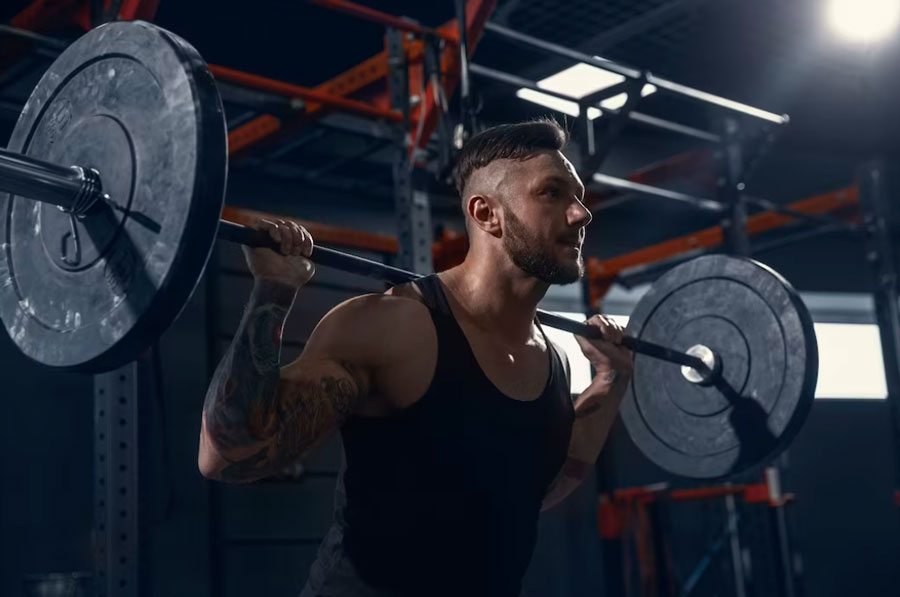
Barbell Squats:
Number of sets: 3
Place the barbell on the back of your shoulders and stand with your feet shoulder-width apart. Slowly lower yourself by bending your knees, and continue lowering until your thighs are parallel to the floor. Return to the starting position, pressing your heels into the floor. Perform 10–15 repetitions.
Front lunges:
Number of sets: 3
Standing with the barbell on your shoulders, take a large step forward, bending your front knee. Bend your knee until your back leg touches the floor. Return to the starting position and repeat with the other leg. Perform 10–15 repetitions on each leg.
Back lunges:
Number of sets: 3
Standing with a barbell on your shoulders, take a large step backward, bending your back leg at the knee. Bend the knee of your front leg until it is parallel to the floor. Return to the starting position and repeat with the other leg. Perform 10–15 repetitions per leg.
Program 4: Circuit Training
Jump Rope:
Number of sets: 3
Grab a jump rope and jump, lifting your knees high, keeping your back straight and your feet under your body. Perform 1–2 minutes of continuous jumping.
Sit-ups:
Number of sets: 3
Lie on your back with your hands behind your head, bend your legs, and lift them simultaneously with your chest, making a movement similar to a parrot’s wings. Reach toward your chest and return to the starting position. Perform 10–15 repetitions.
Barbell Crunch:
Number of sets: 3
Lie on your back with your feet on the floor, holding the barbell at chest level with your arms bent. Move the barbell forward by straightening your arms and lifting it upward, then lower it back down to your chest. Perform 10–15 repetitions.
:
Number of sets: 3
Place your hands on a bench with a backrest; your hands should be slightly wider than shoulder-width apart. Lower yourself, bending your elbows to a 90-degree angle, then push through your arms as you rise. Perform 10–15 repetitions.
These workout programs for muscle building offer a variety of exercises and training regimens that promote muscle growth and improve physical fitness. It’s important to use proper form, choose weights wisely, and rest for 30 to 60 seconds between sets to achieve the best results. Depending on your experience, physical condition, and training goals, you can modify the workout programs by increasing or decreasing the number of sets or the weight.
Nutrition and Pumping

Diet for Optimal Pumping
An optimal diet for achieving the best possible pump should include the following components:
The diet should be high enough in calories to meet the body’s energy needs during workouts and recovery. It should include increased amounts of carbohydrates, proteins, and healthy fats.
It is important to ensure an adequate amount of protein in the diet, as protein is the building block of muscle. The recommended daily intake for athletes depends on training intensity, but a general guideline is 1.2 to 2 grams of protein per kilogram of body weight.
Carbohydrates are the primary source of fuel for muscles during workouts. Including enough carbohydrates in your diet helps provide energy for workouts and maintain muscle performance. It is recommended to consume both complex (e.g., whole grains, vegetables) and simple (e.g., fruits) carbohydrates.
It is important to drink enough fluids during workouts to stay hydrated. Water helps maintain optimal fluid levels in the muscles and supports their performance.
It is important to eat enough before and after a workout. Before a workout, you can have light snacks that contain carbohydrates. After a workout, it’s important to replenish muscle glycogen and consume protein to support muscle recovery and growth.
Nutrients That Promote the “Pump”
- Protein is the primary building block of muscles and is essential for the recovery and growth of muscle tissue.
- Carbohydrates are the primary source of energy for muscles during workouts. They help maintain workout intensity and replenish muscle glycogen.
- Creatine increases muscle mass and improves workout performance. It helps maintain phosphocreatine levels in the muscles, which boosts energy potential during workouts. The recommended dose of creatine is 3–5 g per day.
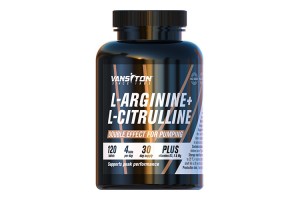
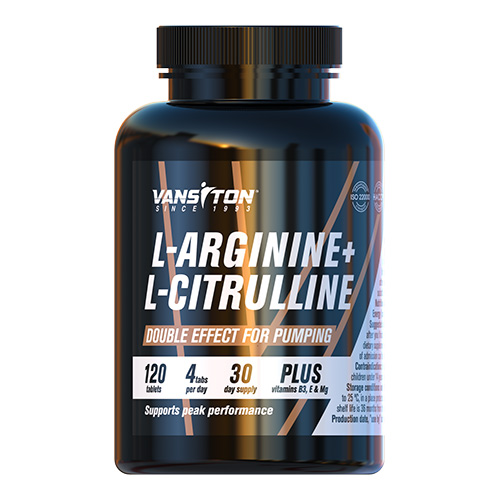
- Arginine is an amino acid that dilates blood vessels, improves blood flow, and enhances the delivery of nutrients to the muscles.
- Beta-alanine is an amino acid that increases carnosine levels in the muscles. Consuming beta-alanine delays fatigue and increases workout duration. The recommended dose of beta-alanine is usually 2–5 g per day.
Proper Nutrition Before and After a Workout
Proper nutrition before and after a workout is important for optimal recovery and maximum muscle growth.
Before your workout:
Have a light snack about 1–2 hours before your workout to provide your body with energy during physical activity. This can be a combination of carbohydrates and protein, such as fruit with walnuts or yogurt with granola.
Avoid heavy meals immediately before your workout, as this can cause discomfort during exercise.
After your workout:
You should eat within 30–60 minutes after your workout to promote rapid muscle recovery and replenish energy.
Include protein to support muscle recovery and growth. This could be a whey protein shake, chicken breast, fish, or other protein sources.
Add carbohydrates to replenish muscle glycogen and restore energy. These could include fruit, whole-grain bread, or beans.
Consider taking additional amino acids, such as BCAAs (branched-chain amino acids), which help with muscle tissue recovery and reduce muscle breakdown.
It’s also important to drink enough fluids during and after workouts to stay hydrated.
Precautions and Recommendations

When using pumping or any other training techniques, it is important to follow certain precautions and recommendations.
A gradual approach. Start with a low volume and light load, gradually increasing them over time. Too high a volume or excessive load can lead to muscle strain and injury.
Proper technique. Use proper form when performing exercises. Improper technique can lead to injuries and ineffective training.
Rest and recovery. Give your body enough time to rest and recover between workouts. Muscles grow during rest, not during workouts. Ensuring adequate rest will help prevent overexertion and reduce the risk of injury.
A personalized approach. Take into account your individual capabilities, physical fitness, and training goals. What works for one person may not work for another. Developing a personalized training program that takes your needs and limitations into account can be helpful.
Listen to your body.Pay close attention to signs of overexertion or fatigue. If you experience excessive fatigue, muscle pain, or symptoms of injury, take a break and give your body time to recover.
Balanced nutrition. Maintain a balanced diet that includes sufficient amounts of protein, carbohydrates, fats, and micronutrients. This will help ensure proper nutrition for your muscles and overall health.
It is always recommended to consult a specialist, such as a trainer or nutritionist, for personalized advice and recommendations regarding pumping and workouts in general.
The Importance of Proper Exercise Technique
Proper exercise technique is crucial in sports and fitness for several reasons:
Injury prevention. Proper technique helps prevent injuries because it distributes the load evenly across the muscles, joints, and the entire musculoskeletal system. Incorrect exercise form can lead to excessive strain on specific muscle groups or improper movement mechanics, which increases the risk of injury.
Workout effectiveness. Proper technique helps maximize engagement of the target muscle groups and achieve optimal load. Correct execution of movements ensures more effective muscle activation and promotes progress in training.
Strength Development. Proper exercise technique allows you to achieve greater strength and power. Engaging the correct muscle groups and using optimal movement mechanics help maximize your potential for strength development.
Body shape and aesthetics. Proper technique contributes to a harmonious body and an aesthetically pleasing appearance. Proper exercise execution helps improve posture, muscle tone, and muscle definition.
Ensuring a productive workout. Proper technique ensures correct functionality and coordination of movement, allowing you to perform exercises with greater precision and control. This helps avoid ineffective movements and ensures a productive workout.
Smart use of weights and loads
Choose a weight that allows you to perform 15–20 repetitions. Pumping is based on a high number of repetitions; it’s important to choose a weight you can lift 15–20 times without compromising your form. This will help ensure you get enough volume to achieve the pump.
Gradually increase the weight when it becomes easy for you to perform 15–20 repetitions; this will help ensure steady progress and muscle growth.
Focus on slow, controlled movements. This will allow you to maximize muscle activation and increase blood flow.
Use supersets and trisets. Supersets and trisets are techniques that involve performing two or three exercises without pausing between them. This increases the volume of work and adds intensity to your pump workout.
Even with a low load, it’s important to maintain proper form. This will help prevent injuries and maximize muscle engagement.
Try different exercises for different muscle groups. This will allow you to vary the angle of the load on your muscles, which promotes growth and development.
Tips for Effective and Safe Pumping
Do a thorough warm-up before starting your workout. Perform cardio exercises, stretching, and active movements to prepare your muscles, joints, and your entire body.
Learn to perform weight training exercises correctly, maintaining proper form and movement mechanics. Improper technique can lead to injuries or insufficient activation of muscle groups.
Gradually increase the weight or volume of your workout over time. Give your body time to adapt and build strength and endurance. Don’t strive for overly rapid progress, as this can lead to overexertion and injuries.
Give your muscles time to recover. Regular breaks between workouts will help prevent overexertion and reduce the risk of injury.
Pay close attention to signs of overexertion or pain during your workout. If you feel unusual discomfort, stop and rest. Do not lift heavy weights if you are tired or in pain.
Control your breathing while performing exercises. It is generally recommended to inhale at the start of the movement and exhale at the end of the movement or during the contraction phase.
Rest between workouts is very important. Stick to optimal rest periods between sets and workouts to allow your muscles to recover and prepare for the next workout.
Scientific sources:
Exercise-induced skeletal muscle hypertrophy: mechanisms, myths, and misconceptions
The effect of drop sets on skeletal muscle hypertrophy: a systematic review and meta-analysis
Position Paper of the International Society of Sports Nutrition: Protein and Exercise
Nutritional interventions to enhance skeletal muscle hypertrophy induced by strength training
Technique and Safety Aspects of Strength Exercises: A Systematic Review of the Literature