Superficial fascia is soft connective tissue located directly beneath the skin. It covers and connects all the structures of our body: muscles, bones, nerves, and blood vessels. Muscles and fascia make up the so-called myofascial system, which plays an important role in maintaining posture, transmitting mechanical forces, and ensuring smooth movement. For various reasons (a sedentary lifestyle, insufficient stretching, injuries), the fascia and the underlying muscle tissue can stick together. This is called adhesion and leads to restricted muscle mobility, pain, and reduced flexibility or range of motion. In this article, we’ll explain how to identify and release fascial restrictions on your own to improve fascial health and provide deep, long-lasting relief. You’ll learn what myofascial release is, why it’s beneficial, how and when to perform myofascial self-massage, and who it’s recommended for first and foremost.
What Is Myofascial Release
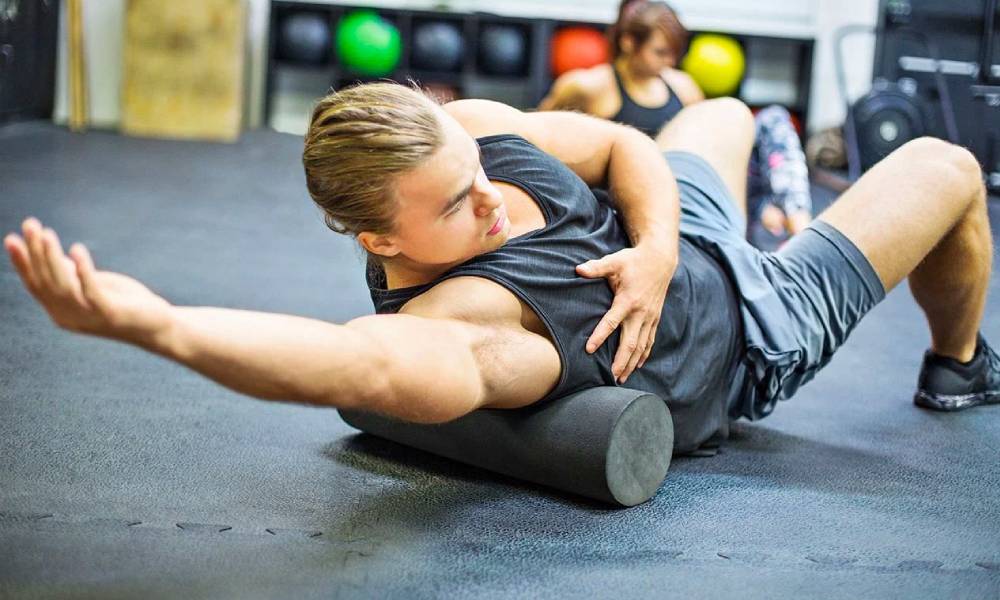
Myofascial release is a series of manual techniques that apply pressure to soft tissues, specifically muscles and fascia. The name comes from the English word “release,” which means to free or let go. This practice can be performed at specialized centers as well as at home, using special tools (massage balls and foam rollers) in combination with gentle stretching techniques.
What is myofascial release used for?According to scientific studies, training the fascia helps maintain its elasticity and health. Applying a certain amount of pressure to the muscles and fascia stimulates mechanoreceptors, reducing muscle and fascial tension. After compression, local blood flow increases, promoting the removal of metabolic waste products and the delivery of oxygen, as well as warming the tissues. Adhesions between fascial layers are broken down, and the elasticity of soft tissues is restored, thereby reducing local inflammation and relieving pain.
Myofascial self-massage—what is it?
Self-administered myofascial release (massage) is a self-care strategy that involves applying gentle, sustained pressure to soft tissues while simultaneously stretching the fascia. This leads to the softening and lengthening (release) of the fascia, breaks down scar tissue, and releases adhesions between the skin, muscles, and bones. This technique is widely used by many active people: athletes, those who work out at gyms or at home, healthcare professionals, and others.
Who Can Benefit from Myofascial Self-Massage and When
Fascial restrictions can create trigger points throughout the body, impairing mobility and flexibility and causing pain. Notably, such issues are usually not visible on standard X-rays, making them difficult to diagnose. This is where myofascial release comes in, identifying and addressing these areas of tension to restore freedom of movement and improve overall well-being.
Who is recommended to practice myofascial self-massage?
Myofascial self-massage is suitable for a wide range of people, as it treats various conditions and ailments. It is especially recommended for those who lead a sedentary lifestyle or spend a lot of time sitting.
Indications for myofascial release include:
- chronic back pain
- tension headaches
- joint pain
- myofascial pain syndrome
- fibromyalgia
- sports injuries
- post-surgical conditions
- stress.
Myofascial techniques can also be beneficial for athletes to aid in recovery after workouts and to improve muscle flexibility; for people who have experienced trauma, whether physical or emotional; and for those experiencing stress or anxiety. In addition, myofascial facial massage is very popular in anti-aging treatments. It helps improve skin elasticity, reduce wrinkles and puffiness, and slow down the signs of aging.
So, what are the practical benefits of performing myofascial release exercises?
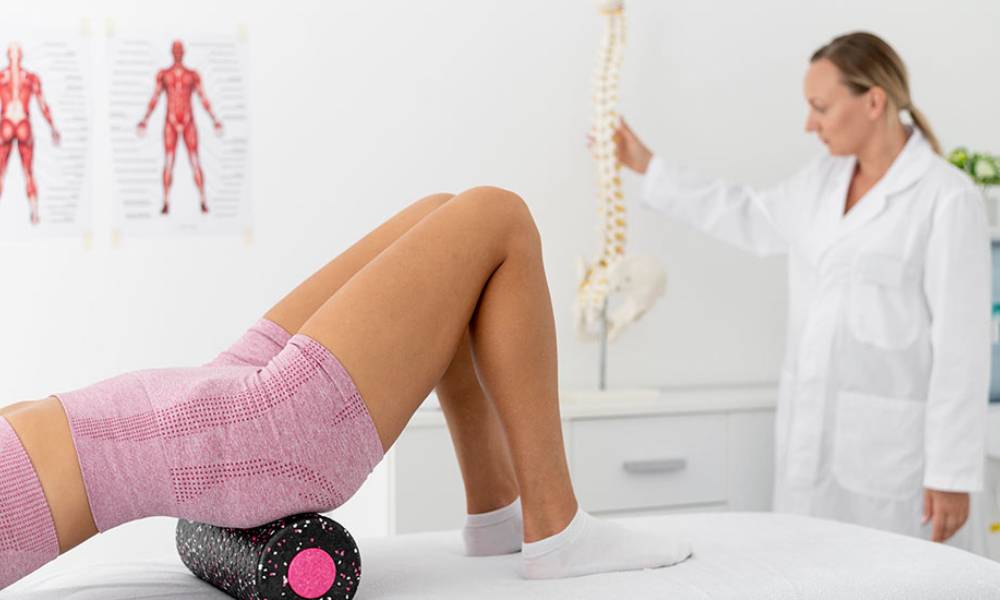
Reduced pain and stiffness
Due to an unhealthy lifestyle, insufficient or one-sided physical activity, prolonged standing or sitting during daily activities, injuries, or excessive stress, adhesions (adhesions) can form in our bodies. This can lead to stiffness, imbalances in tension, and pain.
Targeted fascial training can help release these adhesions, loosen the muscle fascia, and restore the integrity of stiffened connective tissue, providing deep and often immediate relief. Whether the pain is caused by injury, surgery, or accumulated tension, this approach can help reduce or even completely eliminate pain where other methods have failed.
It has been shown that myofascial self-massage alleviates various types of muscle and joint pain, increases the pressure threshold (the minimum force required to cause pain), improves overall body sensitivity, and eliminates feelings of stiffness.
Improved Mobility and Flexibility
Myofascial therapy plays a key role in improving mobility and flexibility. By releasing fascial restrictions, it provides a greater range of motion, promoting the flexibility necessary for any fitness program. The more flexible the muscles are within their normal range of motion, the more power they are capable of generating. For example, stretches that lengthen the hip flexors can help alleviate tension associated with sitting and lower back pain.
According to therapeutic studies, regular self-administered myofascial release improves muscle performance and can be an excellent addition to a posture correction program, promoting muscle balance and efficient spinal movement. Myofascial release techniques improve flexibility and range of motion.
A cross-effect of myofascial therapy has also been noted. Essentially, when you improve flexibility in one part of the body, another, more distant part responds to this improvement. For example, one study shows that foam rolling the thigh and gluteal muscles improves passive shoulder mobility.
Faster Recovery After Workouts
During long and intense workouts, lactic acid builds up in the body, which is often associated with cramps and early fatigue. Using myofascial release techniques can help speed up the body’s breakdown of lactic acid after a workout. This form of self-care has become a common practice among many professional athletes across all sports due to its performance-enhancing benefits.
Tissue mobility is very important after an injury, as new layers of fascia form scar tissue. If this tissue is not broken down, mobilized, and properly aligned, it can hinder normal tissue mobility and function. It is also important to reduce the risk of inflammation that occurs during muscle recovery.
According to scientific studies , myofascial release of tense muscles begins to break down scar tissue, helping muscles become more flexible and stronger. This promotes rapid recovery after workouts, strengthens muscles over the long term, and can prevent much more severe pain in the future.
Improved Metabolism
Myofascial release is used to improve blood circulation and the elasticity of muscle tissue, joints, and fascia, as well as arterial function. The mechanical action of strong pressure and the movement of the massage roller promotes the continuous exchange of nutrients and metabolic byproducts within cells. It also stimulates fluid movement through the lymphatic system, which is important for the immune system.
Stress Relief and Improved Sleep Quality
It has been shown that myofascial release improves sleep quality, since, in addition to its physical benefits, myofascial therapy also has a positive psychological effect.
Muscle fascia, being closely connected to our nervous system, can accumulate emotional tension. When the fascia is tense, we feel agitation and stress, which can cause insomnia. As soon as the tension in the fasciae decreases, our psychological and emotional state improves, and sleep is restored. This is similar to how we usually feel after a good massage. Tight and painful areas relax, and tension accumulated in the connective tissue is released.
Deep relaxation and pain relief promote more restorative and higher-quality sleep. Thus, to relieve stress, unwind, and improve sleep, myofascial self-massage rollers are just as effective as expensive massage treatments.
Injury Prevention
One of the most important reasons for using a myofascial release roller is to prevent exercise-related injuries. If you run regularly or work out at the gym, it’s important to maintain the health and mobility of your muscles and fascia. This can help prevent certain injuries that occur during workouts.
For example, many runners suffer from iliotibial band (IT) syndrome if they do not pay proper attention to massaging this band. Iliotibial band syndrome and other similar issues can be caused by excessive muscle tension. Daily use of the roller ensures that fascial clusters in the muscles are massaged, preventing these areas from becoming trigger points for injuries.
In addition, regular myofascial release sessions help maintain natural body alignment, which is important for reducing tension and preventing awkward postures during daily activities, both at work and at home. By maintaining muscle length and eliminating tension and stiffness, this helps prevent potential injuries.
Reducing Cellulite
Myofascial massage can help with cellulite—a common condition often seen in women. It causes dimples to form on the skin of the abdomen, pelvis, and lower limbs, known as “orange peel skin.” Studies show that one of the causes of cellulite is changes in the structure of connective tissue. Myofascial massage with a foam roller stretches the connective tissue, improves blood circulation, and breaks down intertwined fat fibers. This helps prevent the formation of cellulite and reduce existing cellulite. Don’t forget about diet and exercise, either.
How to Perform Myofascial Self-Massage Correctly
Fascial training includes various practices, each of which has a different effect on the fascia.
There are four main principles:
- Myofascial self-massage—rolling and trigger point massage
- Fascial stretching—stretching long muscle-fascial chains
- Fascial elasticity—swaying, bouncing, jumping, and hopping
- Body awareness—sensory perception as the foundation of all movement.
How to Perform Myofascial Release on Your Own—Exercises Using a Foam Roller
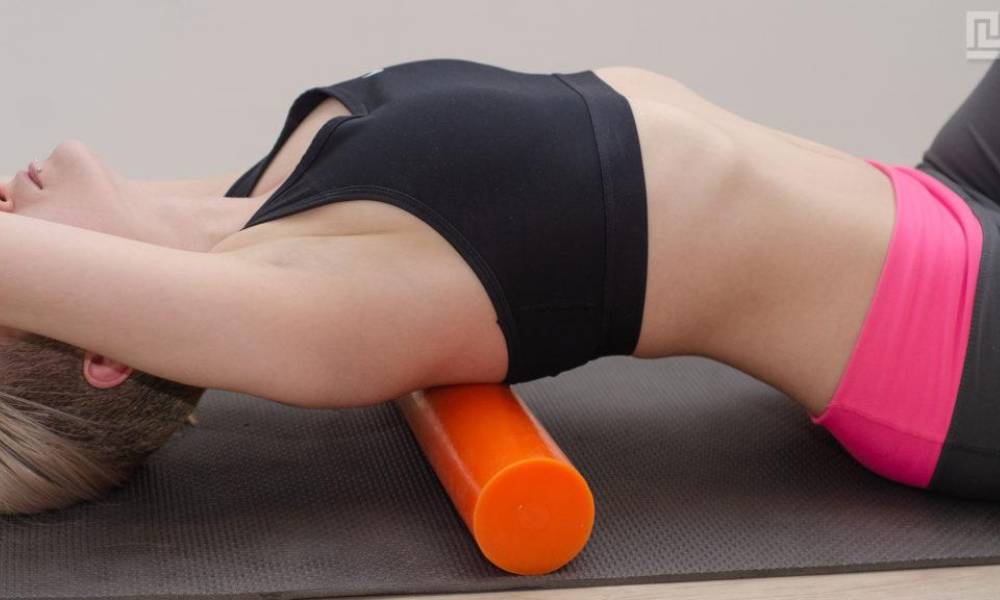
➥ How to Perform a Self-Massage on Your Upper Back
After a full day spent sitting, you may need a massage to relieve stiffness, tension in your back, or lower back pain. A foam roller massage can provide instant relief. The foam roller targets the connective tissue in the lower back (thoracolumbar region), which surrounds the back muscles and attaches to the spine. This can help improve muscle function and relax this area.
How to do it:
Lying on your back, place the roller horizontally across your upper back, just below your shoulder blades. Bend your knees and press your feet firmly into the floor.
There are several ways to perform this back exercise:
- Keep your arms at your sides or cross them over your chest (hugging yourself while lying on your back on the foam roller). You can also place your hands behind your head, interlocking your fingers at the base of your skull. Engage your core and slowly bend your knees, slightly raising your hips into a bridge position, keeping the roller just below your shoulder blades. Roll up and down the roller between your lower back and mid-back, pausing at any tight spots.
- For an advanced variation: with your hands behind your head, try inhaling first, then as you exhale, lower your back toward the floor, arching slightly over the roller. Return your back to the starting position. Then pull your buttocks toward your feet about 5 cm so that the roller is positioned higher up your back. Repeat the movements described above, maintaining slow and steady breathing. Pull your buttocks back toward your feet and repeat the back stretch.
You can try the different variations described above, depending on which one provides the most relief. We recommend starting with the basic exercise before moving on to a more advanced one. Repeat for 30 seconds.
➥ Myofascial Release for the Upper Back
This routine will help relieve tension or pain in the upper back, correct your posture, and maintain proper alignment of the head, neck, and spine.
How to perform:
Lie down with a self-massage roller placed vertically under your spine. Next, you can choose from three options:
- Bend your knees and place your feet on the floor. Bend your arms at the elbows and spread them wide to the sides with your palms facing up. Return to the starting position. Breathe deeply and relax in this position for one minute.
- Lower your arms alongside your body, bending your knees and placing your feet on the mat. Tighten your abdominal muscles, pressing your lower back against the foam roller. Raise your right arm and left knee toward the ceiling. Return to the starting position. Then repeat the stretch on the other side.
- Bend your knees and place both feet on the floor. Position your arms so that your palms are near your ears and your elbows are bent at a 90-degree angle (this “cowboy” pose is called the “cactus pose”). Lower your elbows as close to the floor as possible. Hold for 2 seconds, then bring your hands together. Repeat each variation for 30 seconds.
➥ Myofascial Release for the Lower Back
This exercise relieves tension and stress in the lower back. Be careful and avoid applying excessive pressure to this area.
How to do it:
Lie on your back and place a foam roller horizontally under your lower back. Bend your knees and press your feet firmly into the floor. Bring your knees toward your chest, placing your hands under your hips or on your shins. Gently shift your weight to your right side, lifting your left side (lower back) off the roller. Hold this position for a few seconds. Then gently shift to the left. Continue shifting your weight from side to side for one minute. Repeat 2–3 times.
➥ Myofascial Release for the Back Muscles
The back muscles, affectionately called “wings,” are located on the back, just below the armpits. Stretching relieves tension in this area. It has been proven that deep, sustained pressure on trigger points, or “muscle knots,” reduces tension in muscle fibers and alleviates pain. This exercise is beneficial at any time of day, especially during periods of high stress.
How to do it:
Lie on your back with the foam roller positioned at a 45-degree angle to your right shoulder. Keeping your right leg straight, bend your left leg and press your left foot firmly against the floor. Slowly begin rolling from your right armpit toward the middle of your back, paying special attention to painful areas. Lean back slightly so that the lower muscle of your right shoulder comes into contact with the roller. Roll a few centimeters closer to your feet, then a few centimeters closer to your head. Pause to work on any sore or sensitive areas. Repeat for 30 seconds. Then roll over to the other side.
➥ Myofascial Self-Massage for the Cervical Spine
If you experience severe headaches, especially due to neck tension, use a foam roller, which will provide a more intense self-massage for your neck than any hand could.
How to do it:
Rest your neck on the foam roller where it touches your skull. Slowly, as you inhale, turn your head to the right, focusing on the area where you feel tension. Exhale and turn your head to the left. Repeat for 30 seconds.
➥ Myofascial self-massage of the neck and upper back
Carefully lie down on the roller, positioning it under your neck and upper back.& nbsp;Make sure you’re comfortable and that the roller isn’t pressing on your spine. Slowly roll the roller up and down your neck and shoulders, as well as from side to side, for 30 seconds. Pay attention to tender spots; hold the roller on them for a few seconds, applying pressure. Support yourself with your hands if necessary. Gradually reduce the pressure and return to the starting position. Finish the massage with light strokes.
➥ Myofascial Self-Massage for the Quadriceps
The quadriceps are a very dense muscle group that is heavily used and developed by athletes such as runners and cyclists. Rolling relieves muscle tension in the upper leg, thereby improving hip joint mobility. It is recommended to perform this quadriceps massage before a workout.
How to do it:
Lie on the floor or on a yoga mat, holding the roller between your thighs and knees. Supporting yourself on your forearms with your torso aligned, begin to slowly roll the roller between your thigh flexors and knees for 30 seconds.
➥ Self-massage exercises for the lower leg
Do these in the morning to strengthen your ankle joint, or after a workday spent sitting to improve blood circulation. This self-massage is also helpful after an intense leg workout to reduce future discomfort.
How to do it:
Sit on the floor with your legs straight and place the massage roller under your calves. Cross your left leg over your right, placing your left foot on the floor to apply and adjust pressure. Start by slowly rolling the roller along the back of your right leg, moving up and down from the knee to the ankle, for 30 seconds. Repeat on the other side.
More myofascial release exercises can be found online.
What to Use for Self-Massage
For self-massage, you can use a special roller or a lacrosse ball (massage ball) . The effectiveness of using a roller has been proven by scientific studies. Applying pressure to the muscles with a roller stimulates blood flow to maintain the health of the fascia (connective tissue). Like a sponge, the muscle fascia compresses and then fills with a fluid richer in nutrients. You can also target adhesions and tangled connective tissue.
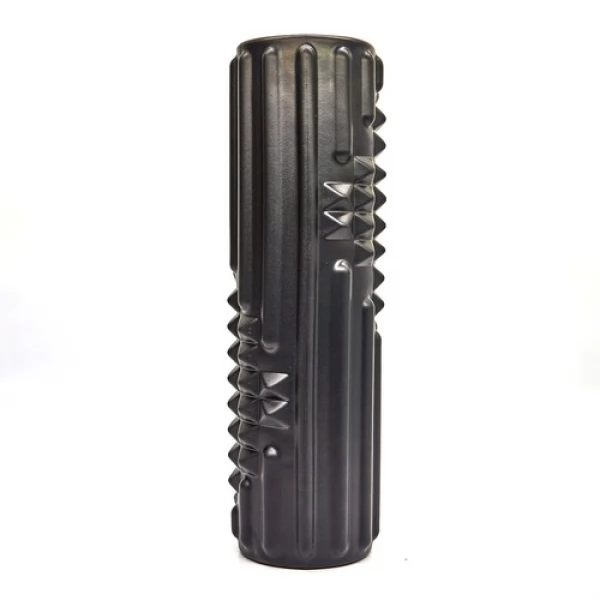
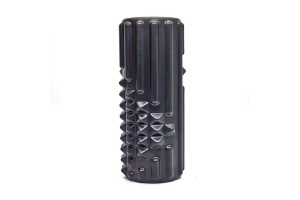
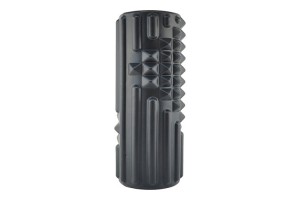
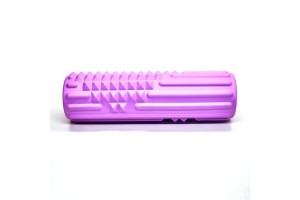
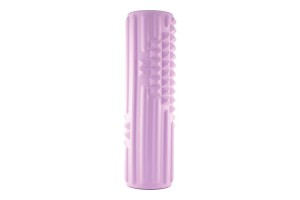
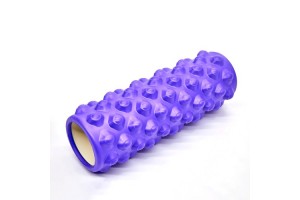
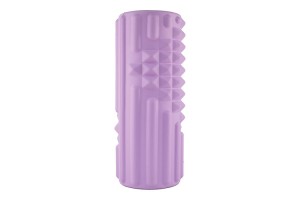
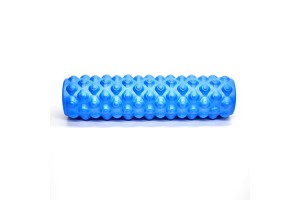
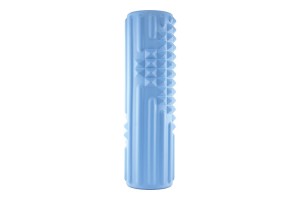
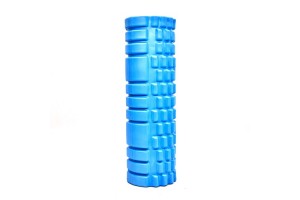
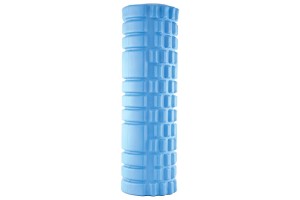
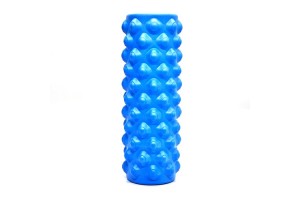
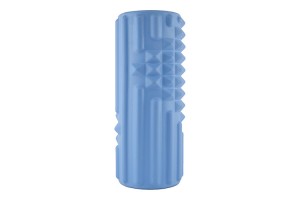
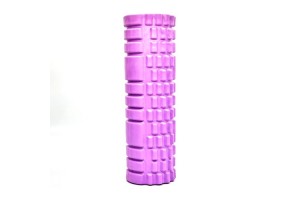
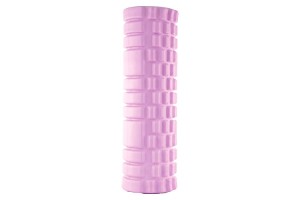
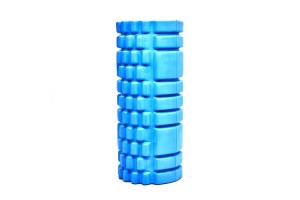
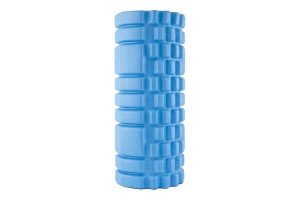
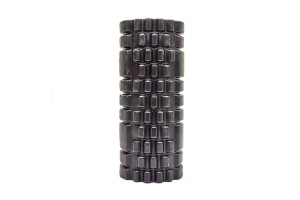
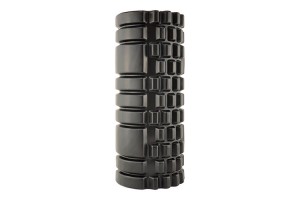
Relieve muscle tension with the versatile Fit Guide massage roller! It features moderate firmness, is ideal for myofascial release, and helps improve blood circulation and relieve pain. It has a wide range of applications: fitness, yoga, Pilates, home workouts, CrossFit, and more. The varied surface texture provides different levels of stimulation and comfort during massage, allowing for deep self-massage, improving blood circulation, reducing stiffness, and aiding post-workout recovery.
Compact and powerful, it’s convenient for use at home or while traveling and is suitable for both beginners and advanced users. In addition to massaging large areas, the Fit Guide massage roller can effectively target trigger points and areas of tension.
Scientific studies show that deep adhesions (fibrosis) occur in muscle septa—the connective tissue between two fascial layers. To achieve holistic fascial health, it is essential to target these specific areas. Rolling helps relieve tension or trigger points—concentrated areas of muscle tension or muscle knots.
Using the Fit Guide roller as part of a regular exercise routine can help improve blood circulation, relax muscle knots, speed up muscle recovery, and relieve soreness and stiffness.
How to Choose the Right Massage Rollers
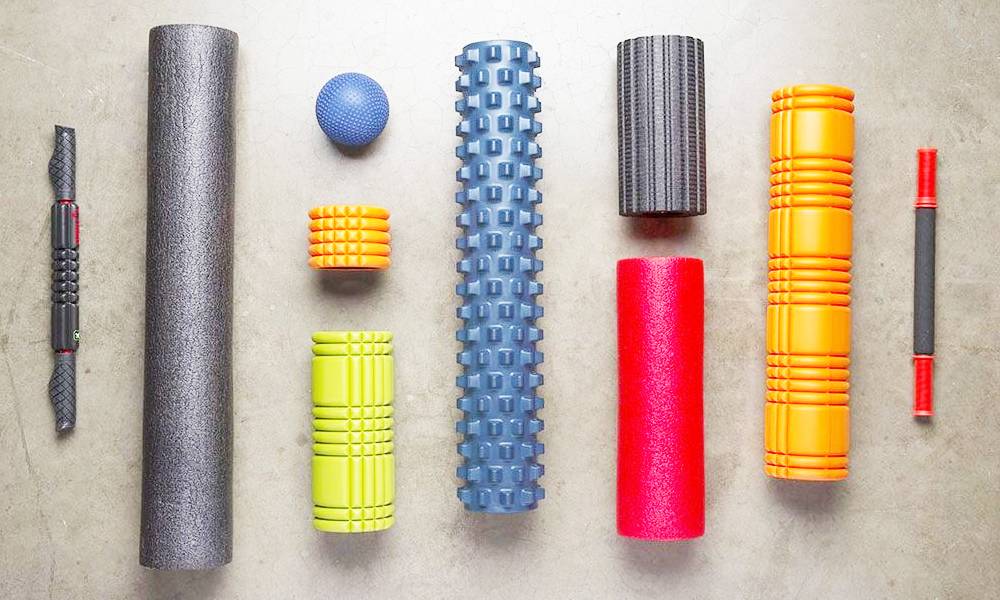
Today, self-massage rollers can be found everywhere: at the gym, at the physical therapist’s office, in the living room, and even in your suitcase. They’ve become a favorite in the fitness world and a cure-all for a variety of ailments. Myofascial massage is even compared to an intense sports massage—and you don’t have to spend time or money visiting a massage parlor. Choosing a roller largely depends on your goals and experience with using one.
Types of rollers for myofascial release:
1. Smooth foam rollers
This is the most common type of roller, usually cylindrical in shape and made of EVA, EPP, PPU. They come in different levels of firmness: soft, medium, and firm. They provide gentle and even pressure on the muscles, work large muscle groups well, and are suitable for beginners. A drawback is their limited effectiveness for deep muscle work.
2. Textured-surface rollers
These differ from smooth rollers in that they have a textured surface featuring protrusions, spikes, or ridges. Unlike smooth rollers, this type of foam roller provides a deeper massage of the muscles and trigger points and is effective for working on stiff and tense areas. Textured rollers can be painful for beginners and people with heightened sensitivity.
3. Double rollers (“peanuts”)
These are shaped like a double sphere or “peanut,” with a narrow bridge in the middle. They are ideal for working the muscles along the spine, neck, and other hard-to-reach areas without affecting the vertebrae. A drawback is that they are less versatile than cylindrical rollers.
4. Massage balls (lacrosse balls)
They come in various sizes, both smooth and textured. Designed for targeted pressure on trigger points, they are well-suited for working on the feet, palms, shoulders, and other small areas. They require more precision when used.
Advantages of a massage roller:
- A substitute for a massage therapist. Using a massage roller can help relieve tension in muscles and trigger points. It effectively stretches muscles and tendons and penetrates deeply into hard-to-reach areas, breaking up soft tissue and scar tissue.
- Versatility. Thanks to your own body weight, a massage roller allows you to perform myofascial release, eliminate trigger points and adhesions in the muscles, relax tense fascia, and improve blood flow and circulation throughout the body.
- Compact size. The massage roller is small in size. It’s convenient to store and transport, as it doesn’t take up much space in your home, bag, or car.
Which roller should you choose?
When choosing a roller for self-myofascial release, you should consider:
- Your fitness level. Beginners should start with soft, smooth foam rollers that don’t cause pain or discomfort. You can gradually move on to firmer and textured ones. Athletes may need a textured foam roller with moderate or high firmness, which deeply targets muscles and trigger points. During rehabilitation after an injury, it is recommended to start with a soft, smooth, gentle foam roller; as muscle condition improves, you should gradually increase the intensity by moving on to firmer and textured models.
- Personal preferences. It’s important to consider how it feels to you and choose the roller that’s most comfortable to use.
Contraindications and limitations
Despite the obvious benefits of myofascial release, it has its limitations and contraindications.
Myofascial release—contraindications:
- As a rule, myofascial release is not recommended for people with skin infections, open wounds, burns, recent fractures, deep vein thrombosis, or varicose veins in the acute phase.
- For certain medical conditions, such as cardiovascular disease or tumors, you should consult a doctor before undergoing myofascial release therapy.
- Pregnancy also requires consultation with a specialist.
How often should myofascial release be performed?
As a general rule, it is recommended to start with myofascial release sessions 2–3 times a week. If necessary, the frequency can be gradually increased to a daily session lasting 10–20 minutes, with about 1–2 minutes per muscle group.
Which foam roller is best for a beginner?
For a beginner, a smooth, soft roller or one with moderate firmness is suitable, allowing you to perform the exercises without pain or discomfort while gradually getting used to the practice.
When is the best time to do it—before or after a workout?
Myofascial release can be beneficial both before and after a workout. Before a workout, it can improve mobility and flexibility, preparing the muscles for exercise. After a workout, it promotes muscle recovery and reduces soreness.
Does myofascial release replace physical therapy or massage?
No, myofascial release does not completely replace physical therapy or massage; rather, it complements them. As a massage or self-massage technique, it is designed to relieve pain in myofascial tissues and can be a useful addition to physical therapy and massage, but it is not a complete substitute for them.