The muscles of Atlanta, the strength of Hercules, and the energy of Zeus—that’s how both beginners and advanced bodybuilders describe creatine. It is the most popular and thoroughly studied sports supplement, backed by a strong body of evidence regarding its safety and effectiveness. Here’s a complete guide to creatine: what it is, what it’s used for, what forms it comes in, and when and how to take it. We’ll tell you about the benefits of creatine supplements and help you make the best choice among the various options for this sports nutrition product.
What is creatine?
Creatine is a non-essential amino acid—a component of our body that is, in essence, a nitrogen-containing carboxylic acid. It is naturally present in skeletal muscles (up to 95%), as well as in the brain, testicles, liver, and kidneys, and serves to meet our energy needs during physical and mental activity. It is estimated that a 70-kg human body contains approximately 120 g of creatine phosphate.
The body obtains this substance directly from food—it is most abundant in meat and fish (4.5 g per 1 kg of beef or salmon)—or synthesizes creatine from the amino acids arginine, glycine, and methionine—via the liver, kidneys, and pancreas. However, with regular intense training, a person begins to experience a deficiency of it, so those who lead an active lifestyle take creatine in the form of a special sports supplement.
This sports supplement is highly valued by athletes; it has been known in this form since the 1990s, when it was established that daily intake of a creatine product for 6 days (5 g four times a day) increases muscle mass by 20%. Since creatine is not on the list of banned substances, it has become very popular among bodybuilders and anyone looking to improve the quality of their workouts and achieve a toned physique.
What is creatine used for?

Creatine has been shown to have a direct effect on muscle mass gain, strength, and power. It promotes muscle contraction, increases energy, and supports effective recovery.
Creatine for Energy
Our cells derive their energy from ATP (adenosine triphosphate). When energy demand is high, creatine phosphate transfers its phosphate group to adenosine diphosphate (ADP) to convert it into ATP. But this energy cycle is very short—only a few seconds. This explains the interest in creatine as a substance that conserves energy and increases resistance to fatigue. Using creatine supplements provides a greater energy reserve for short, intense efforts.
Creatine for Muscle Mass
Once it enters the muscles, creatine attracts and retains water in the cells, making them larger. As a result, muscle size increases. This substance also has the ability to increase muscle protein synthesis. Taking creatine yields fairly rapid and dramatic results in terms of weight gain—up to 3 kg in the first few weeks. Muscle cells become larger, stronger, and more resilient, and thanks to the released energy, workouts will be more intense and effective.
Creatine for Recovery
As is well known, the more hydrated a cell is, the faster protein synthesis—and, consequently, muscle recovery—will occur. Creatine helps retain water in cells and also ensures glycogen stores in the muscles, improving the rate of recovery and muscle tissue growth.
Creatine for Blood Vessels
It has been proven that taking a creatine supplement helps lower levels of harmful cholesterol in the blood and, consequently, strengthens the cardiovascular and nervous systems.
Creatine for the Heart
This compound normalizes heart rhythm and helps prevent cardiovascular diseases. Medical professionals note that creatine supplements may be recommended for people with heart failure to improve the heart’s muscular strength.
Types and Forms of Creatine
As a sports supplement, creatine is available on the market in several forms. Here is a list of the most popular ones.
- Creatine monohydrate
The best-known form, used since 1970, has been the subject of numerous studies and has the most retrospective data. Additionally, it is the least expensive form of creatine.
Classic creatine monohydrate consists of: pure creatine (90%) and water (10%). As a rule, it is quite effective for beginners with good muscle mass but without optimal creatine stores. Experienced athletes prefer more advanced formulas with high bioavailability.
It is this basic form of monohydrate powder that is used to produce other forms of creatine, such as creatine phosphate, creatine ethyl ester, creatine magnesium chelate, creatine citrate, tricreatine malate, or creatine gluconate.
- Creatine malate or tricreatine malate
It consists of three creatine molecules and one molecule of malic acid. This acid stimulates an increase in insulin for more efficient transport of creatine into the muscles and also increases endurance, as it plays a role in the Krebs cycle—the cycle of ATP resynthesis—facilitating the conversion of creatine into energy. Creatine malate is more soluble in water than the classic monohydrate, which improves absorption.
- Creatine phosphate
It is formed during the reversible phosphorylation of creatine and is concentrated primarily in muscle and nerve tissues. It is particularly effective during short, high-intensity workouts. It helps increase ATP levels—the primary fuel for working muscles. A drawback is its poor bioavailability compared to monohydrate, which is why it is not a very popular sports supplement today.
- Creatine pyruvate
When combined with pyruvate (60% pure creatine and 40% pyruvic acid), creatine works much more effectively, especially during prolonged workouts or endurance activities. Pyruvate is an enzyme that plays a role in glucose metabolism and helps regulate energy production by stimulating fat burning and improving the ratio of fat to muscle mass. Creatine pyruvate leads to higher blood creatine levels, dissolves well in water, and can be taken in the form of effervescent tablets.
- Creatine Gluconate
This is a creatine compound consisting of a creatine molecule and glucose, so its absorption is nearly as complete and rapid as that of glucose. Once in the bloodstream, glucose triggers a surge in insulin, which promotes a greater influx of creatine into the muscles. However, there are not yet enough reliable studies to verify this theory.
- Magnesium creatine chelate
It is a compound of creatine and a magnesium molecule, which promotes muscle contraction. The product is distinguished by the speed at which it delivers creatine to muscle fibers; however, there is currently no conclusively proven correlation between the rate of delivery and the rate of muscle growth.
- Creatine Citrate
A combination of creatine molecules and citric acid, which, like malic acid, is an intermediate in the Krebs cycle. It has high solubility but is inferior to monohydrate in terms of biological properties. It is believed that citric acid prevents creatine from breaking down during transport. There is some evidence suggesting that this form of creatine has a better anabolic effect than the monohydrate, but this information has not been confirmed by scientific studies.
- Creatine ethyl ester
It is produced through a process called esterification, which involves binding a creatine molecule to an organic compound called an ester. It helps creatine penetrate the muscles more effectively by binding to lipids, which increases the supplement’s absorption, thereby compensating for one of the shortcomings of creatine monohydrate. However, experience shows that the addition of an ethyl group reduces creatine’s stability in the acidic environment of the stomach and accelerates its breakdown into creatinine. Thus, this form is less desirable compared to creatine monohydrate.
- Creatine orotate
According to manufacturers, the combination with orotic acid increases creatine’s anabolic activity in muscle cells and makes it more effective at providing energy.
- Kre-Alkaline or buffered creatine
One of the latest innovative and most effective types of creatine products, patented in 2002. According to the manufacturers, it has a very high pH level of 12. This means that even when mixed with liquid, it does not break down into creatinine, which contributes to the production of toxins and lactic acid. However, there are not yet enough clinical studies to confirm this.
- Creatine Hydrochloride
Belongs to the latest generation of creatine supplements; it was patented in 2009 by Promera Health and is creatine bound to a hydrochloric acid molecule (hydrochloride). It has exceptional bioavailability (99%, or 59 times higher than that of the monohydrate form), which allows, on the one hand, for the use of a much lower dose (750 mg per 45 kg of body weight) and, on the other hand, avoids the production of waste products that place an excessive burden on the kidneys. Although the high solubility of the hydrochloride form is promising, more research is needed before it can be recommended over other forms.
Forms of creatine in supplements:
Powder. One of the most common forms, its advantage lies in its affordability and the ability to choose the appropriate dosage.
Tablets and capsules. Slightly more expensive than the powder form, but more convenient to take: there is no need to mix the supplement with water. However, to achieve the recommended dosages, creatine in tablet form must be taken in larger quantities, especially during the loading phase, which is limiting and less cost-effective.
Chewable tablets. This form is becoming increasingly popular due to its rapid absorption and convenience.
Effervescent tablets. These appeared several years ago and are viewed with mixed opinions among experts. Some consider them less effective, while others, on the contrary, believe they are more easily absorbed. One of the claimed advantages is that this form protects creatine from the effects of stomach acid, thereby increasing its effectiveness.
Liquid. There is neither proven effectiveness nor better absorption, as it has been established that the liquid form breaks down more quickly.
Benefits of Creatine

Research on creatine as a supplement has been conducted since the 1990s and has identified numerous benefits of this compound for the body.
- Performance, Power, and Recovery
According to researchers, creatine improves physical performance during intense, short-duration activities, such as sprints or weight training. Taking creatine supplements is recommended for strength sports that require explosive strength and power (rugby, bodybuilding, weightlifting, track and field, swimming). Creatine also speeds up recovery after such workouts.
Although the effects of creatine depend on the sport and the athletes’ age, it clearly improves strength, power, and endurance in older men when combined with weight training. A meta-analysis of several studies showed that young, trained men who took creatine achieved significantly higher results in the bench press and squats (ranging from +6.85 to 9.76 kg).
- Muscle Gain
In a study on muscle mass gain during strength training with creatine supplementation, a noticeable increase of up to 2 kg was observed. In fact, creatine promotes glycogen storage in muscles: 1 g of glycogen contains 3 g of water, which makes the muscles appear larger.
However, since the total volume of water in the body remains constant, any increase in body weight is more likely to result from an increase in lean body mass. There is evidence that creatine supplementation, combined with intense training, leads to improved physical performance, a noticeable increase in muscle mass, and changes in muscle morphology.
- Weight Loss
One of the negative effects of losing weight by reducing caloric intake is the loss of muscle mass, because under conditions of energy deficit, the body breaks down its own muscles. Consequently, when losing weight, one may end up with the “skinny fat” effect, where excess weight is gone but the desired body proportions are not achieved. With the help of exercise and creatine, you can not only lose weight but also achieve a great physique. Taking this supplement provides the body with energy, allowing you to maintain and improve muscle mass.
- Cognitive Abilities
It has been established that creatine plays an important role in brain health and function. When performing complex tasks, the brain requires a significant amount of ATP. Supplements can increase phosphocreatine stores in the brain to help it produce more ATP. This allows, just as in muscles, for increased energy production and, consequently, improved cognitive function and memory. Additionally, creatine helps improve brain function by increasing dopamine levels and mitochondrial function.
- Benefits for Vegetarians and Older Adults
Creatine supplements can improve memory and cognitive function in people with low creatine levels—such as vegetarians and older adults. Vegetarians typically have low creatine levels because they do not consume meat, which is the best dietary source of this compound. One study of creatine supplementation in this group showed a 20–50% improvement in certain measures of memory and cognitive function. In older adults, creatine supplementation improves brain function, protects against neurological diseases, and reduces age-related loss of muscle mass and strength.
- Combating Neurological Diseases
A key factor in some neurological disorders is a decrease in phosphocreatine levels in the brain. Taking creatine can slow the progression of the disease. Animal studies show that creatine can reduce the symptoms and progression of neurological diseases. In mice with Huntington’s disease, it restored phosphocreatine stores in the brain to 72% of pre-disease levels, compared to 26% in control mice. This helped maintain daily function and reduced cell death by approximately 25%. Some researchers believe that creatine supplements may offer protection against neurological diseases when used in conjunction with conventional medications.
Adequate levels of creatine in the blood can reduce symptoms of fatigue by providing the brain with additional energy and increasing dopamine levels. It has been shown that this molecule can mitigate some of the effects of Parkinson’s disease. This condition leads to a decline in the level of a neurotransmitter called dopamine, and this decline is responsible for brain cell death, loss of muscle function, speech difficulties, and feelings of depression. In one study of people with this condition, combining creatine with strength training improved strength and daily functioning to a greater extent than exercise alone.
Scientific studies have shown that creatine can increase the production of serotonin, which is produced in the gut and exerts its effects in the brain. This neurotransmitter performs numerous functions, as it modulates hunger, mood, memory, sleep, and learning ability.
- Improved Insulin Sensitivity
A 12-week study examined how creatine affects blood sugar levels after a high-carbohydrate meal. It was found that taking creatine lowers blood sugar levels. This is due to the amino acid’s ability to improve the function of the GLUT4 transporter, which facilitates the transfer of glucose from the bloodstream into muscle tissue.
People who combined creatine with exercise had better control over their blood sugar levels than those who exercised alone, which could be of tremendous help to people with type 2 diabetes. And while these benefits are promising, further human studies are needed on the long-term effects of creatine on improving insulin sensitivity and diabetes.
- Accelerating Treatment for a Range of Diseases
- Alzheimer’s disease
- ischemic stroke
- epilepsy
- brain or spinal cord injuries
- Availability and Safety
Animal studies show that taking creatine supplements accelerates treatment for conditions such as:
One review compared the world’s most popular sports supplements and concluded that creatine is the best among those available. Among its advantages were listed: effectiveness, low cost, safety, and ease of use.
Mechanisms of Action of Creatine

All bodily movements and functions require energy: our muscles, just like a car, need fuel to move. This energy is provided by a molecule called adenosine triphosphate, or ATP. We store a small amount of ATP in our muscles, while the rest is produced by metabolism or “energy systems”: the phosphocreatine (PCr), glycolytic (anaerobic), and oxidative (aerobic) systems.
Here’s how creatine works. During high-intensity exercises, such as the bench press or sprinting, the demand for ATP energy increases sharply. When ATP is used to power muscle contractions (or any other function), it loses a phosphate group and becomes adenosine diphosphate (ADP). After taking a creatine supplement, the amount of phosphocreatine stored in muscles and other metabolically active tissues increases, leading to what is known as ATP resynthesis. Phosphocreatine promotes ATP production by supplying its phosphate group to previously depleted molecules, thereby helping to sustain intense physical activity.
The phosphocreatine energy system continues to deplete relatively quickly within the overall energy system framework, but increasing phosphocreatine stores can certainly improve performance during bench presses, squats, sprints, or other strength exercises. Thus, as numerous studies show, creatine supplementation leads to improvements in strength and power.
Creatine supplementation can also aid in long-term muscle growth by increasing strength (which means lifting heavier weights) and may even increase the activation of satellite cells. Satellite cells “donate” their nuclei to muscle cells, and the more nuclei a muscle cell has, the more it can signal the presence of additional proteins—aka growth.
It’s important to note that people respond differently to creatine supplements; that is, some may see significant progress, while others see almost none. From a physiological standpoint, some people simply have higher levels of phosphocreatine in their muscles. This means they are likely to benefit less from creatine supplements than people with lower natural creatine levels. Thus, you shouldn’t always expect to gain weight from creatine supplements, but a few kilograms is entirely expected.
The Role of Creatine in Sports Nutrition
This type of sports supplement is highly valued by athletes. Unlike supplements that are effective only for advanced bodybuilders, creatine provides benefits regardless of fitness level and improves many performance metrics, including:
- explosive power
- muscle energy potential
- sprinting ability
- endurance
- muscle mass
- recovery speed
- brain performance.
Increases endurance. After taking a creatine supplement, you’ll feel an unprecedented surge of strength, and your performance and endurance will improve.
Accelerates muscle mass growth. By stimulating several key biological processes, it leads to increased muscle growth and size in a very short time.
It improves exercise performance. Creatine is the world’s most effective supplement for high-intensity sports. One review showed that it improves high-intensity exercise performance by 15%.
Reduces fatigue. The supplement reduces symptoms of fatigue by providing the brain with additional energy and increasing dopamine levels.
Accelerates recovery. It stimulates protein synthesis and mitigates the effects of lactic acid—the cause of post-workout muscle soreness.
Creatine is beneficial not only for athletes (powerlifting, bodybuilding, strength multi-disciplines) but also for anyone engaged in heavy physical labor—such as loaders, gas welders, and others.
How does creatine affect muscle growth?
Creatine is a popular and effective supplement that has long been used in sports to build muscle mass. It works both in the short term and the long term. Creatine can alter numerous cellular pathways, leading to the growth of new muscle and an increase in muscle size. This is due to the stimulation of several key biological processes.
First, it accelerates the production of proteins that form new muscle fibers. Second, it can increase levels of insulin-like growth factor 1 (IGF-1)—a hormone that promotes muscle mass growth. And third, creatine supplements can increase water content in the muscles. This is called cellular volumization and also leads to a rapid increase in muscle size.
Taking creatine for 5–7 days increases muscle mass and size solely by increasing water content in the muscles. In the long term, it promotes muscle fiber growth, improving performance in the gym. In one study of a 6-week training regimen, participants who took creatine gained an average of 2 kg more muscle mass than the control group.
How to Take Creatine Correctly?

The recommended daily dose of creatine is 3 to 5 grams. Between two 2-week cycles, it is advisable to take a break of 3 weeks to a month to restore muscle sensitivity to the supplement. 3–4 cycles per year ensure optimal creatine retention for increasing muscle mass, strength, and performance.
“Loading” Phase
For the fastest possible results, take creatine in doses ranging from 10 to 20 grams per day for 7–14 days.
Non-loading period
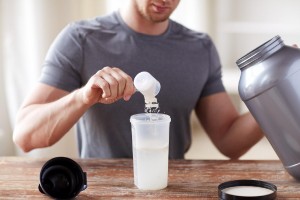
Take 3–6 g of the supplement twice a day. Take the first serving in the morning upon waking, and the second approximately 8 hours later, 30 minutes before lunch or immediately after a workout. Be sure to drink plenty of water.
On rest days
The maintenance dose on non-workout days is 3–5 g of creatine supplement in the morning.
Experts recommend taking the product after a workout, when muscle cells have depleted their stores and are ready to absorb and store more. This is when the anabolic window opens, promoting increased strength and muscle mass.
To maximize the effectiveness of creatine, it is recommended to take it in combination with protein shakes, weight gainers, sports drinks, or mixed with fruit juice, as the insulin surge triggered by this helps creatine be transported to the muscles more quickly. Some forms of creatine already contain sugar for better absorption.
Many athletes, based on their experience, claim that taking creatine half an hour before a workout increases its effectiveness. You can then take the supplement another 1–2 times throughout the day. It is important to stick to a daily schedule for 3–4 weeks to feel the effects.
Absorption depends on the muscles’ storage capacity, which can vary from person to person, as well as on the level of muscle conditioning. You must train intensively and regularly to fully benefit from creatine, as muscle mass will not increase without proper training.
Harm and Side Effects of Creatine
Creatine has often been unfairly accused of causing cancer and damaging the kidneys, even though studies show the opposite. Moreover, it occurs naturally in animal meat, primarily in red meat; for example, 1 kg of pork contains about 5 grams of it.
Today, it is one of the most widely used supplements; its history in sports began in the 1990s, and many athletes and amateurs continue to take it to this day. This is supported by scientific studies in which a dosage of 25 g per day did not cause any side effects. It is estimated that over 80% of professional athletes regularly take creatine, regardless of their sport.
Since creatine was first used, numerous reviews and meta-analyses have been conducted, and at least three generations of creatine have emerged. Creatine supplementation has not been shown to have a significant effect on creatinine levels or kidney function. It is safe when taken correctly, with breaks, and in accordance with recommended doses.
Side effects of creatine that athletes sometimes report:
Cramps. These may occur during endurance training. The main cause is dehydration, which is associated with an electrolyte imbalance, a lack of salt in the diet, and extremely low fluid intake. As is well known, it is very important for bodybuilders to have a well-defined physique, so they “cut”—taking diuretics to eliminate excess water, which leads to dehydration. Given creatine’s mild dehydrating effect, it is recommended to drink plenty of fluids—at least 3 liters per day.
Gastrointestinal Issues. In some cases, taking the supplement may cause diarrhea, nausea, abdominal pain, and cramps (quite rarely). Such gastrointestinal disturbances may occur during the loading phase (i.e., when taking the maximum dose of creatine) and often depend on the quality of the supplement. The best solution is to slightly reduce the dosage or switch to a different supplement.
Acne. This occurs very rarely and is associated not so much with creatine as with increased testosterone synthesis.
Although studies show no harm from taking creatine for healthy adults, even in the long term, certain groups should take it with caution. This applies to individuals with personal intolerance, as well as adolescents and the elderly.
Creatine supplements are not recommended for:
- people with health problems
- who are undergoing medical treatment
- adolescents
- pregnant and breastfeeding women.
Which creatine should you choose?
There are several factors to consider when choosing a creatine supplement:
- Form
- Purity
- Combination with other products
- Flavor
- Digestibility.
Based on these factors, you can choose a creatine supplement that meets your needs and goals—one you can take regularly without grimacing or experiencing stomach pain.
There is no difference between the powder form and capsules—they are the same supplement. Capsules are easier to take; they don’t need to be mixed, and they’re more convenient to bring to your workout in a pill container. The advantage of the powder is its price: it’s much cheaper than tablets or capsules, which is why it’s more popular among athletes who take the supplement on a regular basis.
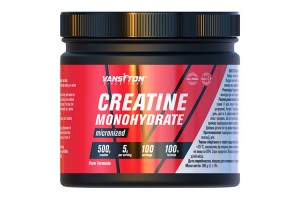
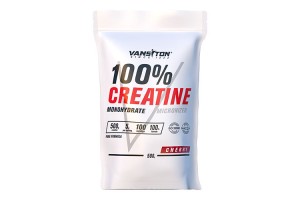
The most recommended form of creatine for bodybuilding and fitness enthusiasts is micronized creatine monohydrate powder. There are thousands of studies on its effectiveness; it has stood the test of time and trends, and is considered safe and effective. Just don’t forget to take creatine with carbohydrates, which will help your muscles absorb the supplement better.
Conclusion
Creatine is an effective dietary supplement with powerful benefits for both athletic performance and health. It can improve physical performance and endurance, accelerate muscle growth, stimulate brain function, and help combat certain neurological disorders.
But remember: no supplement is a magic bullet and cannot replace a solid training program, proper nutrition, and adequate rest. First, optimize your training, diet, and sleep, and then use supplements to achieve maximum results.
And one more tip: before you start taking any supplement, be sure to consult your doctor.
Our Vansiton sports nutrition store offers a wide selection of creatine in various types and forms.
If you’re interested in the topic of this article, share your thoughts, ask a question, or write a review.