The Role of Iron in the Body
Iron is an extremely important trace element for the human body; it plays a role in nearly all biological processes.
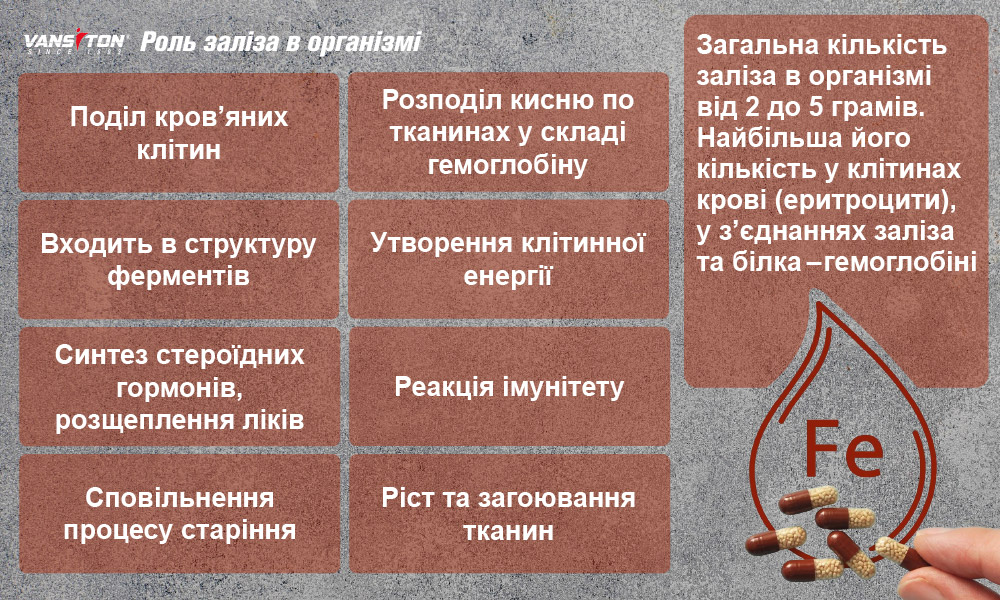
What processes does iron affect:
- blood cell division;
- oxygen distribution to tissues as part of hemoglobin;
- part of the structure of enzymes;
- production of cellular energy;
- synthesis of steroid hormones, metabolism, and breakdown of medications;
- immune response;
- slowing of the aging process;
- tissue growth and healing.
The total amount of iron in the body ranges from 2 to 5 grams of this trace element. The largest amount is found in red blood cells (erythrocytes), in the iron-protein compound known as hemoglobin. It is thanks to iron that hemoglobin binds oxygen and transports it from the lungs to all the body’s cells, while transporting carbon dioxide in the opposite direction.
Another iron-protein compound is myoglobin, which is found in muscles and the heart. Its function is to store oxygen and release it as needed by the body.
Iron also plays a role in the formation of enzymes and proteins, the conversion of calories into energy, cholesterol metabolism, the breakdown and elimination of toxins, the stimulation of growth and physical development in children, the support of the immune system and the functioning of the thyroid and liver, and promotes healthy hair, skin, and nails.
Why does iron deficiency occur in the body?
Iron deficiency can arise for various reasons, the main ones being the following:
Dietary. The primary source of iron is food, so most often a deficiency arises due to an insufficiently balanced diet. For example, avoiding animal products, since they are a source of easily absorbed iron. About 35% of the iron in meat products is absorbed, compared to 1–5% from plant-based foods.
Certain medical conditions. Pregnancy and lactation, which actively deplete the body’s iron stores, can cause iron deficiency.
Diseases. Gastrointestinal disorders and parasitic infections that interfere with the body’s absorption of iron.
Blood loss. For example, this may be associated with surgery, injury, heavy menstruation, childbirth, etc.
Age-related changes. A deficiency of this trace element can occur with age due to poor nutrient absorption by the stomach.
What is the recommended daily intake for humans?

There are specific daily iron intake recommendations for children, men, and women; the table below shows the recommended amounts.
| Age | Women | Men |
| 7–12 months | 11 mg | 11 mg |
| 1–3 years | 7 mg | 7 mg |
| 4–8 years | 10 mg | 10 mg |
| 9–13 years | 8 mg | 8 mg |
| 14–18 years | 15 mg | 11 mg |
| 19–50 years old | 18 mg | 8 mg |
| 51 years and older | 8 mg | 8 mg |
Iron metabolism in the body is carefully regulated, so disturbances in this process are more often characterized by a deficiency than by an excess. The human body has a mechanism that prevents iron deficiency and also enhances its absorption in the small intestine; however, if the cause of the deficiency is not addressed, unpleasant symptoms will arise.
Which foods contain iron
There are two forms of iron in foods: heme and non-heme. Heme iron is found in animal-based foods, while non-heme iron is found in plant-based foods.
The difference between the two forms lies in their bioavailability. Iron found in animal-based foods is absorbed more efficiently (17–22%), whereas that from plant-based foods is absorbed less efficiently (5–7%)

Meat products rich in iron
Meat products are high in iron and, unlike plant-based foods, have much higher bioavailability. Iron is found in red meat: beef, pork, and rabbit. The richest sources are organ meats: kidneys and liver.
| Meat and eggs | Iron content (mg/100 g) |
| Pork liver | 18–22 |
| Chicken liver | 8–10 |
| Beef liver | 6–9 |
| Beef Heart | 4–5 |
| Beef (meat) | 2.6–3.5 |
| Chicken eggs (yolk) | 2.7 |
| Turkey | 1.5–2.5 |
| Chicken (dark meat) | 1.4–2.0 |
Seafood
Almost all seafood contains high amounts of iron, particularly shrimp, oysters, and mussels. 100 grams of seafood can contain up to 17% of the daily recommended intake.
- shellfish — up to 3 mg;
- oysters — 7 mg;
- mussels — 6.7 mg;
- tuna — 1.4 mg.
Iron Content in Plant-Based Foods
| Plant-based sources of iron | Iron content (mg/100 g) |
| Sesame seeds | 10–14 |
| Cocoa (powder) | 11–12 |
| Pumpkin seeds | 8–11 |
| Dark chocolate (70–85%) | 7–11 |
| Legumes (lentils, chickpeas) | 6–9 |
| Tofu | 5.4 |
| Flax (seeds) | 5–6 |
| Oatmeal | 4–5 |
| Whole-grain bread | 2–3 |
| Boiled beans | 2–3 |
| Boiled buckwheat | 2–3 |
| Spinach (fresh) | 2.7 |
Fruits
Fruits are a source of beneficial and nutritious elements. To get a large amount of iron, it’s best to choose dried fruits, since the loss of moisture means the beneficial elements are present in higher concentrations. In addition to iron, fruits contain large amounts of vitamin C, which is essential for the proper absorption of this mineral.
The main iron-rich fresh and dried fruits and their iron content per 100 g of product:
- dried apples, pears, and prunes — 13–15 mg;
- dried apricots — 12 mg;
- pomegranates and peaches — 4 mg;
- grapes and apples — 2.5–2.7 mg.
It is recommended to consume no more than 200 g of fresh fruit or 30–40 g of dried fruit in the morning.
Vegetables
The iron content in vegetables is higher than in fruits; to improve iron absorption, it is best to combine vegetables high in iron with those containing vitamin C. Leafy greens are also a source of this trace element, so it is advisable to consume them along with vegetables and meat.
The main iron-rich vegetables and greens, along with the amount of this trace element per 100 g of product:
- seaweed — 16 mg;
- broccoli — 1 mg;
- beets — 1.4 mg;
- parsley, dill — 6 mg.
Grains and Bread
Whole-grain and unpolished grains contain the highest amounts of iron. To avoid losing nutrients, grains should be cooked according to the instructions; under no circumstances should they be overcooked.
It’s best to pair grains with vegetables and seafood—this improves the absorption of this trace element and also provides the body with other beneficial nutrients. However, they should not be combined with milk, as it actually reduces the absorption of iron.
The main iron-rich grains and the amount of this trace element per 100 g of product:
- buckwheat — 3.6 mg;
- pearl barley — 1.3 mg;
- quinoa — 6 mg;
- barley groats — 3.6 mg;
- rye bread — 2 mg.
Legumes and Nuts
Eating lentils, chickpeas, peas, and beans provides the body with energy, iron, protein, and other beneficial nutrients.
Nuts also contain sufficient amounts of iron: cashews, chia seeds, and peanuts. Other nuts have lower iron content.
The main iron-rich legumes and nuts and their iron content per 100 g of dry product:
- lentils — 12 mg;
- white beans — 8–10 mg;
- fresh beans — 10 mg;
- cashews — up to 7 mg;
- chia seeds — 6 mg;
- peanuts — 5 mg.
Other iron-rich foods
Dark chocolate—a 28-gram serving contains 3.4 mg. Chocolate is made from cacao beans, but milk and white chocolate are made from other, less nutritious ingredients.
Spirulina and other algae — 16–20 mg per 100 g. It is considered a superfood and is extremely rich in nutrients. In addition to its high iron content, spirulina also contains iodine, riboflavin, and thiamine. However, other algae (including seaweed) are very similar to it in both composition and content of health-promoting minerals.
How to identify an iron deficiency?
A decrease in iron levels in the body is characterized by three stages:
- Pre-latent. The amount of the trace element is not critically low; iron production for blood cell formation is not reduced.
- Latent. Iron stores are completely depleted, but there are no signs of anemia.
- Manifest. Anemia begins to develop, and you feel unwell due to insufficient hemoglobin production.
Symptoms of iron deficiency:
- Decreased concentration. You notice that even when reading fiction, you can’t concentrate and find yourself rereading the same sentence several times.
- Pale skin. If pale skin isn’t a natural trait for you, then this is the first warning sign of low iron levels.
- Sleepiness. Even with a proper sleep schedule, you feel sleepy all the time—you need to check your hemoglobin level.
- Pica. When you feel the urge to eat non-edible substances.
- Muscle pain. If it occurs after physical activity, this is normal, but if the pain is constant and unexplained, it may indicate an iron deficiency.
- Shortness of breath. Low hemoglobin levels lead to a lack of oxygen. You should get a blood test and consult a doctor.
- Brittle nails. Iron deficiency often affects the condition of your nails; they start to break, peel, and may develop dents or indentations.
- Cold hands and feet. If your extremities are cold in any weather and you have trouble warming up, you should definitely have your hemoglobin level checked.
- Restless legs syndrome. It’s hard to fall asleep because you toss and turn and can’t settle down; you can’t find a comfortable position. If you cross your legs while sitting, this can also be a sign of low hemoglobin.
- Frequent colds. Frequent infectious illnesses are caused by a weak immune system and low hemoglobin.
Is it possible to overdose on iron?

The main symptoms of an overdose are nausea, vomiting, dizziness, stomach pain, and high blood pressure.
Severe iron overload or even iron poisoning occurs rapidly and has four stages:
- The first symptoms appear within 5–7 hours. Nausea, vomiting, stomach pain, bleeding, high blood pressure, and mild dizziness. Severe drowsiness, irritability, and anger may also occur.
- There may be a sudden improvement in well-being; at this stage, a false sense of recovery sets in, and this condition lasts about 4–5 hours.
- The temperature rises to 39–40 degrees; some organs begin to malfunction, and internal bleeding may occur. This stage lasts 2–3 days.
- Part of the abdomen swells, preventing the organ from functioning properly. It is necessary to seek medical attention to treat the poisoning.
Which foods contain iron that is best absorbed by the body?
The body absorbs so-called heme iron best. It is found in animal products: pork, chicken, and beef liver; red meat (beef); and seafood (such as oysters and mussels). Up to 20–35% of this trace element is absorbed from these foods.
Which plant-based foods rich in iron should vegetarians add to their diet?
Among plant-based sources, the top choices are sesame seeds, pumpkin seeds, lentils, chickpeas, tofu, and high-quality dark chocolate. However, iron from plants (non-heme iron) is absorbed less efficiently—only 1–5%. To improve this process, combine these foods with vitamin C (citrus fruits, tomatoes, bell peppers).
How should you prepare iron-rich foods to preserve their nutritional value?
The main rule is not to combine them with tea, coffee, or dairy products during the same meal, since calcium and tannins interfere with iron absorption. For example, it’s best to cook porridge in water, and to serve meat dishes or legumes with fresh herbs and vegetables.
Scientific Sources
Anemia — World Health Organization (WHO)
Iron — Information for Healthcare Professionals, U.S. National Institutes of Health (NIH)
Iron — Information for Consumers, U.S. National Institutes of Health (NIH)
2026 American Society of Hematology Guidelines for the Diagnosis of Iron Deficiency
Iron-Deficiency Anemia — National Health Service (NHS) of the United Kingdom
Iron: Vitamins and Minerals — National Health Service (NHS)
Nutrient Intake Reference Values — European Food Safety Authority (EFSA)
Measuring Hemoglobin Levels to Detect Anemia: WHO Recommendations