What is potassium and why does the body need it?
Potassium is the third most abundant mineral in the body. Approximately 98% of the body’s potassium is found within cells. Of this, 80% is in muscle cells, and the remaining 20% is in bones, the liver, and red blood cells. If you consume potassium-rich foods daily, your body will regulate its levels on its own.
Once inside the body, this mineral functions as an electrolyte. In water, electrolytes dissolve into positive or negative ions that can conduct electricity. Potassium ions carry a positive charge, which your body uses to regulate various processes. Thus, potassium-rich foods help restore fluid balance, transmit nerve signals, and improve muscle contraction.
You also need potassium for a healthy digestive system and strong bones. Low potassium levels can affect these important bodily functions. Over time, low potassium levels in the body can lead to consequences such as irregular heart rhythms, muscle weakness, and even paralysis.
How much potassium do you need?

Your daily potassium requirement may depend on various factors, including your health and activity level. Studies also show that daily potassium intake may vary among different ethnic groups.
The World Health Organization (WHO) recommends consuming at least 3,500 mg of potassium per day. And some countries, including the United States, recommend consuming at least 4,700 mg per day.
However, there are several groups of people who may benefit more from higher doses of potassium throughout the day. For example, athletes. Those who engage in prolonged and intense physical exercise may lose significant amounts of potassium through sweating. Another at-risk group includes people with high blood pressure, kidney stones, osteoporosis, or a history of stroke. They may benefit from consuming at least 4,700 mg of potassium per day, or even more.
Potassium Intake Guidelines by Age Group
| Children | Adults |
0–6 months – 400 mg/day 7–12 months – 700 mg/day 1–3 years – 3,000 mg/day 4–8 years – 3,800 mg/day 9–13 years – 4,500 mg/day 14 years and older - 4,700 mg/day | 18 years and older - 4,700 mg/day Pregnant women - 4,700 mg/day Breastfeeding women - 5,100 mg/day |
How to Increase Potassium Levels in the Body
The safest and most effective way to increase potassium levels in the body is to adjust your diet. Let’s find out which foods contain sufficient amounts of potassium.
Potassium in Foods (Table)
Leafy greens
| Vegetables containing potassium (0–100 mg) | Serving size | Potassium (mg) |
|---|---|---|
| Chicory | 60 g (½ cup) | 100 |
| Pak choi | 70 g (½ cup) | 93 |
| Endive | 60 g (½ cup) | 83 |
| Iceberg Lettuce | 100 g (1 glass) | 82 |
| Radicchio | 60 g (½ cup) | 64 |
| Watercress | 60 (½ cup) | 60 |
| Arugula | 60 (½ cup) | 39 |
Legumes
| Beans and lentils | Serving size | Potassium (mg) |
|---|---|---|
| Beans | 100 g (¾ cup) | 421 to 552 |
| Dark blue or black beans (cooked) | 100 g (¾ cup) | 541 |
| Lentils (cooked) | 100 g (¾ cup) | 540 |
| Chickpeas (cooked) | 100 g (¾ cup) | 345 |
| Tofu | 150 g (¾ cup) | 182 to 222 |
Watermelon and Juicy Fruits
| Potassium in fruits (101–200 mg) | Serving size | Potassium (mg) |
|---|---|---|
| Apple | 1 medium | 195 |
| Grapes (red, green) | 20 | 187 |
| Rhubarb | 125 ml (½ glass) | 186 |
| Clementine | 125 ml (½ glass) | 182 |
| Cherries | 10 fruits | 182 |
| Quince | 1 fruit | 181 |
| Kumquat | 5 fruits | 177 |
| Mango | ½ fruit | 174 |
| Lychee | 125 ml (½ glass) | 172 |
| Peaches (canned) | 125 ml (½ cup) | 169 |
| Grapefruit | ½ | 166 |
| Pineapple (canned) | 125 ml (½ glass) | 160 |
| Strawberries | 125 ml (½ glass) | 134 |
| Blackberries | 125 ml (½ glass) | 123 |
| Plums | 1 | 104 |
| Watermelon | 100 g (½ cup) | 90 |
Potatoes and Other Vegetables
| Potassium in vegetables (over 200 mg) | Serving size | Potassium (mg) |
|---|---|---|
| Potatoes (baked with skin) | 1 medium | 941 |
| Sweet Potato (Baked) | 1 medium | 542 |
| Potatoes (mashed with 2% milk) | 100 g (½ cup) | 398 |
| Frozen spinach (blanched) | 100 g (½ cup) | 303 |
| Tomato | 1 medium | 292 |
| Beets (boiled) | 125 ml (½ glass) | 274 |
| Hot red or green chili peppers | 50 g (½ cup) | 269 |
| Brussels sprouts (boiled) | 4 | 266 |
| Zucchini (Baked) | 100 g (½ cup) | 261 |
| Artichoke (boiled) | 100 g (½ cup) | 254 |
| Carrots | 1 large | 230 |
| Celery (boiled) | 100 g (½ cup) | 225 |
| Corn (boiled) | 1 medium ear | 225 |
Seafood
| Various Types of Fish | Serving size | Potassium (mg) |
|---|---|---|
| Halibut (baked) | 75 g | 396 |
| Salmon (baked) | 75 g | 379 |
| Trout (baked) | 75 g | 347 |
| Tuna (canned) | 75 g | 134 |
Dairy Products
| Milk, Yogurt, and Cheese | Serving size | Potassium (mg) |
|---|---|---|
| Chocolate milk, 1% | 250 mL (1 glass) | 449 |
| Milk or buttermilk, 1% | 250 ml (1 glass) | 393 |
| Yogurt, plain or fruit-flavored, 1% | 175 ml (¾ cup) | 333 |
| Cubed cheese | 125 ml (½ cup) | 106 |
| Homemade sour milk cheese, 1% | 125 ml (½ glass) | 103 |
Bananas, avocados, and other sweet fruits
| Potassium in fruits (over 200 mg) | Serving size | Potassium (mg) |
|---|---|---|
| Avocado | ½ whole fruit | 487 |
| Passion fruit (granadilla) | 125 ml (½ glass) | 434 |
| Banana | 1 medium | 422 |
| Jackfruit | 125 ml (½ cup) | 391 |
| Guava | 125 ml (½ glass) | 364 |
| Peach | 1 medium | 285 |
| Papaya | ½ fruit | 278 |
| Highlights | 60 ml (¼ cup) | 275 |
| Nectarine | 1 piece | 273 |
| Apricots | 3 fruits | 272 |
| Persimmon | 1 fruit (6.4 cm in diameter) | 270 |
| Dried apricots | 6 halves | 244 |
| Orange | 1 medium | 237 |
| Prickly Pear | 1 fruit | 227 |
| Pomegranate | 125 ml (½ glass) | 217 |
| Kiwi | 1 medium | 215 |
| Pear | 1 medium | 206 |
| Prunes | 3 pieces | 209 |
Tomato paste and sauces
| Other foods that are good sources of potassium | Serving size | Potassium (mg) |
|---|---|---|
| Tomato paste (canned) | 60 ml (¼ cup) | 707 |
| Tomato sauce (canned) | 125 ml (½ cup) | 385 |
| Worcestershire sauce | 15 mL (1 tablespoon) | 135 |
| Soy sauce | 15 ml (1 tablespoon) | 39 to 82 |
What foods can lower blood potassium levels?

Below is a list of foods that are low in potassium. These potassium-rich foods are suitable for people who, for one reason or another, need to follow a diet that limits their potassium intake. The recommended serving size for these foods is 1/2 cup. Because eating too much of a food that is naturally low in potassium can make it high in potassium.
You can reduce the potassium content in certain vegetables through a cooking process called leaching. Try this method with potatoes, carrots, and beets. Another way to lower the potassium content in foods is to rinse them thoroughly with warm water. To do this, first peel the vegetable, rinse it, and then cut it into 3–4 mm thick slices. Soak them in a pot for 2 hours. After removing them, rinse them again with warm water. Drain the water from the pot, refill it, and cook the vegetables as usual.
Based on the amount of potassium that’s right for you, ask your doctor or dietitian how to balance potassium-containing foods in each meal to diversify your diet with a variety of dishes.
Low-potassium foods:
| Food category | Examples |
|---|---|
| Fruits |
|
| Vegetables |
|
| Carbohydrates |
|
| Desserts |
|
| Drinks |
|
Should You Take Potassium Supplements?
Numerous studies have shown that a diet low in potassium and high in sodium plays a significant role in many cases of high blood pressure, thereby increasing the risk of a heart attack or stroke. On the other hand, a diet high in potassium and low in sodium can help normalize blood pressure.
Although many double-blind studies have shown that taking potassium supplements alone can help people control their blood pressure, for best results, it should be combined with sodium restriction.
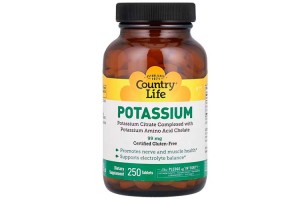
Although a potassium-rich diet is unlikely to have any adverse health effects for most adults, taking dietary supplements containing this trace element may increase the risk of various side effects.
People with a deficiency or at risk of a deficiency may need a supplement containing high doses of this trace element. In these cases, your doctor can help you choose the right dose and monitor any reactions your body may have.
Possible Risks and Overdose
People with mild cases of high potassium rarely experience noticeable symptoms of an excess of this element in the body. Furthermore, minor changes in potassium balance may not raise concerns among doctors and patients; healthy kidneys are often sufficient for the body to regulate potassium levels on its own.
In large amounts, potassium can be dangerous. Do not take potassium supplements without consulting a doctor. Natural sources of potassium, however, are quite safe, even with regular and long-term consumption in large amounts.
The most obvious symptom of excess potassium is an abnormal heartbeat (arrhythmia). Signs of a potassium overdose also include muscle weakness or paralysis, confusion, tingling in the extremities, low blood pressure, and coma.
People with kidney disease, diabetes, heart disease, Addison’s disease, stomach ulcers, or other health problems should never take potassium supplements without first consulting a doctor and should limit their dietary sources of potassium.
An excess of this mineral in the diet can lead to its accumulation in the blood, a condition known as hyperkalemia. In some cases, this can cause the same symptoms as an overdose and can sometimes even lead to fatalities. In addition, studies have shown that potassium supplements containing high doses of this element can damage the intestinal lining.
Risk factors for such an overdose include:
- taking too many potassium supplements
- kidney disease
- prolonged physical exertion
- cocaine use
- potassium-sparing diuretics
- chemotherapy
- diabetes
- severe burns
Which food has the most potassium?
Dried apricots and dried mushrooms are the top sources. 100 g of dried apricots contain about 1,160 mg of potassium—that’s nearly one-third of the daily recommended intake. Among fresh foods, avocados, spinach, and baked potatoes lead the way.
Is it true that bananas are the best source of potassium?
No, that’s a myth. Bananas are a good and convenient source (about 400 mg per fruit), but an average serving of baked potatoes, white beans, or spinach contains 1.5 to 2 times more potassium than a single banana.
How should you prepare foods to preserve potassium?
Foods should be baked, steamed, or cooked in the microwave. When boiled, potassium quickly leaches into the water, so you should only boil vegetables if you plan to eat the broth as well (for example, in soup).
Is potassium lost when foods are frozen?
No, freezing does not destroy potassium. Foods (berries, vegetables, and herbs) retain this mineral in its entirety. The key is not to discard the juice that is released when they are thawed.
Can you get too much potassium just by eating a lot?
In healthy people, this is practically impossible. The kidneys of a healthy person easily and quickly eliminate excess potassium obtained from food. The risk of excess potassium (hyperkalemia) from food exists only for people with severe kidney disease.