
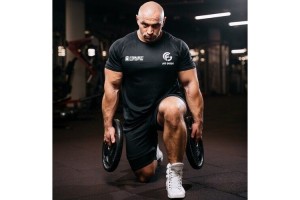
The human body has about 600 skeletal muscles. Large muscle groups (movers) help us move and perform complex movements, while small muscle groups (stabilizers) are responsible for static tension, precision, and coordination of movements. The work of both groups is important—because it is precisely through their combined functioning that we maintain balance.
What Is Balance and Why Should We Train It?

Every day, we perform dozens of movements that we don’t even notice: we walk, climb stairs, sit down and stand up, hold things in our hands, go about our daily tasks, and play sports. All the while, we maintain our balance without even thinking about how it happens. And this is all because the human body has small muscles responsible for our stable position in space and for maintaining balance.
Balance is the body’s ability to maintain a stable position during movement or at rest. It is supported by the vestibular system, vision, and stabilizing muscles. These muscles provide the “foundation” for all our actions: they keep us balanced, prevent the body from swaying during movement, help us control our movements while exercising or performing physical work, and protect the body from injury.
When balance is disrupted, the body loses control over its movements, increasing the risk of falls, injuries, and joint strain. Regular balance exercises help maintain stability, reduce stress on the spine and knees, and improve posture and mobility in everyday life.
Balance training activates the stabilizer muscles—deep muscles that work unnoticed by us in every movement. They keep the body in the correct position, reduce the risk of falls, help distribute the load evenly across the joints, and protect the spine.
What Are Stabilizing Muscles?

Stabilizing muscles are a group of deep muscles located around the spine and joints that perform a stabilizing function, keeping the joints and spine in the correct position during any movement. Their work goes unnoticed, but it is precisely these small muscles that create the conditions for safe and effective movement, ensuring balance and proper biomechanics of joint movement.
Without strong stabilizers, the body becomes less controllable: unsteadiness sets in, the load on the joints increases, and the risk of injury rises.
Functions performed by the body’s stabilizing muscles:
- ensure balance and proper biomechanics of joint movement;
- maintain posture;
- prevent excessive joint displacement;
- are responsible for maintaining posture over long periods;
- work in close coordination with the large motor muscles;
- engage reflexively and are activated even during ordinary walking or standing.
During sports training or physical activity, stabilizer muscles are responsible for maintaining balance while performing movements and have a significant impact on strength and exercise technique. If the stabilizing muscles are underdeveloped, it will be difficult to perform exercises that require stabilization and balance, and in the case of complex exercises, it will be practically impossible.
Stabilizing muscles include:
- the core muscles (abdominal muscles, deep back muscles, diaphragm, and pelvic floor muscles), which stabilize the spine and pelvis. The deep core muscles control trunk position and the transfer of force between the upper and lower body.
- Transverse and rectus abdominis muscles:
- The rectus abdominis muscle is responsible for trunk flexion and helps maintain a stable trunk position.
- The transverse abdominis is one of the main “corset” muscles, tightening the abdominal wall and maintaining intra-abdominal pressure. It is the foundation of the entire torso’s stability and protects the spine.
- The gluteus minimus and medius muscles stabilize the pelvis during walking and running. They help maintain balance when we stand on one leg. Weakness in these muscles often leads to gait abnormalities and pain in the knees and lower back.
- The adductor muscles are located on the inner thigh. They bring the legs together and help maintain pelvic stability. In sports, they are important for controlling movements during running, jumping, and sudden changes in direction.
- The muscles on the back of the thighs (hamstrings) are involved in knee flexion and hip extension and, together with the gluteal muscles, stabilize the pelvis and the knee joint.
- The coracohumeral muscle is a small muscle in the shoulder that originates from the scapula and attaches to the humerus. It stabilizes the shoulder joint, assists in flexing and extending the arm, and maintains proper shoulder alignment during movement.
Why It’s Important to Train Stabilizer Muscles

Stabilizing muscles ensure the body’s stability during any movement—from ordinary walking to complex athletic exercises. They keep the joints in the correct position, help distribute the load, and reduce the risk of injury.
Regular training of stabilizing muscles:
- improves coordination;
- strengthens ligaments and tendons;
- makes movements smooth and controlled;
- reduces the likelihood of injury;
- increase the effectiveness of workouts.
Without balance training, even strong muscles can work inefficiently—the body will expend more energy on everyday activities, and the risk of injury during sports or active recreation will increase.
Consequences of Weak Stabilizer Muscles
If the stabilizer muscles are weak, the body loses balance and control over its movements. This can lead to:
- back, neck, and knee pain due to improper load distribution;
- poor posture;
- rapid fatigue when walking or working while standing;
- reduced coordination;
- frequent injuries during sports and daily activities.
Training on an Unstable Surface

Exercises on an unstable surface are an effective way to activate stabilizer muscles, as the body must constantly maintain balance. During training on an unstable surface, muscles work more intensely than during traditional exercises because they are continuously adjusting the body’s position. Stabilizer exercises improve coordination, reaction time, strength, and endurance, and also help prevent injuries.
Balance platforms, BOSU balance balls, fitness balls, or even a regular soft mat are used for these workouts.
Fit Guide Balance Massage Cushion
Fit Guide Balance Massage Pillow – a fitness accessory in the form of a rubber disc with a textured surface, partially filled with air. The balance cushion strengthens the vestibular system, develops endurance, agility, flexibility, and coordination, and engages the deepest muscles that aren’t activated during standard exercises. Exercises with the stabilizing cushion stimulate micro-movements of the intervertebral discs, strengthening the back muscles and spine, improving coordination and balance, and enhancing mobility and overall well-being.
The balance cushion features an anti-slip system, making it safe and suitable for all ages—it can be used by both adults and children. The massage balance cushion has a special textured surface that mimics the effects of acupuncture massage. It can be used to massage the back, arms, and legs.

Exercises with a Balance Cushion
Core muscle exercises and balance training on an unstable surface help strengthen stabilizers, improve coordination, and enhance movement control. Performing these exercises on a balance cushion amplifies the effect, as the body is constantly working to maintain balance.
Below are exercises you can do on a balance cushion to develop core stability and balance.
Standing on One Leg
Standing on a balance cushion with one leg is a simple but very effective way to develop your stabilizer muscles.
Place one foot in the center of the cushion and bend the other knee. Hold your balance for 20–40 seconds, gradually increasing the time. Perform 2–3 sets on each leg. This exercise engages the core, foot, and calf muscles.
Squats
Place both feet on the balance board and perform slow squats. Keep your back straight and make sure your knees don’t collapse inward. Do 2–3 sets of 10–15 squats. This exercise works the quadriceps, glutes, and pelvic stabilizers.
To make the exercise more challenging, you can do single-leg squats with the other leg extended forward. For safety, you can use a stable support.
Plank with Support on a Pillow
The plank is a classic exercise for strengthening the core, and using an unstable surface provides additional training for the deep stabilizing muscles.
Place your forearms or palms on a balance cushion; keep your arms straight and make sure your back doesn’t arch. The basic plank is excellent for training the stabilizing muscles of the spine. An unstable surface forces the core muscles to work harder to keep the body in a stable position.
To make the exercise more challenging, you can lift one leg at a time or do a plank supported by one arm or one leg.
Seated Abdominal Activation
Sit on a pillow with your feet flat on the floor. Lean back slightly, engage your abdominal muscles, and try to maintain your balance without leaning on the backrest or your hands. This exercise helps engage the transverse abdominal muscles and improves core stability.
Exercises for the Feet and Ankle Joint
Sit on a chair, place your foot on a pillow, and roll from heel to toe and perform “circle” exercises in different directions.
Foot exercises on a pillow strengthen the small muscles of the foot, the ankle joint, and the calf muscles, and improve coordination, blood circulation, and stability while walking and running.
Rotating your feet, rolling a tennis ball under your foot, and picking up small objects with your toes—all of these strengthen the stabilizers of the legs.
The “bridge” exercise for the stabilizers of the spine, glutes, and abs
Lie on your back. Place your arms alongside your body with your palms facing the floor. Bend your knees and press your feet against a balance cushion. Without lifting your head or shoulders off the floor, slowly raise your pelvis. Hold this position for 1–2 minutes. To make the exercise more challenging, you can support yourself on just one leg.
How do deep muscles differ from superficial muscles?
Deep muscles are responsible for stabilizing and supporting the joints; they work silently to maintain proper body alignment. Superficial muscles are the large muscles that perform major movements (biceps, quadriceps, etc.).
How can you tell if your stabilizer muscles are weak?
The following signs often indicate weak stabilizer muscles: Balance issues: difficulty standing on one leg, performing balance exercises, or feeling unsteady, especially on uneven surfaces. Rapid muscle fatigue: even mild physical activity causes muscle fatigue, especially when performing exercises that require stabilization, such as dumbbell presses or squats. Excessive fatigue during exercise: balance and stabilization exercises cause rapid fatigue and may seem too difficult. Joint and back pain: insufficient joint support can lead to pain and discomfort.
Can you train your stabilizing muscles at home?
Yes. Regular balance exercises, training on an unstable surface, and foot exercises are accessible even without special equipment. You can do balance training at home at any convenient time and at your own pace.
Which exercises are most effective for training stabilizer muscles?
Balance exercises (standing on one leg, plank), exercises using a balance cushion, exercises for the feet and ankles, as well as exercises for coordination and core stability.


