Key theses
- Taurine — is a conditionally essential amino acid that supports the work of cells and the nervous system.
- Protects the heart, improves endurance during training and supports vision.
- Comes from meat, fish, seafood and bio-additives.
- It is well tolerated in moderate doses, but requires caution when combined with caffeine.
What is taurine
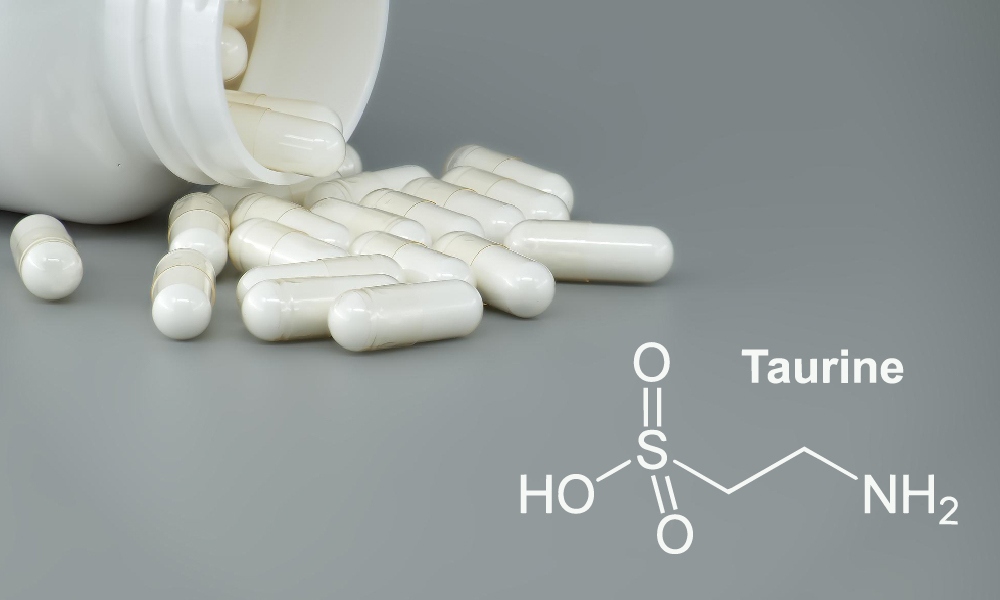
Taurine — is a sulfur-containing amino acid that is naturally produced in the liver and brain (from cysteine and methionine compounds). The name comes from the Latin word taurus, which means bull, because it was from the bile of the bull that this substance was first isolated in 1827. Modern taurine for food additives is synthesized exclusively by laboratory means.
The actual production of this substance in the body is relatively small, so with intense physical exertion, stress or diseases, internal reserves may not be enough.
What products contain
Taurine is found in food of animal origin:
- in meat (beef, pork, poultry);
- in fish (tuna, salmon);
- in seafood (mussels, scallops, squid);
- in eggs and dairy products (in much smaller quantities).
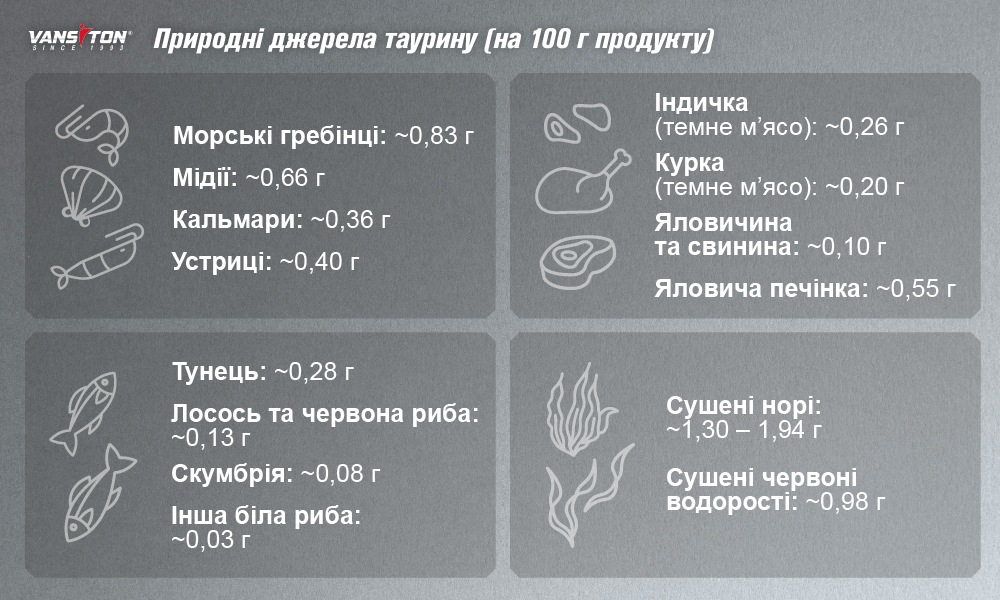
In vegetables and fruits, its content is almost zero. The only significant source of non-animal origin — is red algae, but trying to cover all daily requirements due to large volumes of algae is dangerous (due to the risk of excess iodine and sodium).
Most scientific reviews determine a safe daily dose of taurine for regular use without the risk of side effects at 3000 mg (3 g).
Why do you need taurine: benefits for the body
Although taurine is called an amino acid, it belongs to non-protein, that is, to those that are not involved in the creation of protein. Then why do we need taurine in our body? Although it is not a building material, it is critical to cell function and indirectly supports protein metabolism.
Taurine for the heart and blood vessels
It plays a decisive role in the physiology of the cardiovascular system: about 50% of the free amino acids in the heart are taurine.
Numerous studies indicate that it may help lower blood pressure in people with hypertension and improve endothelial function, leading to improved vascular health. Its antioxidant properties can also reduce the risk of cardiovascular disease, such as atherosclerosis and heart failure. And in this, the benefits of taurine for the heart do not end.
Scientists note that taurine supplementation may increase myocardial contractility (inotropic heart function), stroke volume and cardiac output.
Taurine for athletes: endurance and recovery
Aerobic endurance and exhaustion threshold. Taking taurine supplement prolongs the period of performance during long-term aerobic exercise. Studies record a reduction in metabolic fatigue markers, as confirmed by a systematic review by the International Society for Sports Nutrition (ISSN).
Anaerobic power and sprints. Studies note that taurine use has improved peak, average, and minimum power during high-intensity or repeated sprint loads (such as the Wingate test), which helps to contain fatigue buildup.
Thermal stress and thermoregulation The European Journal of Applied Physiology published the results of a randomized controlled trial that suggested that taurine supplementation improves sweat gland activation, heat transfer, and endurance in hot and humid conditions. Thanks to this, the athlete spends less internal resources on cooling, directing more energy to the work of the muscles.
Taurine for eyes and liver
Taurine is essential to protect the liver from toxic compounds: pesticides, herbicides and other environmental toxins. Also protects against the accumulation of ammonia in the blood and its harmful effects on the liver.
The highest concentration of taurine is in the retina. It has been established that dietary taurine is necessary for the normal functioning of the mammalian retina, which is why, starting from the mid-1980s, the addition of microdoses of taurine to infant formulas has become a world practice.
Taking taurine is appropriate to maintain retinal health, as this substance plays an important role in mitochondrial function, has antioxidant properties, and protects photoreceptors. In addition, studies in humans suggest a direct link: taurine deficiency can worsen the condition of the retina, while its sufficient or increased level helps to strengthen it.
Side effects and contraindications

When we find out what taurine is, we may get the impression that it is completely safe and has no side effects, because the body is able to produce it on its own. However, in some cases, or if the dosages are exceeded, it can cause side reactions:
- headache and dizziness;
- gastrointestinal discomfort or disorders;
- changes in blood pressure.
Contraindications to taking taurine, especially in the form of bio-supplements:
- Hypotension, as the substance can lower the pressure even further.
- Gastric and duodenal ulcer.
- Blood coagulation disorders or anticoagulant medication.
- Individual amino acid intolerance.
- Gallstone disease or severe liver and kidney pathologies.
- Pregnancy and breastfeeding period (due to lack of sufficient clinical data).
Compatibility of taurine with caffeine and energy products
Caffeine and taurine are two of the most widely used «legal performance enhancers for athletes and people who lead an active lifestyle. They are often combined in sports nutrition and energy drinks, which is why the myth arose that taurine — is a stimulant.
In fact, it acts as a stabilizer that can reduce excessive nervousness, tremors, or agitation caused by high doses of caffeine. Together with caffeine, they improve endurance, concentration and reduce muscle fatigue during training or long-term work.
Excessive consumption of energy drinks is dangerous precisely because of high doses of caffeine and sugar, which, in combination with taurine, can cause tachycardia and pressure spikes.
How to choose taurine: release forms and what to pay attention to
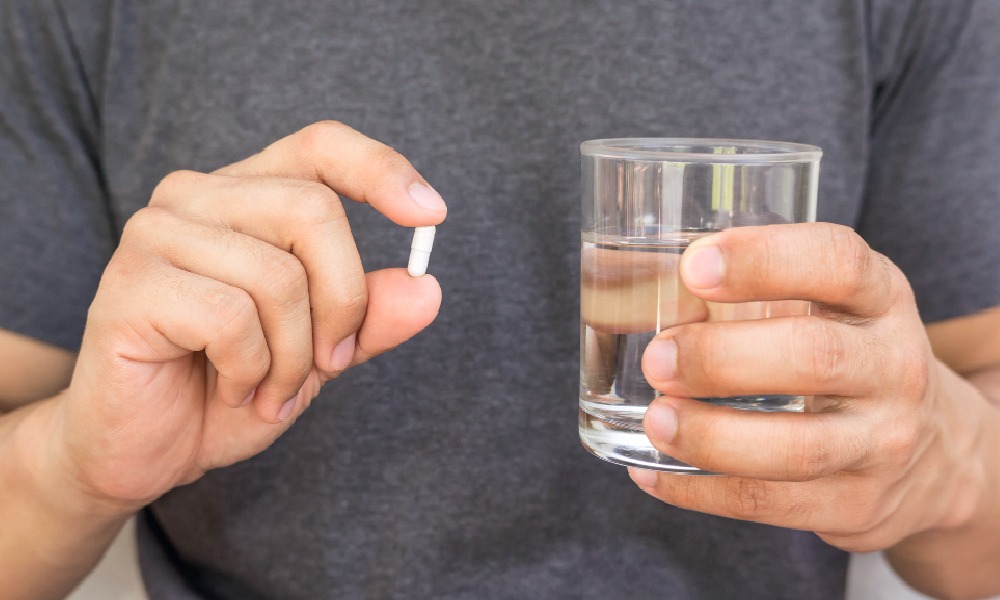
When choosing taurine, we advise you to read the instructions in detail: it should contain clear data on the composition of the product. It is better to give preference to additives without unnecessary dyes and sugar. Also, pay attention to the manufacturer's availability of GMP and ISO certificates.
Taurine in capsules, tablets and powder
It is most convenient to take taurine in capsules or tablets, as such forms have a clear dosage, have no taste and are convenient to take with you.
The advantage of the powder for many is that such taurine can be mixed with water or pre-training complexes. In addition, this form is the fastest to learn.
Regardless of the chosen release form, it is important to understand how to take taurine for maximum benefit. For general body support, the supplement is usually consumed with food, and athletes are advised to coordinate the time of intake with the training schedule.
Can you take taurine every day?
Yes, daily intake in prophylactic doses is safe, but it is usually recommended to take a break after 1–2 months of the course.
Who can't take taurine?
The supplement is not recommended for children, pregnant women, breastfeeding mothers, or people with severe kidney disease or severe hypotension (low pressure) without consulting a doctor.
How does taurine differ from taurine cardio?
Common taurine contains only a pure amino acid, while «Taurine Cardio» — is a combined complex to which potassium, magnesium, B vitamins or plant extracts (such as hawthorn) are additionally added for enhanced heart support.
What are the side effects of taurine?
If you follow the instructions, side effects almost do not occur, but with a significant excess of the dose, abdominal discomfort, diarrhea, dizziness or drowsiness due to a decrease in blood pressure are possible.
Scientific sources:
The functional role of taurine in aging and cardiovascular health: a current review (2023)
The role of taurine in the central nervous system (2010)
Taurine as a functional ingredient: food sources, potential health benefits and uses (2026)
Cardiovascular effects of taurine: a systematic review and meta-analysis (2024)
Taurine as a promising nutraceutical for the prevention of retinal degeneration (2023)
Taurine and liver disease: a review of the diverse protective properties of taurine (2014)
EFSA Scientific Opinion on the safety of taurine and D-glucuronolactone in energy drinks (2009)
FDA Response to GRAS Notice № 000586: Safety Assessment of Taurine as a Food Ingredient (2015)