

The Japanese diet, or “Japanese-style diet,” became very popular in the early 2000s. Its main advantages are its effectiveness, the long-term maintenance of results, a straightforward selection of foods, and the simplicity of the recipes included in the program. However, to go all the way to achieving a slim figure, you need true samurai-like perseverance.
What is the traditional Japanese diet?

Everyone knows that Japan is a country of long-lived people. Nutritionists attribute this to the traditional Japanese diet, which emphasizes moderation and low-calorie meals with a focus on seafood.
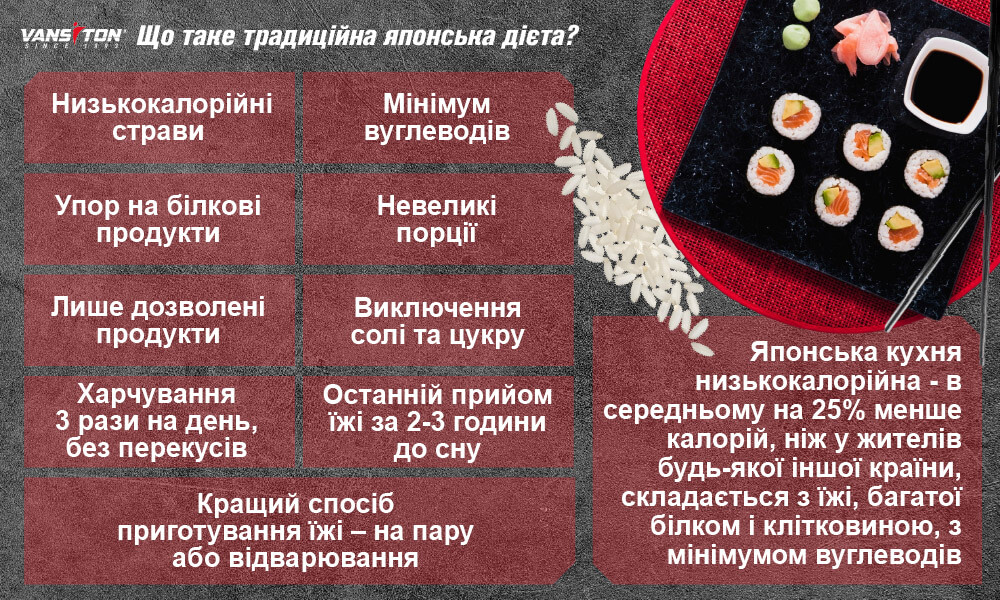
The Japanese diet consists mainly of foods rich in protein and fiber, with a minimal amount of carbohydrates. The daily menu of Japanese people includes fish, seaweed, a small selection of vegetables and fruits, rice, beans, tofu, and green tea. A typical meal may include anywhere from 5 to 20 different dishes in unusual combinations. The Japanese also drink very little coffee: it was introduced to the country relatively recently and has not yet gained popularity.
The Japanese weight-loss diet is, in fact, not the traditional Japanese diet. The menu does not include exotic sushi, rolls, miso soup, or ramen. It is not known for certain why this eating plan was called “Japanese.” Some call it the Naomi Moriyama Diet, attributing its development to the famous Japanese nutritionist and author of the bestseller *Japanese Women Don’t Get Fat or Grow Old*. Others see the name as purely a marketing ploy and a tribute to the trend of East Asian cuisine. However, the method does reflect the dietary principles of the Japanese people: it is well known that Japanese cuisine is low in calories (on average, 25% fewer calories than in any other country), moderate, and simple.
The recipes for the dishes included in the Japanese diet are accessible to everyone. They don’t take long to prepare. The restrictions are based on strictly adhering to a set daily menu. The main emphasis is on endurance and moderation. But it’s worth it, because the results at the end of the diet will be more than convincing.
On forums, people report that for some, the 14-day Japanese diet resulted in a 10 kg weight loss, with a reduction in waist and hip circumference of up to 7 cm. Moreover, the results can last 2–3 years without any further effort. And for those who are the most impatient and resilient, there’s a “faster” option—an effective 7-day diet. It’s difficult to lose 10 kg on this diet, but it’s realistic to lose up to 5 kg.
Basic Principles of the Japanese Diet

- low-calorie meals
- minimal carbohydrates
- an emphasis on protein-rich foods
- small portions
- use only permitted foods
- Elimination of salt and sugar
- Eat strictly three times a day, without snacking
- Have your last meal 2–3 hours before bedtime
- The best way to prepare food is by steaming or boiling.
Throughout the entire course, you must not consume alcohol, flour-based foods, or baked goods (flour is allowed only in small amounts—for breading).
Between meals, you can drink mineral (still), filtered, or boiled water without restriction—one glass every hour. The minimum daily water intake is 2 liters; there is no upper limit.
The mechanism of weight loss with this diet is based on limiting the intake of calories, especially from fatty, high-carbohydrate, and salty foods. In this respect, the Japanese diet is similar to other low-sodium and high-protein diets.
The main sources of protein in the diet are chicken eggs, chicken, beef, fish, and dairy products. Fats come from unrefined oil used for cooking; carbohydrates come from crackers, as well as vegetables and fruits from the approved list. Permitted beverages include black coffee without sugar, green tea, and plant-based juices (tomato, celery).
Thanks to the fiber in vegetables and fruits, your stomach will function normally. Coffee and tea contain antioxidants that are beneficial to your health and provide your body with energy and vitality.
Given the strict restrictions on food choices, this diet cannot be considered balanced, so following it for more than 14 days is harmful to your health. According to dietitians and doctors, it is advisable to incorporate the Japanese weight-loss principle into your diet no more than 2–3 times a year.
Special attention should be paid to the transition out of the diet, which must be done correctly. In addition, due to the sharp reduction in carbohydrates in the diet, some people may experience weakness, fatigue, headaches, or body aches. In this case, it is better to phase out the diet gradually and, if necessary, consult a doctor.
Types of the Japanese Diet
Currently, there are several variations of the Japanese diet, which differ only in the number of days (7, 13, or 14) and the corresponding amount of weight lost.
The 7-Day Japanese Diet
Allows you to lose 2–3 kilograms of excess weight. The recommended menu is designed for one week, is strictly limited, and does not allow for any changes—neither in terms of substituting dishes nor in terms of their rotation. According to some nutritionists, the original 7-day Japanese diet is extreme, but such a short period is insufficient for effective weight loss: during this time, the body only has time to adjust to a slowed metabolism.
The 13-Day Japanese Diet
Also known as the salt-free diet, it is designed to last 13 days and is considered the classic Japanese diet (13 is a favorite number among the Japanese). It was developed by the YaeX Clinic in Tokyo and is based on the high effectiveness of a low-carbohydrate diet, which stimulates fat burning in cells. When followed according to the specified rules, it allows you to lose 5 to 10 kg.
The 14-Day Japanese Diet
It is the most popular because it is highly effective. There are many arguments for and against it. Reviews from those who have personally tried this eating plan report weight loss of 6–10 kg. It involves a fixed menu of permitted foods and does not allow for deviations. All foods recommended at must be consumed at the designated time of day and on a specific day of the week.
Interestingly, there are several other diets that are also referred to as Japanese:
The Japanese Tea Diet. A mandatory requirement is to drink up to 4 cups of green tea per day. It is believed that, thanks to the action of catechins, the intake of glucose into the bloodstream is reduced, the breakdown of fat reserves is stimulated, and the enzymatic composition of the intestines is improved, leading to gradual weight loss.
The Japanese Water Diet. It requires drinking 4 glasses (640 mg) of water on an empty stomach every morning, 30 minutes before each meal, and eliminating fatty, smoked, and fried foods, alcoholic beverages, and carbonated water from the diet.
The Japanese Rice Diet. One of the strictest but most effective diets—resulting in weight loss of 5–10 kg after a week of hardship. The main idea: rice for breakfast, lunch, and dinner plus other ingredients; reducing daily calorie intake to 1,200 kcal; and having your last meal 3–4 hours before bedtime.
The Okinawa Diet. The healthiest and most balanced diet, developed by the residents of Okinawa Island, known for their longevity. It promotes healthy weight, good health, and longevity by changing eating habits. It is based on reducing calorie intake, prioritizing whole grains, vegetables, and fruits, omega-3 in the diet, minimizing sweets and alcohol, an active lifestyle, and a positive outlook on life.
The "Orihiro Japanese Diet" (Orihiro Night Diet). This is a popular Japanese line of dietary supplements designed to promote weight loss while you sleep, rather than a traditional diet with food restrictions. The product is most often available as an instant powder in sachets or as a caffeine-free herbal tea.
Its effect is based on the link between the quality of nighttime rest and metabolic rate. The complex contains amino acids (arginine, lysine, ornithine) and L-carnitine, which stimulate fat breakdown during rest. The formula also contains chitosan and white kidney bean extract to block the absorption of excess fats and carbohydrates from a late-night meal, glycine to promote deep sleep, and lactobacilli for comfortable digestion. The product helps you stay in shape without strict fasting, normalizes metabolism, and improves the body’s recovery at night.
Potential Health Benefits
Experts say that in addition to its weight-loss effects, the Japanese diet offers a number of other benefits, namely:
- restoring proper metabolism
- detoxification of the body
- elimination of excess water
- normalization of digestive system function
Permitted foods

Foods allowed on the Japanese diet:
- protein – meat (chicken, beef), fish (pollock, cod, hake, pikeperch, pike), chicken eggs, low-fat cheese
- carbohydrates – crackers or rye bread
- fats – unrefined cold-pressed olive oil
- fiber – vegetables (carrots, cabbage, zucchini, squash, eggplant, parsnips), unsweetened fruits (apples, pears, oranges, grapefruit, lemons, kiwis)
- drinks – water, black coffee, green tea, homemade unsalted tomato juice, low-fat kefir
Foods to limit or avoid
The following are prohibited on the Japanese diet:
- fatty meats, fish, milk, and dairy products
- sweet fruits (bananas, grapes, peaches, persimmons, etc.)
- vegetables not included on the list of permitted foods
- flour and pasta
- grains
- candy, pastries, jam, honey, chocolate, ice cream, and other sweets
- nuts and dried fruits
- processed foods, sauces, fast food
- herbs, spices, salt
- alcohol, fruit compotes, juices, and carbonated beverages.
Here is a 7-day Japanese diet plan organized by day in the tables below.
7-Day Japanese Diet: Daily Schedule
If you decide to follow a 7-day diet plan, nutritionists recommend printing out the original menu for each day and hanging it on your refrigerator door.
Table 1
Days |
Breakfast |
Lunch |
Dinner |
1 |
coffee without milk or sugar, or a cup of green tea |
cabbage cooked with a small amount of olive oil, tomato juice, two hard-boiled eggs |
100 g of boiled or steamed fish |
2 |
a cup of freshly brewed black coffee, a slice of dried bread (preferably rye) |
100 g of fish (boiled or fried), cabbage salad with a small amount of olive oil |
100 g of boiled beef, 1 glass of low-fat kefir |
3 |
a small piece of rye bread, preferably dry, a cup of coffee or tea without sugar |
zucchini or eggplant fried in oil (any amount) |
100 g of boiled beef, white cabbage with a small amount of vegetable oil, 2 hard-boiled eggs. |
4 |
a cup of freshly brewed black coffee without sugar |
1 raw egg, carrot salad dressed with oil, 20 g of hard, light-colored cheese, a glass of tomato juice (the raw egg can be replaced with half an apple). |
200 g of fruit from the approved list |
5 |
fresh carrot salad, seasoned with lemon juice. |
500 g of saltwater fish, a glass of tomato juice |
200 g of fruits from the approved list |
6 |
a cup of freshly brewed black coffee or unsweetened tea |
500 g of boiled chicken breast, cabbage salad with carrots (or made with a single ingredient) dressed with oil |
2 hard-boiled eggs, fresh salad with carrots |
7 |
a cup of unsweetened, freshly brewed green tea |
a small portion of boiled beef (100 g), 2 apples or pears |
You can choose any dinner option except the third one |
The 14-Day Japanese Diet: A Day-by-Day Chart

Table 2
Days |
Breakfast |
Lunch |
Dinner |
8 |
coffee or unsweetened green tea |
Salad with boiled chicken, fresh cabbage, and carrots dressed with oil |
2 hard-boiled eggs, a small carrot |
9 |
grated carrots dressed with lemon juice |
200 g of boiled or pan-fried fish, 1 glass of tomato juice |
200 g of any fruit, except bananas and grapes |
10 |
a cup of coffee or tea without sugar |
1 hard-boiled egg, 3 small carrots, 50 g of cheese |
200 g of any fruit except bananas and grapes |
11 |
a small slice of dried rye bread, a cup of unsweetened coffee or tea |
zucchini or eggplant, sautéed in oil |
200 g of boiled beef, 2 hard-boiled eggs, fresh cabbage salad with vegetable oil |
12 |
a small piece of dried rye bread, a cup of coffee or tea |
200 g of boiled fish, fresh cabbage salad with oil |
100 g of boiled beef, 1 glass of low-fat kefir |
13 |
coffee or unsweetened tea |
2 hard-boiled eggs, boiled cabbage with oil, a glass of tomato juice |
200 g of boiled or pan-fried fish in oil |
14 |
coffee or unsweetened tea |
200 g of boiled or pan-fried fish, fresh cabbage salad dressed with oil |
200 g of boiled beef, a glass of low-fat kefir |
The proper Japanese diet is very strict and requires strict adherence to a schedule and portion sizes. You cannot swap days or meals (such as lunch and dinner) or substitute one food for another. Snacking between breakfast, lunch, and dinner is completely prohibited. If you feel very hungry, you’re allowed to drink only plain water. It’s not allowed to substitute one food for another or change the order of the recipes. Strictly follow the recommendations; only then can you expect positive results.
The only thing you can give up is coffee. You can replace it with a cup of unsweetened green tea. In the morning, drink a glass of water on an empty stomach, and your last meal should be at least a few hours before bedtime.
Recipes for the 14- or 7-day Japanese diet
Fresh Cabbage Salad with Oil
Can be served almost daily as a side dish with fish or meat.
Ingredients: White cabbage (or Napa cabbage) – 150 g, olive or sesame oil – 1 tsp, lemon juice – a few drops.
Preparation: Finely chop the cabbage. Gently knead it with your hands to release the juices and soften it. Drizzle with lemon juice and toss with oil. Do not add salt.
Boiled or Baked Fish
Fish (usually cod, hake, pollock, or pink salmon) is served for lunch or dinner.
Ingredients: Lean fish fillet – 200 g, lemon – 1/4, herbs (parsley, dill) – to taste.
Preparation: Place the fish fillet on a piece of foil. Top with thin lemon slices and fresh herbs. Wrap the foil and bake in the oven at 180 °C for 20 minutes (or boil in unsalted water without spices).
Boiled Beef
A hearty, protein-rich dish for dinner or lunch.
Ingredients: Lean beef or veal – 200 g, bay leaf – 1.< (For flavor).
Preparation: Place the meat in boiling water. Once it comes to a boil, skim off the foam and add the bay leaf. Simmer over low heat until completely tender (about 60–90 minutes). Let cool and cut into serving portions.
Boiled Carrots with Oil
Ingredients: A traditional side dish for days when the consumption of raw vegetables is limited.
Large carrots—1–2, vegetable oil—1 tsp.
Preparation: Boil the carrots with the skin on until tender. Let cool, peel, and grate or dice. Drizzle with oil before serving.
Benefits of the diet
Benefits of the Japanese Salt-Free Diet:
- Guaranteed weight loss
- Long-lasting results
- Water elimination
- Precise meal plan
- Simple recipes
- Affordable ingredients
- Attractive price
The one-week Japanese diet is ideal if you need to lose a few extra kilograms in a short period of time.
Cons of the diet
Before starting the salt-free Japanese diet, you should consult a doctor or be confident in your health.
Risks associated with the 7- or 14-day Japanese diet:
- slowed metabolism
- possible exacerbation of chronic diseases
- deficiency of essential nutrients
- high stress levels
- Coffee on an empty stomach is harmful to the stomach and puts a strain on the heart
- a lack of dietary variety can lower your mood
- A constant feeling of hunger reduces concentration
- Possible rapid fatigue, irritability, apathy, and dizziness
- If you stop the diet improperly, the weight you lost may return
Are there any risks or contraindications?
There are a number of contraindications under which this type of diet is prohibited:
- pregnancy and lactation
- digestive problems, gastritis, stomach ulcers, and duodenal ulcers
- heart and vascular problems
- liver and kidney disease
If, a few days after starting the diet, you experience weakness, dizziness, or muscle pain, it is recommended that you stop the diet. In any case, it is advisable to consult a doctor before starting it.
How to Transition Off the Diet and Maintain Your Results

Basic rules for transitioning off the Japanese diet:
- Completely limit your consumption of sweets for the next 2 weeks
- You may add no more than 1 new food item to your menu each day
- Do not increase your portion sizes; otherwise, your stomach will stretch again, your appetite will increase, and the weight will return
- Consume all high-calorie foods in the first half of the day
- For several weeks after the diet, avoid spicy and sour foods that stimulate the appetite, as well as fatty foods
- Take vitamin and mineral supplements to quickly replenish essential nutrients.
If you successfully complete the diet, you can not only maintain and consolidate your results but also normalize your body’s metabolism. Most people who have followed the “Japanese diet” say that the first 3–5 days are the hardest; after that, you get used to it and it becomes easier. The Japanese diet is also suitable for men because it is based on a large amount of protein-rich foods, which is important for maintaining muscle mass.
Conclusion: The Japanese diet is highly effective, leading to steady weight loss, but it has drawbacks related to health risks. According to nutritionists, it cannot be classified as “healthy weight loss.”
Can you substitute chicken for fish on the Japanese diet?
No, you can’t, because fish contains micronutrients that are essential for the body. The original 14-day Japanese diet is very strict; practically nothing in it can be changed.
How much weight can you lose on the Japanese diet?
Forum posts report that people lost up to 3 kg in 7 days on the diet, and 6 to 8 kg in 14 days.
What can you substitute for zucchini on the Japanese diet?
Zucchini can be replaced with zucchini or pumpkin (but not the sweet variety).
Can you drink green tea on the Japanese diet?
Yes, drinking green tea on the Japanese diet is not only allowed but also recommended.


