What Is the Glycemic Index?
The glycemic index (GI) is a relative measure of the effect that carbohydrates in foods have on changes in blood glucose levels.
The glycemic component of foods was first studied by Canadian dietitian David Jenkins, who was working on developing the ideal diet for people with diabetes. Jenkins developed a method for calculating and classifying glycemic indexes, which are still in use today. Modern dietetics uses the glycemic index of foods to adjust diets for people with type 2 diabetes and severe obesity. Anyone who is actively involved in sports and fitness, striving to lose weight, or committed to a healthy lifestyle pays close attention to the glycemic index.
Definition and Basic Principles
The glycemic index is a relative measure that indicates the ratio of blood glucose levels two hours after consuming a food containing 50 g of carbohydrates to the blood glucose level that rises after consuming 50 g of pure glucose.
In simple terms, it’s a measure of how quickly carbohydrates from food are absorbed and raise blood sugar levels.
Why It’s Important to Know About the GI
Understanding the glycemic index helps you make informed food choices to maintain normal blood sugar levels. This knowledge is especially useful for certain groups of people who have conditions directly related to blood glucose levels, and for whom it is important to constantly monitor this indicator.
People with diabetes—especially those with type 2 diabetes—since foods with a high GI can cause a sharp rise in blood sugar.
People trying to manage their weight — low-GI foods rich in fiber are absorbed and digested more slowly, promote a prolonged feeling of fullness, and reduce food cravings.
Athletes — understanding the GI helps them choose the right foods to maintain stable energy levels for workouts and ensure proper recovery.
People with cardiovascular disease – some studies show that high blood sugar levels may increase the risk of developing cardiovascular disease
What determines the glycemic index?
The glycemic index depends on the nature of the food: the more monosaccharides it contains, the higher the GI; the more fiber it contains, the lower the GI.
How is the glycemic index measured?

The GI is measured by comparing the rate at which blood glucose levels rise after consuming a test food with the body’s response to pure glucose or white bread, which are used as reference standards.
Participants in the test consume a product containing 50 g of carbohydrates (GI equivalent), and after consumption, their blood glucose levels are measured several times over a set period—typically at 15, 30, 45, 60, 90, and 120 minutes after eating.
Once all measurements are complete, a graph of blood glucose levels over time is plotted. For each time point, the area under the curve (AUC, area under the curve) for the test product. The resulting area for the test is then compared to the AUC for glucose, and based on this, the GI of the test product is determined using the following formula:
GI = (Area under the curve (AUC) after consumption of the test product / Area under the curve (AUC) after glucose consumption) × 100
When measuring the GI, the quantity of food consumed, the method of preparation, the number of calories, sugar, and saturated fats, nor the amount of carbohydrates per serving; therefore, for a more accurate assessment of the effect on the body and when planning a diet, one should consider not only the glycemic index but also the glycemic load (GL).
GI Value Ranges
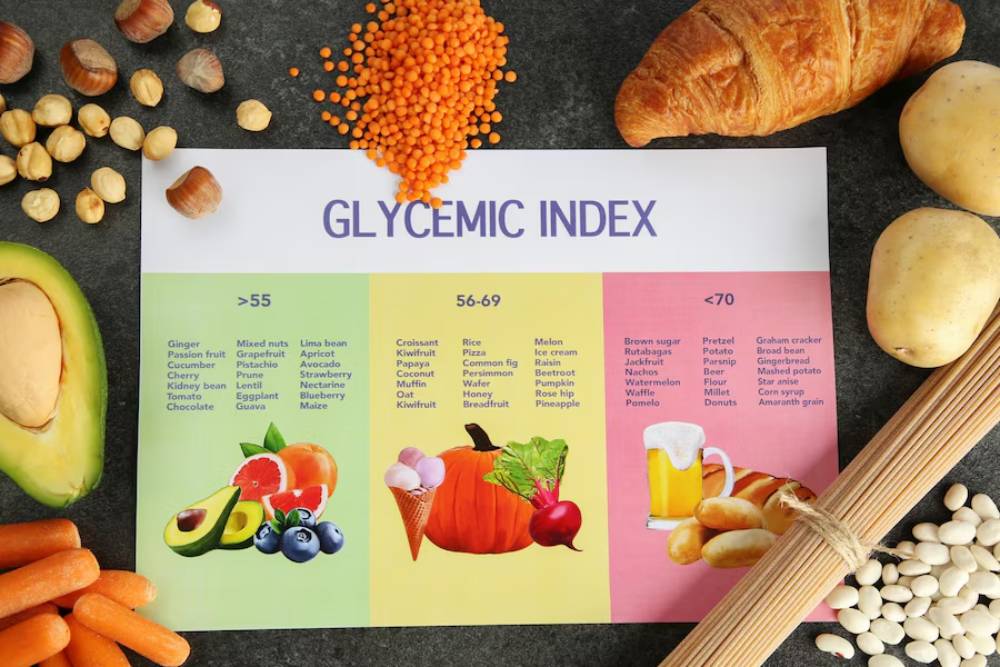
The GI of all foods is rated on a scale from 0 to 100 and indicates the amount of glucose produced during the digestion of a particular food.
According to the GI classification, foods are divided into low, medium, and high:
- 0 to 55 – low
- 56 to 69 – medium
- 70 and above – high.
Foods with a high glycemic index contain carbohydrates that cause a rapid rise in blood glucose levels. Foods with a low GI are digested more slowly and do not cause a sharp increase in blood glucose.
Factors affecting the GI of foods
The Degree of processing. Whole grains have a lower GI than refined or ground grains.
Product processing and manufacturing technology. Any industrial processing—such as steaming, refining, fat emulsification, and methods for quick preparation and long-term storage—increases the GI.
Freezing, drying, boiling, deep-frying, steaming, baking, fermentation, salting, canning, sun-drying, as well as the use of seasonings and spices—all alter a dish’s GI.
Heat treatment. Exposure to high temperatures breaks down cell membranes, which affects how the body digests and absorbs the food and alters its glycemic index.
Degree of ripeness and hydration level. Very juicy or ripe foods will have a higher GI than green or unripe ones.
Dietary fiber content. Foods containing more fiber are digested more slowly and have a lower GI .
Method of preparation and combination with other foods. Eating foods with a high glycemic index alongside foods rich in protein, fat, and fiber slows the absorption of carbohydrates and reduces the glycemic load.
The GI is also influenced by storage conditions and duration, product consistency, the use of spices and seasonings, and the ratio of fats to proteins.
Foods with low, medium, and high GI
Foods with a low GI
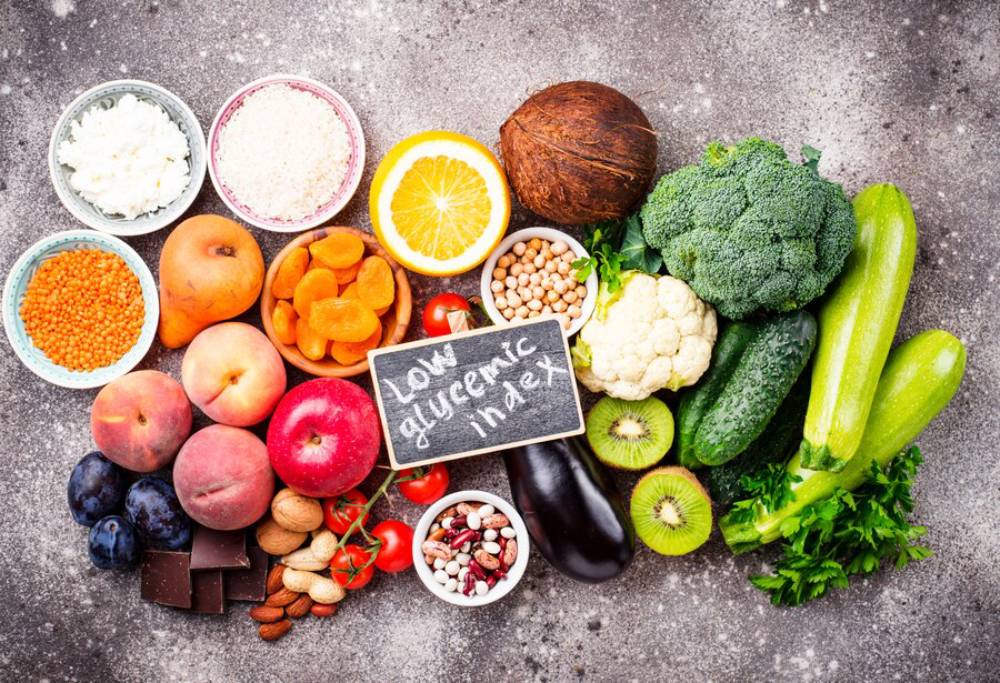
People with health problems or who are overweight should eat more foods with a low glycemic index. Consuming these foods offers numerous benefits:
- maintaining stable blood sugar levels—no sharp fluctuations in blood glucose;
- a prolonged feeling of fullness—fiber reduces hunger for longer periods and helps prevent overeating;
- improved digestion—fiber-rich vegetables, fruits, and grains promote better digestion and bowel function;
- sustained energy—the gradual absorption of glucose helps maintain a steady energy level, preventing fatigue and energy depletion;
- Reduced risk of cardiovascular disease—thanks to lower cholesterol levels and improved metabolism;
- Maintenance of a healthy weight—avoiding overeating and excess calories helps prevent obesity.
Foods with a low glycemic index help maintain stable blood glucose levels and contain fiber, vitamins, and minerals, which are the foundation of a healthy diet.
Table of foods with a low glycemic index
| Food | Glycemic Index |
| Green buckwheat | 50 |
| Basmati rice | 50 |
| Brown rice | 50 |
| Brown buckwheat | 50 |
| Spaghetti, pasta | 50 |
| Orange | 50 |
| Kiwi | 50 |
| Mango | 50 |
| Persimmon | 50 |
| Apple juice, unsweetened | 50 |
| Oatmeal | 49 |
| Bulgur | 48 |
| Canned green peas | 48 |
| Grape juice, unsweetened | 48 |
| Whole-grain bread | 45 |
| Grapefruit | 45 |
| Coconut | 45 |
| Pineapple juice, unsweetened | 45 |
| Orange juice, unsweetened | 45 |
| Grapes | 40 |
| Whole-grain wheat bread, rye bread | 40 |
| Beef | 40 |
| White beans | 40 |
| Durum wheat pasta | 40 |
| Prunes | 40 |
| Fresh plums | 35 |
| Plain yogurt | 35 |
| Raw carrots | 35 |
| Quinoa | 35 |
| Dried apricots | 35 |
| Nectarines | 35 |
| Pomegranates | 35 |
| Peaches | 35 |
| Sprouted rye grains | 34 |
| Pear | 34 |
| Apricot | 30 |
| Brown lentils | 30 |
| Chickpeas | 30 |
| Fresh tomatoes | 30 |
| Low-fat cottage cheese | 30 |
| Mandarin orange | 30 |
| Apple | 30 |
| Green banana | 30 |
| Red currant | 25 |
| Strawberries | 25 |
| Soy flour | 25 |
| Pumpkin seeds | 25 |
| Yellow peas | 22 |
| Pearl barley | 22 |
| Cherries | 22 |
| Soy yogurt | 20 |
| Peanuts | 20 |
| Almonds | 15 |
| Broccoli | 15 |
| White cabbage | 15 |
| Celery | 15 |
| Bran | 15 |
| Brussels sprouts | 15 |
| Cauliflower | 15 |
| Chili peppers | 15 |
| Fresh cucumber | 15 |
| Hazelnuts, pine nuts, pistachios, walnuts | 15 |
| Asparagus | 15 |
| Ginger | 15 |
| Mushrooms | 15 |
| Zucchini | 15 |
| Onions | 15 |
| Green onions | 15 |
| Olives | 15 |
| Tofu (soy cheese) | 15 |
| Spinach | 15 |
| Avocado | 10 |
| Lettuce | 10 |
| Eggplant | 10 |
| Green bell pepper | 10 |
| Sunflower seeds | 8 |
| Crustaceans (crabs, lobsters) | 5 |
| Red caviar | 0 |
| Red fish (salmon, tuna) | 0 |
| Seafood (mussels, oysters) | 0 |
| Olive oil, vegetable oil | 0 |
Table of Glycemic Indices for Dairy Products
| Product | Glycemic Index |
| Rice milk | 79 |
| Ice cream | 62–70 |
| Soy milk ice cream | 35 |
| Nonfat plain yogurt | 35 |
| Whole milk | 32 |
| Fruit yogurt with sugar | 33 |
| Milk, 2.5% fat | 30 |
| Soy milk | 30 |
| Nonfat milk | 27 |
| Sugar-free yogurt | 19 |
| Greek yogurt | 12 |
Foods with a moderate glycemic index (56–69) can be included in your diet, but it’s important to monitor your portion sizes and pair them with low-GI foods to reduce your overall glycemic load.
Table of Foods with a Moderate Glycemic Index
| Food | Glycemic Index |
| Melon | 65 |
| Raisins | 65 |
| Couscous | 65 |
| Pumpkin | 65 |
| Canned vegetables | 65 |
| Beets | 64 |
| Cherries | 63 |
| Banana | 62 |
| Oatmeal | 62 |
| Oatmeal with milk | 61 |
| Boiled sweet corn | 60 |
| Corn porridge | 60 |
| Parboiled rice | 60 |
| Rice porridge with milk | 59 |
| Pineapple | 59 |
| Muesli | 59 |
| Papaya | 56 |
Foods with a High GI
Foods with a high glycemic index contain carbohydrates that are absorbed very quickly and cause a sharp spike in blood sugar levels. This generally applies to all foods that have undergone minimal processing or do not contain much fiber.
Which foods have a high glycemic index?
White bread, baked goods made with white flour, refined grain products, processed breakfast cereals, cornflakes, sweet desserts, sweet carbonated and energy drinks contain a lot of simple sugars, which cause a rapid energy spike followed by a quick crash, potentially leading to feelings of hunger and fatigue.
Foods with a high GI are essential for athletes to build muscle quickly (for example, white rice after a workout), whereas people looking to lose weight are advised to completely avoid simple carbohydrates and eat only foods with a low or moderate GI.
Table of Foods with a High Glycemic Index
| Food | Glycemic Index |
| White bread | 100 |
| Beer | 70–110 |
| Pastries | 95 |
| Pancakes | 95 |
| Fried potatoes | 95 |
| Baked potatoes | 95 |
| Rice flour | 95 |
| Cornstarch | 95 |
| Honey | 90 |
| Semolina | 85 |
| Refined wheat flour | 85 |
| Instant rice | 85 |
| Corn flakes | 85 |
| Carrots (cooked) | 85 |
| Parsnips | 85 |
| Rice flakes | 80 |
| Polished rice | 80 |
| Muesli with nuts and raisins | 80 |
| Zucchini “caviar” | 75 |
| Corn grits | 75 |
| Sweet pastries (waffles, donuts) | 75 |
| Watermelon | 75 |
| Melon | 75 |
| Dates | 70 |
| Sweet potato | 70 |
| Millet porridge | 70 |
| Chocolate bar | 70 |
| Milk chocolate | 70 |
| Sweet carbonated drinks | 70 |
| White rice | 70 |
| Sugar (white or brown) | 70 |
How to Calculate the GI of a Prepared Meal?
Calculating the glycemic index of a prepared meal can be more complicated than for individual foods, since the meal combines various ingredients, each of which has its own GI.
Calculating the GI of a prepared meal:
- Determine the glycemic index for each individual ingredient;
- Determine the amount of each ingredient in a serving of the prepared dish. For example, 100 grams of potatoes, 50 grams of carrots, and 150 grams of meat. This is necessary to understand which ingredient will have the greatest impact on the dish’s overall GI;
- calculate each ingredient’s contribution to the overall GI. To do this, calculate the proportion of carbohydrates in each ingredient using the formula:
Ingredient’s contribution = Ingredient’s GI × Amount of carbohydrates per serving / 100
For example, if potatoes contain 20 g of carbohydrates per 100 g and their GI is 85, their contribution to the dish will be as follows:
Potato contribution = 85 × 20 / 100 = 17
4. Once you’ve calculated everything, add up the values to get the total GI of your dish.
5. Adjust the GI based on the portion size. If you eat half a portion, the GI decreases; if you eat two portions, it increases accordingly.
Example of calculating the GI of a prepared dish.
Ingredients:
• 150 g potatoes (GI 85, 30 g carbohydrates)
• 100 g chicken breast (GI 0, 0 g carbohydrates)
• 50 g carrots (GI 47, 9 g carbohydrates)
Calculation for each ingredient:
Potatoes: 85×30/100 = 25.5
Chicken breast: 0×0/100 = 0
Carrot: 47×9/100 = 4.23
Now let’s add these values together:
25.5+0+4.23=29.73
Calculating the GI of a prepared meal helps you more accurately assess its impact on blood sugar levels, especially if your diet includes a variety of foods with different GIs.
Glycemic Index and Glycemic Load: What’s the Difference?
Glycemic Load (GL) is a measure used to assess the impact of foods on blood sugar levels. It combines two factors: a food’s glycemic index (GI) and the amount of carbohydrates contained in a serving of that food. Glycemic load allows for a more accurate assessment of how a specific food will affect blood glucose levels, whereas the glycemic index only considers the rate at which blood sugar, without taking into account the amount of carbohydrates in a serving. The glycemic load can be calculated using the following formula:
GL = GI × Amount of Carbohydrates (g)/100
where:
GI – the glycemic index of the food,
Amount of carbohydrates – in grams, contained in a standard serving of the food.
Similar to the glycemic index, all foods can be evaluated and classified in terms of glycemic load:
- 0–10 – low glycemic load
- 11–19 – moderate glycemic load;
- 20 and above – high glycemic load.
Knowing the glycemic load helps you plan your diet better and control your blood sugar levels.
When planning your daily diet, you can use GL values as a guide based on your lifestyle:
- 50–80 for a sedentary lifestyle;
- 80–120 for a moderately active lifestyle;
- 120–150 for active sports participation;
- over 150 for professional athletes.
Both the glycemic index and the glycemic load are important for assessing the impact of carbohydrates on glucose levels, but there are significant differences between them:
The glycemic index determines the rate at which blood sugar rises after consuming a food, without taking into account the amount of carbohydrates in a serving.
The glycemic load takes into account both the rate at which blood sugar rises (GI) and the amount of carbohydrates in a serving.
Impact on blood sugar levels:
The GI can be useful for comparing the effects of different foods on blood sugar, but it does not provide an accurate picture of how a large serving of a specific food will affect glucose levels.
GL provides a more accurate picture of how a specific serving of food affects blood sugar levels.
Practical application:
The glycemic index can be useful for general recommendations on food choices; however, it does not account for an individual’s specific calorie and energy needs.
Glycemic load is used for more precise meal planning, especially for people with diabetes and those who need to control their blood sugar levels.
How GI information helps maintain good health
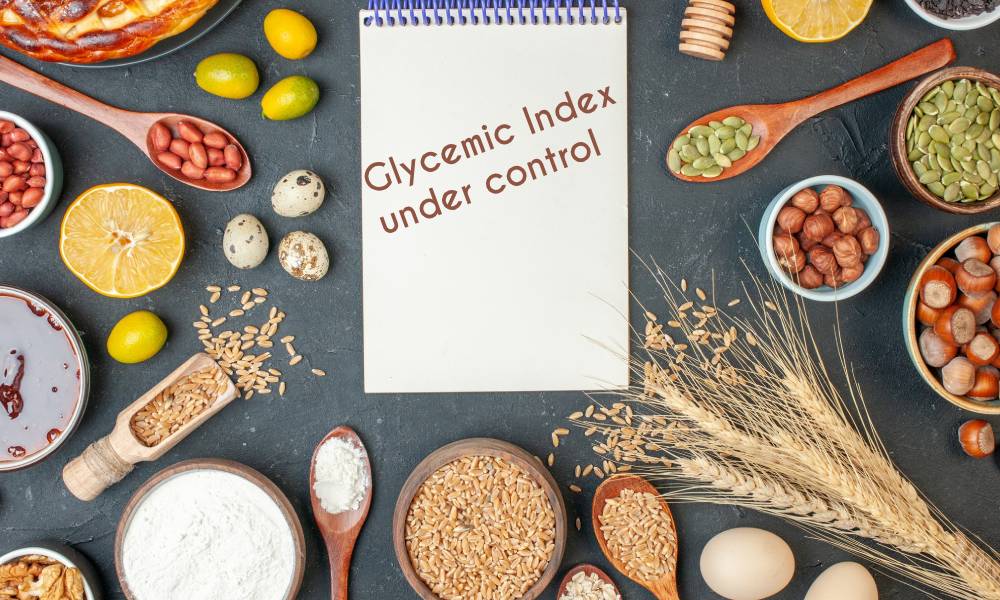
Using information about the glycemic indexes of foods is helpful for:
- controlling blood sugar levels;
- reducing calorie intake to manage weight and maintain energy balance;
- creating a healthy and balanced diet;
- preventing the development of inflammatory processes and cardiovascular diseases;
- supporting stable bodily function and preventing chronic diseases.
Lowering Blood Sugar Levels
Information about the glycemic index helps control blood sugar levels by reducing the risk of sharp fluctuations after meals. Consuming foods with a low or moderate glycemic index contributes to:
- improved insulin sensitivity—a slow rise in blood sugar reduces the burden on the pancreas, helping to better regulate insulin production.
- prevention of hyperglycemia—a condition in which blood sugar levels exceed normal ranges due to impaired glucose regulation caused by a deficiency insulin;
- lowering blood sugar levels in the long term—consistent consumption of low-GI foods reduces fluctuations in blood sugar levels and maintains them at a stable level.
Understanding and applying information about the glycemic indices of foods allows you to achieve a more balanced diet, maintain stable energy levels, and reduce the risk of diabetes and other metabolic disorders.
Balanced Nutrition
Carbohydrates, which are high in energy, are an important part of our diet because they provide fuel for the brain, organs, and muscles. However, not all carbohydrate-containing foods are the same. A diet dominated by high-GI foods forces the pancreas to produce extra insulin, which carries the risk of pancreatic exhaustion and leads to metabolic disorders, weight gain, insulin resistance, and an increased risk of diabetes, obesity , liver disease, and cardiovascular disease.
When planning your meals, focus on foods with a low glycemic index—these can be eaten every day. Foods with a moderate GI can be consumed occasionally. However, it is best to avoid foods with a high GI entirely.
In addition to the glycemic index, you should also consider the glycemic load and the percentage of carbohydrates. The lower the glycemic load, the less pure glucose the body will absorb, and the better your digestive system will function.
Weight Management
The glycemic index is an important factor affecting metabolic processes and weight management. Foods with a high GI rapidly raise glucose levels, leading to a sharp surge in insulin—a hormone that promotes fat storage in the body. At the same time, foods with a low GI cause a gradual rise in glucose levels, which helps maintain stable insulin levels and promotes better appetite control. Replacing high-GI foods with low-GI foods makes your diet balanced and satisfying, improves metabolic processes, and supports weight loss by helping to reduce the risk of gaining excess weight.
Anyone who is managing their weight or trying to lose weight should consult comprehensive glycemic index tables, which list three metrics: glycemic index, glycemic load, and carbohydrate percentage. This allows you to monitor all three parameters at once and tailor your diet to your specific needs.
Glycemic Index and Health Considerations

GI and Diabetes
Patients with diabetes should not only be aware of the GI of the foods they consume but also monitor their carbohydrate intake. Furthermore, scientists and doctors today are increasingly focusing on the insulin index rather than the glycemic index.
Insulin Index (II) – a measure of the amount of insulin produced by the pancreas in response to food consumed. This “insulin response” applies not only to carbohydrates but also to fats and proteins. This index indicates how much insulin the pancreas releases within a few minutes after nutrients from certain foods enter the body. The higher a food’s II, the more insulin is produced.
The Insulin Index is also important because insulin is responsible for regulating glucose levels—it is the only hormone that lowers blood glucose levels.
Understanding the impact of the GI on the body is especially important for people with type 2 diabetes, which is characterized by elevated blood glucose levels due to insulin resistance and impaired insulin secretion.
The mechanism of type 2 diabetes is as follows:
We consume food—blood glucose levels rise—the pancreas secretes insulin to help cells absorb this glucose and use it as an energy source—due to a loss of sensitivity, the cells do not respond to insulin — the pancreas produces even more insulin to compensate for its insufficient effect on the cells — insulin accumulates in the blood, causing hyperinsulinemia — the cells still receive nothing, and the pancreas constantly tries to compensate for insulin resistance by producing more and more insulin, gradually becoming depleted.
As a result, insulin that cannot perform its function accumulates in the blood, and the pancreatic β-cells are no longer able to produce it in the necessary amounts. All of this creates an imbalance in the body, leading to metabolic disorders, lipid imbalance, increased blood pressure, and the development of diabetes.
GI and Sports
Foods with a high glycemic index in an athlete’s diet are beneficial when it is necessary to maintain peak energy output. A small amount of fast-acting sugars before training or competition will boost speed, strength, and agility, while a low-glycemic-index meal consumed 2 hours before training will improve performance and overall endurance.
By taking the GI into account, athletes can manage their body weight and plan their diet to achieve specific goals — such as weight loss, “cutting,” increasing muscle mass, or gaining weight through fat. Knowledge of the GI helps improve performance for athletes involved in team sports, strength sports, and cyclic sports.
Glucose, which triggers insulin synthesis, also has other effects on the body:
- it protects amino acids in the blood and simple peptides from being converted into glucose in the liver;
- it enhances the synthesis of endogenous protein, which is necessary for muscle fiber growth;
- accelerates the uptake of leucine, valine, and other amino acids, as well as potassium, magnesium, and phosphorus.
- Insulin, released into the bloodstream in response to glucose, inhibits the hydrolysis of endogenous proteins, reduces their degradation, and lowers the release of fatty acids into the bloodstream.
GI and Heart Health
Fluctuations in blood glucose levels can affect heart function and increase the risk of developing cardiovascular diseases. This is because sharp spikes in glucose promote inflammation, insulin resistance, and elevated triglyceride levels, which, in turn, increase the risk of atherosclerosis and other cardiovascular vascular problems. In addition, impaired insulin secretion and the development of diabetes also affect cardiovascular health. Insulin resistance prevents insulin from performing its primary function—regulating glucose levels—resulting in various complications: increased levels of fatty acids, glycerol, and cholesterol levels in the blood, damage to blood vessels, and the onset of cardiovascular disease.
Myths About the Glycemic Index
Are low-GI foods always healthy and suitable for everyone, who are monitoring their blood sugar or trying to lose weight
Although low-GI foods are generally healthier, this doesn’t always mean they’re the best choice. Some low-GI foods can be too high in calories, so it’s important to consider a food’s overall nutritional value, not just its GI.
High-GI foods are always unhealthy
Yes, high-GI foods are unhealthy if consumed frequently and in excessive amounts. But in cases where you need to quickly replenish energy—for example, after intense physical activity—high-GI foods can be beneficial.
The glycemic index applies only to carbohydrates and is not relevant to other food groups
Yes, the GI applies only to carbohydrates, but when we eat, we don’t separate carbohydrates from proteins and fats. The combination of all macronutrients in foods and how they interact can speed up or, conversely, slow down the rate at which carbohydrates are absorbed and alter the food’s overall effect on blood sugar levels.
Carbohydrates lead to weight gain
No. The number of calories consumed and physical activity play a significant role. If you eat more food than you burn through exercise, this inevitably leads to weight gain, regardless of whether you consume carbohydrates or not.
All carbohydrates are the same
No. Complex carbohydrates have the least impact on blood sugar levels. Vegetables, grains, legumes, and whole grains contain not only complex carbohydrates but also fiber, protein, and fat, which are important for a healthy metabolism. Fruits contain both simple and complex carbohydrates, but they’re also rich in fiber, vitamins, minerals, and antioxidants. All of these slow down the absorption of glucose. The most dangerous to health are added refined sugars in all their forms.
A low-carb diet helps with weight loss
No, it doesn’t. Carbohydrates are a source of energy, and their absence will immediately affect the body’s organs, systems, and functions. Eliminating carbohydrates deprives the body of valuable nutrients. It’s better to focus on the calorie content of your diet, nutritional balance, and physical activity.
The glycemic index is the only important criterion when choosing food
It’s important, but not the only one. Other factors should be considered: a food’s calorie content, the amount of carbohydrates, proteins, and fats, vitamins, minerals, fiber, as well as the body’s individual needs.
The glycemic index is only important for people with diabetes; others can ignore it
Not exactly. For healthy people, eating foods with a low GI can help maintain stable energy levels, improve insulin sensitivity, and reduce the risk of developing cardiovascular disease.
Helpful Tips for Managing the GI
- Choose foods with a low or moderate GI and combine them;
- Choose minimally processed cooking methods and avoid refined and processed carbohydrates;
- Include whole grains in your diet;
- Pay attention to portion sizes;
- Drink enough water;
- Make sure to get enough physical activity.