Key Takeaways
- Spirulina is a cyanobacterium rich in complete protein, iron, and vitamins.
- One of the most concentrated whole-food sources of protein by dry weight.
- It increases endurance, accelerates muscle recovery, and supports immunity.
- Spirulina helps control appetite, but does not burn fat without changes to diet and exercise.
What Spirulina
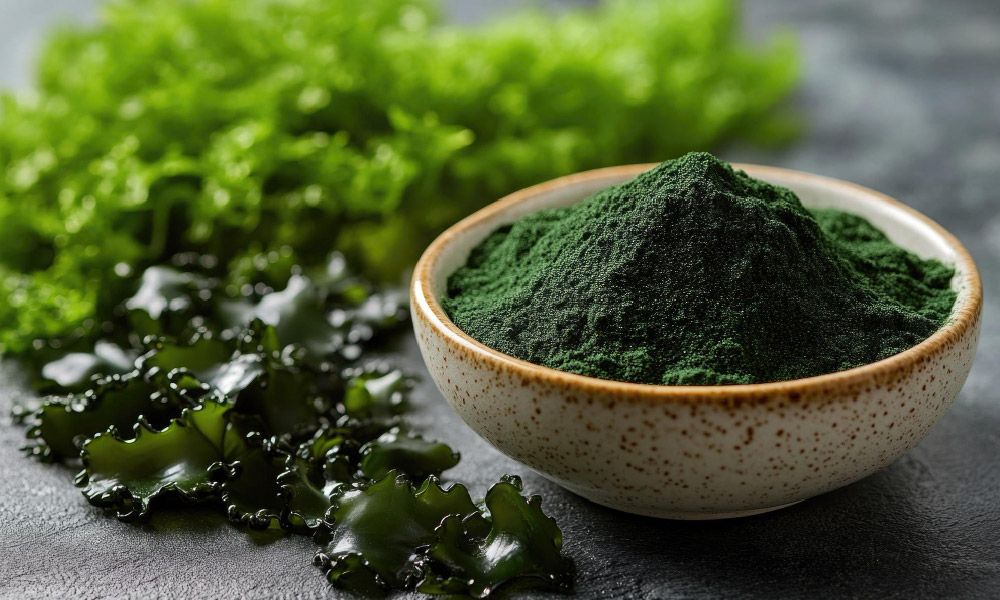
Is Spirulina is a cyanobacterium that lives primarily in brackish and fresh water with high alkalinity. Its history as a superfood dates back to the ancient Aztecs, who harvested it from Lake Texcoco, sun-dried it, and ate it as a nutritious food.
Today, it is one of the most popular supplements in the world, and NASA space food researchers study spirulina as a promising source of nutrients and antioxidants.
Spirulina Composition: Protein, Iron, Vitamins, and Antioxidants
Spirulina contains:
- protein (55–70% of spirulina's dry weight);
- thiamine (vitamin B1);
- riboflavin (vitamin B2);
- niacin (vitamin B3);
- copper;
- iron.
It also contains small amounts of magnesium, potassium, and manganese, as well as omega-6 and omega-3 fatty acids.
Among whole natural foods, dried spirulina has one of the highest protein content levels. Its amino acid profile deserves special attention: it contains all 9 essential amino acids that the body cannot synthesize on its own.
Spirulina and Chlorella: What Is the Difference
Spirulina and chlorella are often thought of as the same supplement or something interchangeable. Yet beyond differences in origin and composition, they affect the body quite differently.
Criteria | Spirulina | Chlorella |
Nature | Blue-green cyanobacterium | Green single-celled freshwater alga |
Protein | 45–60% | 55–70%, complete amino acid profile |
Main pigment | Phycocyanin (blue) + chlorophyll | Chlorophyll (levels several times higher) |
Key action | Nourishing the body, antioxidant protection, supporting immunity, endurance, and appetite control | Detoxification, heavy metal removal, gut support |
Spirulina Benefits: What Research Shows
Plant Protein and Diet Support
Energy, Endurance, and Post-Workout Recovery
A study by Kalafati and co-authors (2010) in Medicine & Science in Sports & Exercise tested taking 6 g of spirulina daily for 4 weeks in nine moderately trained men. During a treadmill test, participants sustained exertion longer before fatigue after taking the supplement, though due to the small sample size and specific experimental conditions, this result does not guarantee the same effect for every athlete.
A systematic review of spirulina's effects on athletes shows that the supplement lowers levels of muscle fiber damage markers. Because of this, muscle soreness (DOMS) decreases and the body recovers faster after intense workouts.
Spirulina supports oxygen transport: the review points to its possible ability to stimulate nitric oxide (NO) synthesis, which improves blood flow, as well as maintain hemoglobin levels thanks to its high bioavailable iron content.
Antioxidant Action and Immunity
It is precisely because of its antioxidant action that NASA included spirulina in research aboard Northrop Grumman's 24th commercial mission. During spaceflight, immune system balance is disrupted: chronic inflammation stays elevated and defense against infections weakens. In these conditions, spirulina's main pigment—phycocyanin, known for its antioxidant and anti-inflammatory properties—comes into play.
Another reason people choose spirulina is immune support. It contains vitamins and minerals needed for the body's defense system. Individual studies also indicate that spirulina increases the production of white blood cells and antibodies involved in defense against viruses and bacteria.
Researchers are currently studying spirulina and its potential anticancer properties.
Spirulina for Weight Loss: Myths and Facts
Spirulina can be helpful in undernutrition due to its high protein content and vitamin-mineral profile. At the same time, it also suits those looking to lose weight.
Influencers and bloggers most often talk about spirulina as a weight-loss superfood when promoting the product. Let's look at which claims are myths and which are actually backed by science and work in practice.
Claim | Status | Scientific Rationale |
Burns fat without changes to diet and exercise | Myth | No clinical trial confirms localized or standalone fat "burning" without a calorie deficit. |
Moderately reduces body weight | Fact | A 2025 meta-analysis showed an average weight loss of 1.07 kg and a decrease in body mass index when taking 2 g/day or more for 12+ weeks. |
Vitamin B12 from spirulina treats its deficiency in vegans | Myth | In a study by Watanabe et al. on PubMed, researchers analyzed spirulina tablets and found that 83% of corrinoids in them consist of inactive pseudovitamin B12. |
The supplement helps control appetite | Fact | A study on PubMed found a significant reduction in appetite levels in patients with obesity taking 2 g of spirulina daily for 12 weeks. |
Forms Available: Tablets, Capsules, Powder
.jpg)
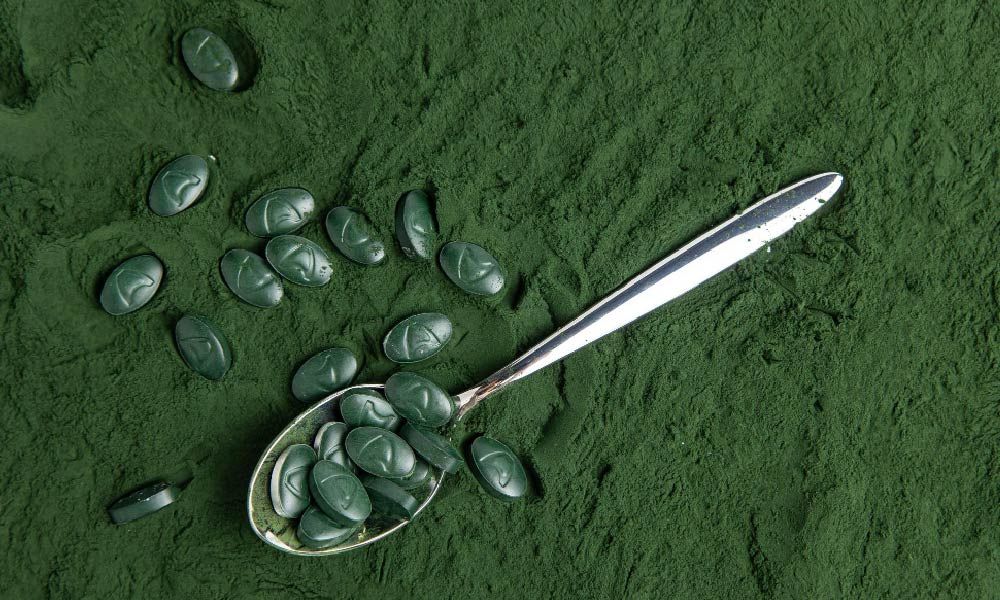
Now that you know what spirulina is, it is time to decide how to take it. In stores, it is usually available in three forms.
The main advantage of capsules and tablets is a fixed dose and no taste or odor. If you follow a vegan or vegetarian diet, choose capsules made from plant cellulose (HPMC) rather than animal gelatin.
Powder guarantees 100% spirulina with no additives. You can add it to smoothies, green shakes, juices, or sauces. At the same time, be prepared for a pronounced "marine" or grassy aftertaste.
Regardless of whether you choose tablets or powder, follow the storage instructions on the label. All forms are sensitive to light and moisture, which oxidize beneficial fatty acids and break down antioxidants. Keep the supplement in an airtight, dark container in a cool place, and for opened powder, the refrigerator is ideal.
Contraindications and Possible Side Effects
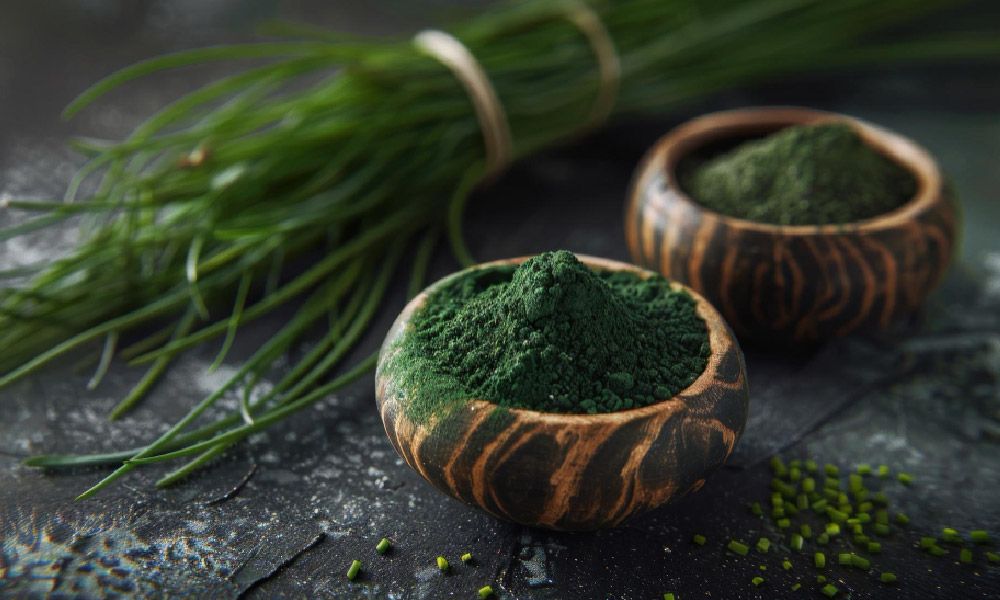
Spirulina is safe for most adults and holds Generally Recognized as Safe (GRAS) status from the U.S. Food and Drug Administration (FDA). However, it can cause side effects, interact with medications, and pose risks under certain health conditions.
Side Effects
- digestive upset;
- allergic reactions;
- headaches;
- fatigue;
- dizziness;
- sleep problems.
Spirulina During Pregnancy, Breastfeeding, and for Children
There is not enough research to confirm whether these blue-green cyanobacteria are safe for children, pregnant women, or breastfeeding women. Therefore, spirulina use is contraindicated for this group. Other contraindications to taking spirulina include autoimmune diseases, phenylketonuria (since spirulina contains phenylalanine), and blood clotting disorders.
Interactions with Medications
Consult a doctor before starting spirulina if you take any of the following medications:
- Anticoagulants (blood thinners).
- Diabetes medications.
- Immunosuppressants.
- Blood pressure medications.
How to Choose Quality Spirulina: What to Look for on the Label
According to the LiverTox toxicology database (NCBI), spirulina grown in contaminated open bodies of water carries a high risk of accumulating heavy metals (lead, arsenic, mercury) or microcystin toxins. Before buying spirulina, check for GMP or ISO manufacturing certifications.
Quality powder should contain only 100% spirulina, while tablets may include a small amount of natural binding agents (such as silicon dioxide or magnesium stearate). Packaging should be completely opaque to protect the product from sunlight.
You can buy spirulina at the Vansiton online store with delivery across Ukraine.
How do you take spirulina and can you take it every day?
Yes, adults can safely take spirulina every day in recommended doses. Timing depends on your goal: 1. For energy: in the morning or afternoon (not before bed); 2. For appetite control: 20–30 minutes before a meal with a glass of water; 3. For a sensitive stomach: during or after a meal.
Does spirulina help with weight loss?
Spirulina can support modest weight loss, but it is not a fat burner and does not replace a calorie deficit and physical activity.
Spirulina in tablets or powder: which is better?
From a scientific standpoint, spirulina in powder and tablets has nearly the same nutritional value, as tablets are made by simply compressing that same dried powder. The choice depends not on one form having a better composition, but on convenience of use, digestive tolerance, and storage conditions.
Can spirulina be combined with other supplements and medications?
Spirulina can be combined with most basic dietary supplements, but it has potential interactions with several medications (anticoagulants, diabetes medications, immunosuppressants, blood pressure medications), so combine them only after consulting a doctor.
Can spirulina cause allergies?
Yes, spirulina can cause allergic reactions, though this happens fairly rarely. Research shows a dual effect of this cyanobacterium: for most people it is safe and may even ease symptoms of allergic rhinitis, while for some individuals it becomes a strong allergen.
Scientific sources:
Ergogenic and Antioxidant Effects of Spirulina: A Human Study
Effect of Spirulina on Obesity: A Systematic Review and Meta-analysis of Randomized Clinical Trials
A Review of Spirulina's Health Benefits with a Focus on Sports Performance and Recovery
Spirulina: Information on Use During Breastfeeding — LactMed, U.S. National Library of Medicine