How does the average athlete who regularly goes to the gym choose sports nutrition? Usually, they rely on information gleaned from popular online articles, as well as advice from fellow gym-goers. Like, why does this protein actually work? Because it’s endorsed by one of the Mr. Olympia winners. How could it be bad? But this one here—it’s complete nonsense. The packaging is generic, and Vasya from the apartment next door drinks it by the bucketful, yet he was a skinny stick and remains one to this day.
In reality, though, these are all just myths and legends that are far from reality. Neither a well-known brand, nor a high price, nor—least of all—advertising can guarantee the quality or “effectiveness” of a product that an athlete buys.
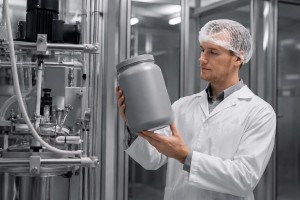
After all, in reality, not a single company in the world that produces sports supplements actually manufactures the raw materials. Rather, they blend sports supplements, add various ingredients, package them, and sell them. But those very essential components—which contain protein, amino acids, vitamins, and other “building blocks” for creating the ideal physique—are purchased by sports supplement manufacturers from specialized companies and raw material suppliers.

For example, the largest producers of whey protein are major dairy companies (primarily hard cheese producers) from Europe and the United States. Collagen proteins are supplied by companies in France. Most amino acids are produced in China, with a small amount coming from Japan and Switzerland; however, they are quite expensive and are rarely used in the production of sports nutrition products. Creatine monohydrate, so beloved by “natural” athletes, is produced by only a few factories in China and Germany. At the same time, German creatine monohydrate is produced exclusively under the Creapure® brand; it is of significantly higher quality and, accordingly, more expensive.
So, does this mean that sports nutrition manufacturers simply slap their name on the packaging, jack up the price, and profit off poor athletes? No, that’s far from the truth. After all, food manufacturers don’t use their own raw materials either. But for some reason, pasta, ketchup, or sausages from certain brands are wildly popular and in high demand—they taste great and are high quality—while other products you wouldn’t even want to touch. Even though the price is, more or less, the same.
It’s the same with sports nutrition. First, it matters where exactly the sports supplement manufacturer sources its raw materials and how it tests and monitors their quality. Second, a lot depends on the additional ingredients used in the preparation of sports nutrition. For example, to enhance the muscle-building effect, a weight gainer might contain sugar, which promotes fat storage, or it might contain maltodextrin, which is more easily digested and doesn’t ruin your physique. Protein powders may contain natural cocoa powder or even crushed fruit to improve the taste. But if the manufacturer decides to cut costs, they’ll add ordinary food coloring instead. Third, the proportions in which the various components are mixed are of great importance. Take, for example, amino acids or vitamin complexes. These proportions directly influence how well the body absorbs these complexes, whether or not the athlete will feel a surge of energy during training, and how quickly they’ll recover on rest days.

It’s just as big a mistake to assume that if SportPit is imported and expensive, it must be good and simply super-duper. Let’s recall the early ’90s, when foreign food products flooded our country. Back then, they were a novelty and in huge demand. But years have passed, and we’ve all come to realize that our manufacturers can produce products that are in no way inferior to foreign ones—and often even better, and cheaper to boot.
The same goes for sports nutrition: fortunately, Ukraine has sports nutrition brands that have been on the market for many years and have proven themselves very well. For example, the company “Vansiton,” which has been in business since 1993. It is well known not only among enthusiasts in basement “gyms,” but is also used by renowned professional athletes. These include Ukrainian bodybuilding champion and “Arnold Classic” medalist Andriy Sharapov, 15-time Ukrainian champion, “Arnold Classic” champion, and world champion Valeriy Koptenko; four-time Ukrainian bodybuilding champion and Kyiv champion Denis Osadchiy; master of sports in track and field and member of the Ukrainian national team Oleksandr Karpenko; and many others.

What gives “Vansiton” an edge over its competitors? First and foremost, the company uses only high-quality raw materials. For example, it sources creatine not from China, which offers a cheap substance, but from Germany, specifically from Alzchem GmbH—a company better known under the Creapure® brand and valued by athletes worldwide.
In addition, “Vansiton” holds the necessary quality certifications. These include the ISO 22000:2007 food safety management certificate, which complies with the international HACCP standard. The company is also currently undergoing certification under the ISO 22000:2005 standard. All sports supplements are prepared according to formulas that have been refined over the years and approved by sports medicine specialists and the Ministry of Health of Ukraine. Every stage of production is monitored, from specialized equipment to strict sanitary conditions in the production facility.
Furthermore, Vansiton products are reasonably priced. Not exorbitantly high, but not suspiciously low either. Of course, we all want to save money. But when a kilogram of whey protein costs 200 UAH or even less, that should raise a red flag. And if you look online, you can find plenty of tests of such budget products that reveal 40–50% protein instead of the advertised 60–70%, with the rest being dry milk or starch.
With “Vansiton,” athletes can be confident they’re getting a pure and 100% effective product. After all, it’s the result of the hard work of a large team, each member of which is responsible for the quality of the sports nutrition. And the fact that it’s a domestic manufacturer makes it twice as satisfying.
Scientific sources:
Dietary Supplements for Exercise and Athletic Performance: Information for Healthcare Professionals
IOC Consensus Statement: Dietary Supplements and High-Performance Athletes
IOC Consensus Statement: Dietary Supplements and High-Performance Athletes
Contaminants in dietary supplements: toxicity, doping risk, and current regulations
FDA: Good Manufacturing Practice Requirements for Dietary Supplements
WHO: Good Manufacturing Practices and Quality Assurance for Medical Products
WHO: Good Manufacturing Practices for the Production of Herbal Medicines